
 Canada
 USA
USA Japan
Japan



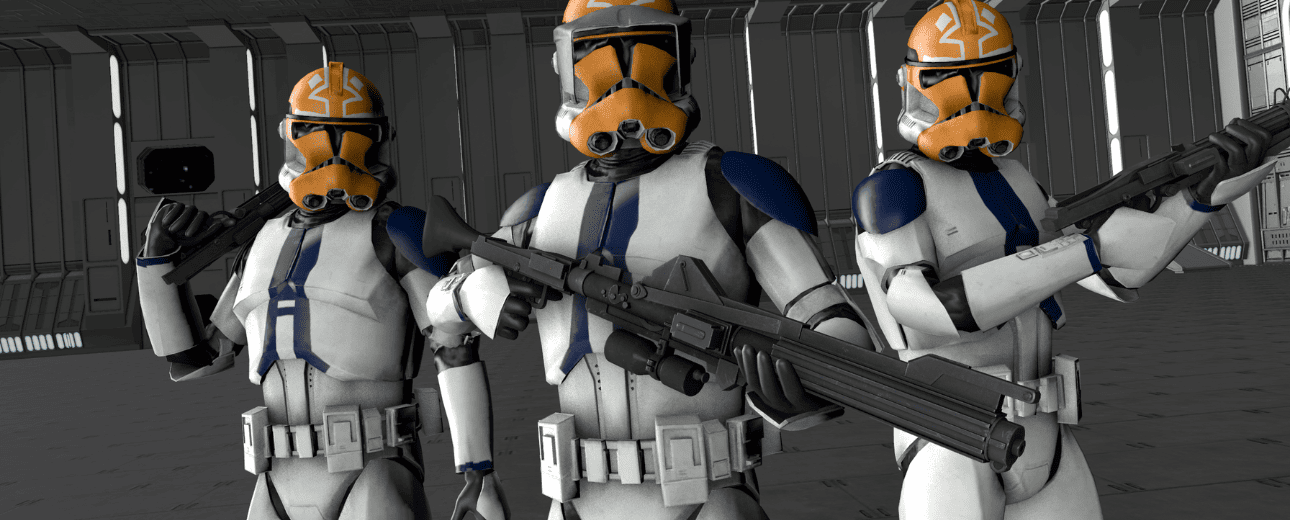
There is a moment in the final arc of “Star Wars: The Clone Wars” that stops you completely the first time you see it — and that hits even harder on every subsequent viewing when you know what is coming. Ahsoka Tano walks into a hangar and sees the clone soldiers of the 332nd Company for the first time. Their helmets are painted. Not with unit colors, not with the standard markings of their battalion. They are painted with a pattern that echoes Ahsoka’s own facial markings— the white and orange of a Togruta woman who left the Jedi Order and whom these men had never stopped serving in their hearts. Captain Rex stands among them, and the expression on his face is everything the Clone Wars was always really about: loyalty that transcends orders, love that transcends programming, and the specific dignity of soldiers who chose to honor someone they cared about in the only way available to them.
The 332nd Company exists in Star Wars canon for exactly four episodes — the Siege of Mandalore arc that concludes “The Clone Wars” animated series — and in those four episodes it becomes one of the most emotionally significant military units in the franchise’s history. Not because of the battles they fight, though those battles are extraordinary. Not because of the tactical innovations they employ, though the Siege of Mandalore is a masterpiece of animated military storytelling. But because of what they represent: the final expression of everything that made the clone army human, the last chapter of the relationship between Ahsoka and Rex, and the most devastating setup for Order 66 in the entire franchise.
This article is the complete story of the 332nd Company — who they were, how they were formed, what they did at Mandalore, the specific individuals within their ranks, and why their story remains one of the most important and most emotionally powerful in all of Star Wars. Grab your helmet. We’re going to Mandalore.
The Formation of the 332nd Company: Rex’s Act of Loyalty
The 332nd Company was formed specifically for the Siege of Mandalore — assembled by Captain Rex from soldiers of the 501st Legion for deployment alongside the former Jedi Padawan Ahsoka Tano in the campaign to capture Mauland liberate Mandalore from his control. This specific formation context is important: the 332nd was not a pre-existing unit with its own established identity that was assigned to Ahsoka’s campaign. It was created for her — assembled by Rex as an act of personal loyalty to someone who had left the Jedi Order under circumstances that were deeply unjust and that had cost her everything.
Understanding the formation of the 332nd requires understanding the relationship between Ahsoka and Rex — and by extension, the relationship between Ahsoka and the 501st Legion as a whole. Ahsoka had been Rex’s commanding officer, his Jedi General, his friend, and in many ways the most important relationship in his professional and personal life during the Clone Wars. When she was falsely accused of bombing the Jedi Temple and expelled from the Order, Rex was one of the few people who stood by her — who refused to participate in her condemnation even when the institutional pressure to do so was enormous. And when she was exonerated and then chose to leave the Order anyway — because the Order’s treatment of her had revealed something about the institution that she could not continue to serve — Rex accepted her decision even as it cost him her presence.
Why Rex Assembled These Specific Soldiers
The selection of soldiers for the 332nd Company was not random, and understanding Rex’s selection criteria reveals something important about both his character and the specific culture of the 501st Legion. Rex chose soldiers for the 332nd who had served under Ahsoka — who had been her troops, who had fought beside her, who had known her as a commander and as a person rather than simply as a Jedi abstraction. These were men who had their own reasons to honor her, their own memories of her leadership and her care for them, their own specific loyalty that went beyond the institutional structure of the Jedi and the Republic.
This selection criteria meant that the 332nd was, from its formation, a unit defined by personal loyalty rather than institutional assignment — a unit whose cohesion came from shared experience and shared feeling rather than from the standard mechanisms of military unit building. The 501st Legion had always had a culture of personal loyalty to its commanders, but the 332nd took this culture to its most explicit expression: it was a unit formed specifically to serve someone who was no longer officially part of the military structure they served, assembled by a commander who was prioritizing human loyalty over institutional protocol.
The Helmet Painting: The Most Significant Gesture in Clone Wars History
The decision to paint the 332nd Company’s helmets with patterns echoing Ahsoka’s facial markings is the single most significant gesture in the entire Clone Wars animated series, and its significance operates on multiple levels simultaneously. At the most immediate level, it is an act of honor — a visual declaration that these soldiers serve Ahsoka Tano, that they claim her as their commander even in the absence of any official designation that would make this claim institutionally valid. At a deeper level, it is an act of identity — a statement about who these soldiers are and what they value that goes beyond the unit colors and battalion markings that most clone armor displays.
The specific symbolism of the painted helmets is extraordinary in the Star Wars visual language. Clone Trooper armor markings are typically unit identifiers — they tell you which battalion a soldier belongs to, what their rank is, sometimes something about their individual history. The 332nd’s Ahsoka markings do something different: they tell you who this soldier loves. They are not unit colors. They are devotion made visible — the external expression of an internal commitment that these soldiers have made not to the Republic, not to the Jedi Order, not even specifically to the 501st, but to a specific person who has shaped who they are.
Rex’s Role as the Architect of the 332nd’s Identity
Captain Rex is the architect of everything that makes the 332nd Company what it is, and understanding his specific contribution to the unit’s identity is essential to understanding why the unit carries such emotional weight. Rex could have simply assigned soldiers to the Mandalore campaign without the helmet modification, without the specific selection of soldiers with personal connection to Ahsoka, without the deliberate creation of a unit identity built around loyalty to her. He did not do any of these things. He made choices — specific, considered, emotionally significant choices — that transformed a military assignment into something that was simultaneously a military unit and a declaration of love.
The Rex who forms the 332nd is the Rex who has spent years developing the capacity for individual moral judgment that the clone army’s design was supposed to prevent. He is a soldier who has learned, through his relationship with Ahsoka and through years of the Clone Wars’ moral complexity, that loyalty to institutions and loyalty to people are not the same thing — and that when they conflict, the loyalty to people is the one worth keeping. The 332nd Company is the most complete expression of this understanding, a unit that embodies the specific kind of loyalty that Rex has developed and that the clone army’s designers never intended him to have.
The Siege of Mandalore: The 332nd’s Only Campaign
The Siege of Mandalore — depicted in the final four episodes of “The Clone Wars” Season 7 — is the only campaign the 332nd Company ever fought, and it is one of the greatest military and narrative achievements in Star Wars animation history. The siege brought together multiple threads that had been building throughout the series: the fate of Mandaloreas a political entity, the ongoing threat of Maul and his shadow collective, the relationship between Ahsoka and Rex, and the larger trajectory of the Clone Wars toward its catastrophic conclusion. The 332nd Company was at the center of all of these threads, serving as both the military instrument of the campaign’s execution and the human heart through which its emotional stakes were felt.
The campaign was organized around a specific tactical objective: capture Maul and liberate Mandalore from the influence of his criminal organization, which had destabilized the planet’s governance and threatened its people. This objective was itself the product of a specific political negotiation — Bo-Katan Kryze and the Mandalorian resistance needed Republic support to retake their world, and Ahsoka had leveraged her connections to the Jedi Council and to Rex to secure that support despite her own non-Jedi status. The 332nd’s deployment to Mandalore was therefore not just a military operation but a statement about the specific network of loyalty and personal relationship that had made it possible.
The Battle Tactics and the 332nd’s Performance
The tactical execution of the Siege of Mandalore is one of the most impressive showcases of clone military capability in the entire animated series, and the 332nd Company’s performance in the siege demonstrated the specific quality that elite clone units could achieve when led by a commander of Rex’s caliber with soldiers of the 501st’s training level. The campaign involved multiple distinct tactical phases — the initial assault, the urban combat through Mandalore’s domed cities, the pursuit and capture of Maul — each of which imposed different demands on the soldiers executing it.
The urban combat phase of the siege was particularly challenging and particularly revealing of the 332nd’s quality. Fighting through the enclosed environments of Mandalore’s dome cities required the specific combination of individual tactical judgment and unit cohesion that distinguished elite clone units from standard formations — the ability to operate effectively in small units, to adapt to rapidly changing tactical situations, and to maintain coordination without the clear lines of sight and communication that open-battlefield combat provided. The 332nd performed this phase of the campaign with a professionalism and an effectiveness that reflected both their training and the specific quality of leadership that Rex provided.
Ahsoka’s Command Style and Its Impact on the 332nd
The relationship between Ahsoka’s command style and the 332nd Company’s performance is one of the most interesting aspects of the siege campaign, because it shows what happens when a commander with Ahsoka’s specific qualities leads soldiers who already know her and are personally committed to her. Ahsoka was not a standard Jedi General — she had always been more personally engaged with her troops than most Jedi commanders, more willing to fight alongside them at the individual level rather than directing from a position of strategic remove, more explicitly attentive to them as individuals rather than simply as military assets.
The 332nd soldiers’ knowledge of Ahsoka — their prior experience of her command style, their personal commitment to her — amplified the effectiveness of this approach. They did not need to adjust to an unfamiliar commander. They were fighting for someone they already trusted completely, someone whose judgment they had learned through direct experience was worth following even in the most dangerous situations. This pre-existing trust created a unit cohesion and a fighting effectiveness that went beyond what standard military organization could produce, and it showed in the quality of the 332nd’s performance throughout the campaign.
The Capture of Maul: The Mission’s Climax
The capture of Maul is the tactical climax of the Siege of Mandalore and the moment that best demonstrates both the 332nd’s military capability and the specific cost of the campaign. Maul — a Force user of extraordinary power, a tactician of genuine sophistication, and a survivor whose resilience had been tested by experiences that would have destroyed almost anyone else — was not a target that standard military operations could expect to contain. His capture required the specific combination of Ahsoka’s Force capability, Rex’s tactical intelligence, and the 332nd’s disciplined execution.
The specific tactics employed in Maul’s capture — the coordination between Ahsoka and the 332nd, the use of the siege’s broader tactical situation to force Maul into a position where his options were constrained enough for Ahsoka to engage him directly — reflect the quality of planning and execution that the combined Ahsoka-Rex command team was capable of. This was not a simple military operation against a conventional target. It was a precisely executed plan to neutralize one of the most dangerous individuals in the galaxy, and its success reflected the full capabilities of the team that executed it.
The Individuals of the 332nd: The Faces Behind the Helmets
One of the most important aspects of “The Clone Wars” as a storytelling achievement is its insistence that clone soldiers are individuals — that beneath identical faces and identical armor are distinct persons with distinct personalities, histories, and moral lives. The 332nd Company is no exception to this insistence, and the specific individuals within its ranks who receive focused attention in the Siege of Mandalore arc are some of the most memorable minor characters in the series.
The specific attention that the final arc pays to individual 332nd soldiers — giving them names, voices, specific moments of character expression — is not incidental. It is a deliberate narrative choice that serves the arc’s ultimate purpose: to make Order 66 as devastating as possible by ensuring that the soldiers who will carry it out are not abstractions but people we have come to know and care about. The more specifically we know these individuals, the more completely we understand what is lost when the inhibitor chips activate and transform them from the loyal, caring soldiers of Ahsoka’s helmeted honor guard into the instruments of her near-destruction.
Jesse: The True Believer and His Tragedy
Jesse — ARC Trooper CT-5597 — is the 332nd Company member who receives the most focused individual attention in the Siege of Mandalore arc, and his specific characterization makes him one of the most significant and most tragic figures in the entire Clone Wars series. Jesse is, among the 332nd’s members, the one who most explicitly and most passionately embodies the clone soldier’s commitment to the Republic and to the Jedi — the one whose belief in the system he serves is most complete and most genuine. He wears his devotion to the Republic on his face in the most literal possible way: his tattoo of the Galactic Republic’s symbol covers half of his face, a permanent declaration of identity and loyalty.
This specific characterization of Jesse as a true believer makes his role in Order 66 the most devastating of any 332nd member. When the inhibitor chip activates and Jesse becomes the soldier who most aggressively pursues Ahsoka’s capture and execution — who commands the effort to kill the woman whose helmet markings his unit wears — the specific horror is not that a villain has done something terrible. The horror is that a genuinely good man, a man whose devotion was real and whose loyalty was admirable, has been made into an instrument of destruction against the very person he was honoring. Jesse’s tragedy is the clone army’s tragedy in its most concentrated and most heartbreaking form.
Rex’s Personal Journey Through the 332nd
Captain Rex’s experience during the Siege of Mandalore and through Order 66 is the central emotional story of the final arc, and understanding it requires understanding what the 332nd Company specifically means to him. Rex formed this unit as an act of love for Ahsoka. He assembled these soldiers — his soldiers, men he had commanded and cared for — specifically to serve her. And then he watches them be transformed, by the activation of their inhibitor chips, into the force that tries to kill her.
The specific horror of Rex’s situation during Order 66 is that he is surrounded by men he loves, commanded by programming he cannot override, trying to destroy someone he loves more than the institution that created him. His ability to resist the inhibitor chip’s full effect — long enough for Ahsoka to surgically remove it — is the product of years of developing exactly the kind of individual moral agency that the chip was designed to suppress, and it is the most complete expression of who Rex is and what the Clone Wars made him.
The Unnamed Soldiers and Their Collective Significance
Beyond Jesse and Rex, the unnamed soldiers of the 332nd carry a collective significance that is as important as the named individuals in their ranks. These are the soldiers whose helmets bear Ahsoka’s markings but whose names the story does not have time to tell. They are the soldiers who will fire on Ahsoka when Order 66 activates, whose faces she will see through the helmets she inspired, whose weapons will be turned against her in the most brutal possible inversion of the loyalty that their armor displayed.
The decision to not name these soldiers individually is as deliberate as the decision to name Jesse — it creates a collective whose anonymity is part of their meaning. They are every clone who was loyal and good and then transformed by something they could not control into something they would never have chosen to be. Their unnamed status does not diminish their significance. It amplifies it, by making them representative of all the clone soldiers whose individual stories the franchise did not have time to tell but whose humanity is nonetheless real and whose fate is nonetheless devastating.
Order 66 and the 332nd: The Most Devastating Betrayal
Order 66 is the defining tragedy of the Clone Wars era — the moment when the inhibitor chips activated and clone soldiers across the galaxy turned on their Jedi commanders in a coordinated massacre that effectively destroyed the Jedi Order in a matter of hours. It is one of the most dramatically powerful events in the Star Wars saga, and its power comes partly from the specific horror of soldiers who were genuinely loyal and genuinely good being transformed into killers against their will.
For most audiences, Order 66 is experienced primarily through “Revenge of the Sith” — through the montage of Jedi being killed by their clone troops across multiple worlds, through the specific tragedy of soldiers who had no control over what they did. But the deepest and most specific expression of Order 66’s horror is in the Siege of Mandalore arc of “The Clone Wars,” in the specific context of the 332nd Company, because here we know these soldiers. We have watched them paint their helmets in Ahsoka’s honor. We have watched Rex form them with love. And then we watch them try to kill her.
The Activation Sequence and Its Staging
The staging of Order 66 in the Siege of Mandalore arc is one of the most carefully constructed sequences in “The Clone Wars,” and its construction reflects the creative team’s understanding of how to maximize the emotional impact of an event whose outcome the audience already knows. The activation of the inhibitor chips is not sudden or shock-cut — it is observed, first by Ahsoka, who senses something wrong through the Force before the behavior changes make it visible, and then through Rex’s terrified face as he fights against his own programming with everything he has.
This observational staging — allowing us to watch the transformation rather than simply experience its results — creates a specific horror that the “Revenge of the Sith” montage does not provide. We see the moment when soldiers who were honoring Ahsoka became soldiers trying to kill her. We see it from Ahsoka’s perspective — watching men whose helmets bear her face turn weapons on her — and the specific visual irony of that image is one of the most powerful single images in Star Wars animation history.
Rex’s Resistance and Its Meaning
Rex’s resistance to the inhibitor chip — his ability to fight against its activation long enough to communicate to Ahsoka that she needs to find Fives, to find the truth about what has been done to every clone soldier — is the most heroic individual act in the final arc and one of the most heroic in the entire series. It is heroic not in the action-movie sense of physical courage under fire, but in the rarer and more difficult sense of moral resistance against a force that is operating from inside you — fighting against your own programmed responses to protect someone you love.
The specific meaning of Rex’s resistance is inseparable from his history — from the years of development as an individual moral agent, from his relationship with Ahsoka, from everything that the Clone Wars made him into despite its design to make him into something simpler and more controllable. Rex resists because he is Rex, because he is the product of everything his experience has built him into, and because the love that formed the 332nd Company is strong enough to fight the programming that was always meant to override it.
The Crash and the Burial: The Final Act
The conclusion of the 332nd Company’s story — the Star Destroyer crash on the moon, the burial of the fallen soldiers by Ahsoka and Rex, the specific image of Ahsoka placing a clone helmet on a grave marker in the frozen landscape — is one of the most emotionally complete endings in Star Wars history. It honors the 332nd not with triumph but with mourning — with the specific grief of survivors who know that the people they are burying were not their enemies, who understand that the soldiers who tried to kill them were victims as much as Ahsoka was, who carry the weight of what was done to these men alongside the weight of having survived it.
Rex’s silence during the burial sequence communicates more than any dialogue could. He is burying his soldiers — men he formed, men he led, men he loved — who died either following programming they could not resist or trying to resist it. His grief is not simple. It is the grief of someone who understands exactly what was taken from these men and what they were made into, and who will carry that understanding for the rest of his long life.
The 332nd’s Legacy: What They Mean to Star Wars
The legacy of the 332nd Company in Star Wars extends far beyond their four-episode existence in the canon, into the broader conversation about what the Clone Wars was really about and what the clone soldiers’ story ultimately means. They are the final and most concentrated expression of several themes that “The Clone Wars” developed across seven seasons: the humanity of clone soldiers, the specific quality of loyalty that the Clone Wars produced, and the devastating cost of a system that created people capable of genuine love and then used that capacity against them.
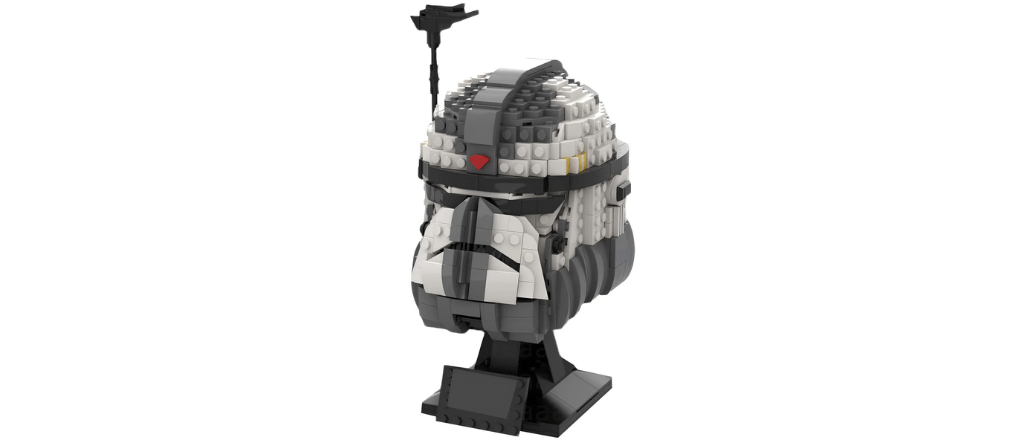
Their helmet design has become one of the most iconic pieces of visual design in Clone Wars history — the blue and white Ahsoka-pattern helmets are instantly recognizable to fans of the series and carry immediate emotional connotations of loyalty, loss, and the specific beauty of soldiers who honored someone they loved in the only way available to them. These helmets appear consistently in fan art, in cosplay, in collector’s items — as a visual shorthand for everything the 332nd represents.
Why the 332nd Matters for Understanding Clone Trooper Humanity
The 332nd Company’s significance for understanding clone trooper humanity is that they are the clearest and most complete demonstration of what individual moral development looked like in clone soldiers who had been given the opportunity to develop it. Rex, Jesse, the unnamed soldiers of the 332nd — these were not robots following programming. They were people who had developed genuine loyalties, genuine loves, genuine moral commitments that went beyond their designed function. The helmets they painted were evidence of a humanity that the clone army’s designers did not intend them to have and that Palpatine’s Order 66 was designed to weaponize against the very Jedi who had helped them develop it.
Understanding this humanity — understanding that the soldiers who carried out Order 66 were not villains but victims — is essential to understanding what the Clone Wars was really about. The tragedy is not simply that Jedi were killed. The tragedy is that the people who killed them were themselves destroyed in the process — transformed by the activation of chips they did not know they had from the loyal, caring soldiers they had become into instruments of murder against the people they loved.
The 332nd in the Broader Star Wars Canon
The 332nd Company’s presence in the broader Star Wars canon beyond “The Clone Wars” is limited but significant. Their story echoes through “Star Wars: Rebels” in the episodes featuring an older Rex, whose survival and whose ongoing engagement with the Rebellion reflects the specific moral character that the 332nd’s formation expressed. Rex is, in Rebels, still the person who formed the 332nd — still someone whose loyalty to people transcends his loyalty to systems, whose specific moral development survived the Clone Wars’ destruction.
The emotional weight of the 332nd’s story also influences how audiences experience other parts of the Star Wars canon — particularly the prequel trilogy and the sections of the sequel trilogy that engage with the clone army’s legacy. Knowing the 332nd’s story changes how you see Order 66 in “Revenge of the Sith,” deepens your understanding of what Rex represents in Rebels, and provides a specific human context for the larger tragedy of the clone army that the films alone cannot fully provide.
For readers who want to explore the 332nd Company and the Siege of Mandalore further, “Star Wars: The Clone Wars” Season 7 is available on Disney+ at disneyplus.com — the final four episodes of the season constitute one of the finest narrative achievements in Star Wars history and are essential viewing. Wookieepedia at starwars.fandom.com maintains comprehensive documentation of the 332nd Company, its members, and the Siege of Mandalore campaign. The “Star Wars: The Clone Wars — The Complete Series” collector’s edition provides the full context of the relationships and the storytelling that makes the 332nd’s final arc so powerful. For community discussion and fan analysis of the 332nd and the Siege of Mandalore, the Star Wars subreddit at reddit.com and the dedicated Clone Wars fan communities host some of the most thoughtful and most emotionally engaged analysis available anywhere. And “The Art of Star Wars: The Clone Wars” published by Dark Horse Books and available at amazon.com documents the visual development of the 332nd’s distinctive armor design and the creative decisions behind the Siege of Mandalore arc’s visual storytelling.
They painted their helmets in her honor. They tried to kill her when ordered to. They were buried by the two people who loved them most. The 332nd Company’s story is Star Wars at its most human — and its most heartbreaking.