
 Canada
 USA
USA Japan
Japan



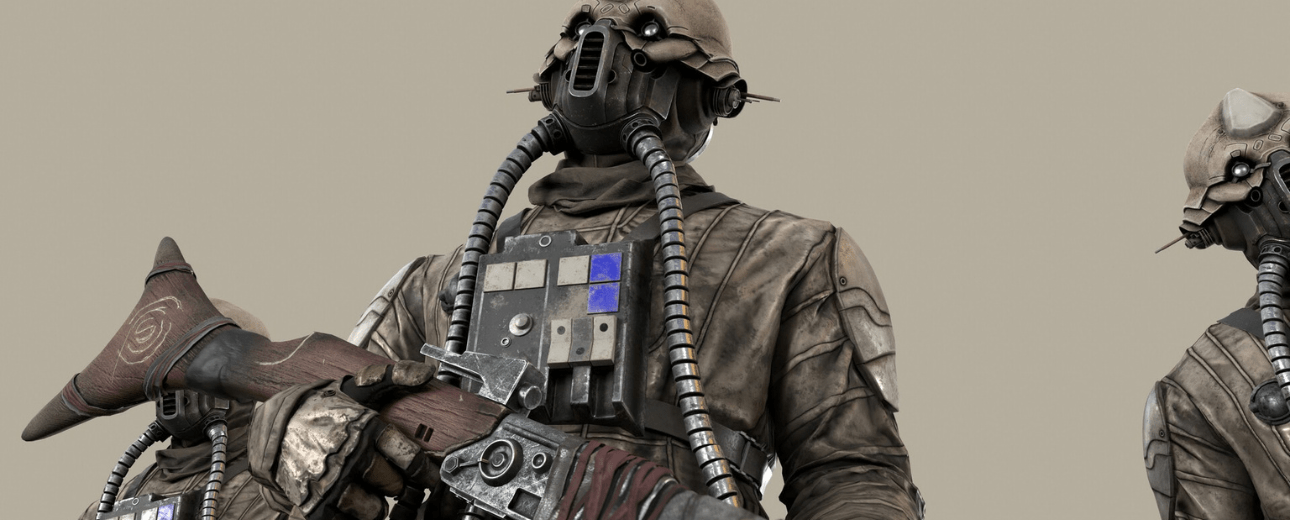
If you’ve ever watched Rogue One: A Star Wars Story and found yourself drawn to the masked, intimidating figure lurking in the background of Saw Gerrera’s rebel cell, you’ve already crossed paths with one of the galaxy’s most fascinating and underappreciated characters. Benthic Two Tubes — yes, that’s actually his name, and yes, it’s as cool as it sounds — is a character who barely gets a handful of lines across his appearances, yet somehow manages to leave an impression that sticks with you long after the credits roll. He’s the kind of character that serious Star Wars fans obsess over, digging through Wookieepedia at 2 AM trying to piece together every scrap of lore. And honestly? We’re right there with you.
This complete guide is everything you’ve ever wanted to know about Benthic Two Tubes: his species, his backstory, his role in the Partisan movement, his relationship with Saw Gerrera and Cassian Andor, and why he deserves way more love than the mainstream Star Wars conversation typically gives him. Buckle up, because we’re going deep into the lore.
Who Is Benthic Two Tubes? A First Look at the Partisan Rebel
Before we dive headfirst into the weeds of Benthic’s lore, let’s set the stage for anyone who might be coming to this article fresh. Star Wars is an enormous universe with thousands of named characters, and not everyone can keep track of every masked alien with a cool nickname. So let’s do a quick introduction for the uninitiated — and even the seasoned fans might pick up a few things they didn’t know.
Benthic, known by the unforgettable nickname “Two Tubes,” is a Tognath male who appears in Rogue One: A Star Wars Story (2016) and in the Disney+ prequel series Andor (2022). He is a hardened rebel fighter and a loyal member of Saw Gerrera’s Partisans, the extremist splinter faction of the Rebel Alliance known for their brutal, no-holds-barred approach to fighting the Galactic Empire. With his distinctive dual breathing tubes, his unsettling dark eyes, and his reputation for violence and fanatical devotion to the cause, Benthic is exactly the kind of character who reminds you that the galaxy far, far away is not always a clean-cut story about heroes in white armor.
What makes Benthic so compelling isn’t just his visual design — although let’s be real, the Tognath look is absolutely striking. It’s the layers of tragedy, loyalty, and moral ambiguity packed into a character who rarely gets more than a few minutes of screen time. He’s a rebel, yes, but he’s also a true believer in a cause that has pushed him far past the point of conventional heroism. He’s a survivor in every sense of the word, shaped by loss and hardened by war. And in the broader tapestry of the Star Wars universe, he represents something important: the idea that the Rebellion wasn’t a monolith, and that fighting the Empire sometimes meant becoming something terrifying yourself.
The Name “Two Tubes” — What Does It Actually Mean?
One of the first questions new fans ask when they encounter this character is simple: why is he called “Two Tubes”? The answer is both literal and deeply rooted in the biology of his species. As a Tognath, Benthic requires a special respiratory apparatus to breathe in standard atmospheric conditions. Tognath evolved on Yar Togna, a planet with a nitrogen-rich atmosphere quite different from the oxygen-heavy air found on most habitable worlds in the galaxy. As a result, Tognath who travel off-world must wear a breathing mask with dual intake tubes — hence the nickname “Two Tubes.”
But it’s worth noting that he isn’t the only Tognath fighter in Saw Gerrera’s crew. His brother, Edrio, is also known as “Two Tubes” — both brothers share the same nickname because they both sport the same distinctive breathing apparatus. This can cause a bit of confusion for new fans, but once you understand that both brothers are part of the same unit and are virtually inseparable in their devotion to the Partisan cause, it starts to make a kind of poetic sense. They are two halves of the same fist, both shaped by the same rage and the same grief.
The nickname itself also carries a subtle symbolism that fits perfectly into the gritty, unglamorous world of the Partisans. Unlike the more polished members of the Alliance who go by heroic call signs or rank titles, Benthic is identified by something as mundane and functional as the tubes that help him breathe. It’s a reminder that for characters like him, survival is never taken for granted. There’s no poetry to it, no glory — just the raw biological need to keep breathing in a galaxy that would rather see you dead.
Benthic vs. Edrio: Telling the Two Tubes Apart
This is a question that trips up a lot of fans, even dedicated ones. Both Benthic and Edrio are Tognath, both wear the characteristic dual breathing tubes, and both appear in Rogue One. So how do you tell them apart?
The clearest distinction between the two brothers is their skin pigmentation. Benthic has notably darker, more mottled skin compared to his brother Edrio, who has a somewhat lighter complexion. In terms of screen time, Benthic tends to appear more prominently in certain scenes, particularly in Andor, while Edrio gets a moment that many fans associate with the destruction of Jedha City. In terms of personality and role, both brothers are fiercely devoted to Saw Gerrera and his cause, but Benthic is generally portrayed as slightly more calculating and controlled — at least relatively speaking within the context of the Partisans.
In the wider Star Wars fan community, there’s often good-natured debate about which brother is which in various scenes from Rogue One, especially in the background crowd shots in Saw’s base on Jedha. The important thing to remember is that both characters are distinct individuals with their own history and motivations, even if the films don’t always make that crystal clear. The expanded lore — comics, novels, reference books — does a much better job of differentiating them and giving each brother his own voice.
The Tognath Species: Understanding Benthic’s Biology and Culture
To truly understand Benthic Two Tubes, you have to understand where he comes from. His personality, his physiology, and his outlook on life are all deeply shaped by being a Tognath — a species that most casual Star Wars fans might not know much about but which is absolutely fascinating once you start digging in.
The Tognath are an insectoid-mammalian hybrid species, which already puts them in fairly exotic territory even by the standards of a galaxy teeming with bizarre and wonderful alien life. They evolved on the planet Yar Togna, which sits in the Outer Rim Territories — that vast, lawless expanse of space far from the gleaming centers of galactic civilization. The Outer Rim is a place of extremes, of poverty and violence and beautiful, terrible isolation, and it shaped the Tognath into a people who are physically and psychologically tough in ways that core world species simply aren’t.
Tognath Physiology: Built for Harsh Conditions
The most immediately recognizable feature of the Tognath is, of course, their breathing apparatus. Their natural atmosphere — the thick, nitrogen-rich air of Yar Togna — is toxic to most other species, and in return, standard galactic atmospheric mixes require supplementary equipment for Tognath to breathe comfortably for extended periods. This isn’t merely a cosmetic quirk; it’s a constant, daily reminder of their outsider status in the wider galaxy. Every time a Tognath like Benthic adjusts those tubes or draws a breath through that mask, it’s a subtle signal: I do not belong to your world. I am here on my own terms.
Beyond their respiratory needs, Tognath are described as being physically resilient and formidable in combat. Their insectoid features — multi-faceted eyes, a somewhat chitinous skin texture, a lean and wiry build that masks considerable strength — make them well-suited for the kind of brutal, close-quarters fighting that defines life in the Partisans. Benthic is not a character who fights at a distance if he can help it; he’s the kind of soldier who gets in close and makes it personal. His biology and his upbringing both point in the same direction: toward a warrior who is hard to kill and harder to intimidate.
The Tognath didn’t develop these traits by accident. Life on Yar Togna demanded resilience. Their world, their atmosphere, their entire evolutionary history pushed them toward toughness as a baseline — not as an achievement, but as a prerequisite. This is why Benthic doesn’t crumble under the weight of repeated loss and prolonged war. He’s not simply a hardened individual. He belongs to a species that hardness is bred into at the cellular level. Understanding that gives his stubbornness, his refusal to compromise, his absolute commitment to the cause a biological dimension that purely cultural explanations don’t fully capture.
Yar Togna: The Homeworld Lost to the Empire
Here is where the story takes a turn from biology into tragedy, and where Benthic’s backstory snaps into sharp, painful focus. Yar Togna wasn’t just taken over by the Empire — it was occupied and subjugated, its people brutalized and its resources stripped away in the Empire’s relentless drive for expansion and control. For Benthic and his brother Edrio, this wasn’t an abstract political grievance. This was their home. Their people. Their entire world, crushed under the boot of Imperial power.
This is what drives them. This is what made them seek out Saw Gerrera and his Partisans rather than the more moderate, cautious leadership of the official Rebel Alliance. When you’ve seen your homeworld occupied, when you’ve watched your people suffer under Imperial rule, the idea of fighting with measured restraint and carefully calculated strategy can feel like a luxury — or worse, like cowardice. Benthic didn’t join the rebellion to negotiate. He joined to fight, and he found a home among people who felt exactly the same way.
What makes the Yar Togna backstory so powerful is how precisely it mirrors the experiences of dozens of Outer Rim worlds depicted across Star Wars canon. The Empire wasn’t just a distant political entity — it was a physical, grinding presence in the lives of people like Benthic, showing up in their streets, stripping their resources, humiliating their communities, and killing anyone who resisted. By the time Benthic found Saw Gerrera, he wasn’t radicalizing — he was simply doing the only thing that made any sense after what he had been through.
The Tognath Egg-Brother Bond
One of the most interesting pieces of Tognath culture that informs Benthic’s story is the concept of egg-brothers — two Tognath who hatch from the same clutch of eggs and are raised together as a bonded pair. Benthic and Edrio are egg-brothers, and this relationship in Tognath culture goes far deeper than what humans would typically think of as a brotherly bond. It’s closer to a lifelong partnership of profound mutual loyalty and identity. To lose an egg-brother would be to lose a fundamental piece of yourself.
This cultural context adds enormous weight to the brothers’ shared devotion to Saw Gerrera’s cause and to each other. They fight together, they believe together, and they rage against the Empire together. Their bond is one of the quiet emotional cores of their story, even if the films never spell it out explicitly. Understanding it makes Benthic not just a cool masked alien in the background, but a fully realized person with deep attachments and a very human — or rather, very Tognath — capacity for love and loyalty.
For fans who want to understand Benthic at the deepest possible level, the egg-brother dynamic is essential reading. It reframes everything about his behavior in the films and series. His intensity, his protectiveness, his absolute refusal to abandon the cause — all of these traits look different when you understand that he isn’t just fighting for an abstraction. He is fighting alongside and for the one person in the galaxy who shares his origin, his grief, and his bone-deep commitment to making the Empire answer for what it did to Yar Togna.
Saw Gerrera’s Partisans: The Movement That Made Benthic
You cannot talk about Benthic Two Tubes without spending serious time on Saw Gerrera and the Partisans, because Saw is the gravity well around which Benthic’s entire adult life orbits. Understanding Saw means understanding why Benthic fights the way he does and why, by the time we meet him in Rogue One, he has become the hardened, dangerous figure we see on screen.
Saw Gerrera is one of Star Wars’ most tragically compelling characters — a man who was once a legitimate hero of the Clone Wars, fighting Imperial occupation on his homeworld of Onderon with the guidance of the Jedi and the support of the nascent Rebel Alliance, and who gradually descended into extremism as decades of unrelenting war wore away everything soft and compromising in him. By the time of Rogue One, Saw has been abandoned by the official Rebel Alliance, who considers him too dangerous and unpredictable to associate with. He operates his own splinter cell, the Partisans, out of a base hidden in the ancient holy city of Jedha.
What Made the Partisans Different From the Alliance
The Rebel Alliance, for all its heroism, had rules. It had a chain of command, a code of conduct, and a pragmatic interest in maintaining the kind of moral credibility that could win civilian hearts and minds. The Partisans had none of that. Saw’s crew fought dirty because they believed dirty fighting was the only kind that worked against an enemy as powerful as the Empire. Torture, assassination, sabotage, attacks that the Alliance would consider too risky or too brutal — these were all tools in the Partisan arsenal.
For someone like Benthic, who had already lost everything to the Empire and had no patience left for half-measures, this was the right place to be. The Partisans didn’t ask him to hold back. They didn’t ask him to wait for the right political moment or to consider the optics of a particular operation. They just pointed at the enemy and said: fight. And Benthic fought. He threw himself into the Partisan cause with the kind of total commitment that only comes from someone who has already lost what mattered most and has decided that the only thing left worth having is revenge — or at least justice, depending on how generous you’re feeling.
What separates the Partisans most clearly from the Alliance isn’t tactics alone — it’s philosophy. The Alliance believed that how you fought mattered as much as whether you won. The Partisans believed that winning was the only thing that mattered, and that any other consideration was a form of privilege that people who had suffered as much as they had could not afford. Both positions have a certain internal logic. The tragedy of Saw’s movement — and of Benthic’s place within it — is that the Partisan philosophy, taken to its limit, risks creating something that looks uncomfortably like the thing it set out to destroy.
Jedha: The Partisan Base of Operations
By the time of Rogue One, the Partisans are based in Jedha City on the moon of Jedha, a holy site for the Church of the Force and a center of Kyber crystal extraction — which, of course, made it a prime target for Imperial interest. The Empire had already set up a significant presence on Jedha to strip-mine the Kyber crystals it needed to power the Death Star’s superlaser. This made Jedha a constant battleground, with Partisan fighters launching regular guerrilla attacks against Imperial patrols in the narrow streets of the ancient city.
This is the environment where we really see Benthic in his element. He’s a guerrilla fighter through and through — quick, brutal, effective in the chaos of urban combat. Jedha City, with its labyrinthine alleys and its crowds of pilgrims and refugees, is the perfect hunting ground for someone with Benthic’s skills and temperament. He knows every corner, every shadow, every line of retreat. And he has the cold-eyed determination to use all of it.
Jedha City under Imperial occupation is a place of profound tension — sacred ground turned into a mining operation, ancient streets turned into patrol routes, a community of faith turned into a population of suspects. For Benthic, operating in this environment isn’t just a military assignment. It’s a mirror of everything the Empire has done to every world he’s cared about. He sees Yar Togna reflected in Jedha’s streets every time he moves through them, and it keeps the fire burning in a way that no amount of time or tactical calculation could extinguish.
Benthic’s Role Within the Partisans
Within Saw’s organization, Benthic functions as a senior fighter and enforcer — someone who has been with the cause long enough to have earned a position of trust and authority within the group’s internal hierarchy. He’s not just a rank-and-file soldier. He’s someone Saw relies on for the harder, more dangerous operations, and someone who commands respect from the other fighters in the cell.
This is reflected in how he’s portrayed in the films. Benthic isn’t hovering nervously in the background during tense confrontations — he’s front and center, calm in the way that only someone who has been in genuine danger so many times that it no longer registers as remarkable can be calm. When Saw interrogates Jyn Erso’s contact Bodhi Rook, when the Partisans capture a suspected Imperial agent, it’s fighters like Benthic who are handling the rough work. He’s the one you call when the situation calls for someone who won’t blink.
Within the Partisans, authority isn’t given — it’s earned through endurance. The cell operates in conditions where most fighters don’t survive long enough to accumulate the kind of experience Benthic has. Every year he’s still alive and still fighting is a demonstration of competence that carries more weight than any rank or title. His position within the group is therefore both a reward and a burden: he’s been entrusted with the hardest tasks precisely because he’s proven he can handle them, and that means the hardest tasks never stop coming.
Benthic Two Tubes in Rogue One: Every Scene, Analyzed
Rogue One: A Star Wars Story is the movie that introduced most fans to Benthic Two Tubes, and while his screen time is limited — as is true for much of Saw’s extended cast — every appearance is worth examining closely. This is a film where the background detail matters enormously, where a single masked face in a crowd can open up into an entire story if you know where to look.
Rogue One rewards fans who pay attention to the edges of the frame. The world it builds is dense and layered, populated with characters who have entire histories compressed into a single expression or a specific way of holding a weapon. Benthic is the perfect example of this kind of filmmaking — a character who communicates volumes without ever being the center of the scene, simply by being present in exactly the right way.
The First Appearance: Jedha City
Benthic’s most memorable appearance in Rogue One comes during the chaotic sequence in Jedha City, where Cassian Andor and Jyn Erso find themselves caught in the middle of a Partisan ambush on an Imperial patrol. This sequence is one of the film’s highlights — a beautifully choreographed piece of urban chaos that manages to simultaneously convey the brutality of the Partisan approach and the desperate, precarious nature of the rebellion in general.
Benthic is visible in this sequence as one of the lead fighters, coordinating the ambush and engaging Imperial forces directly. Watch his movements and you’ll see someone who is operating with practiced efficiency — this is not the first ambush he’s run, not by a long stretch. He moves through the chaos with a kind of terrible grace, and there’s something almost frightening about how composed he is in the middle of a firefight. This is a man who has made peace with violence, who has integrated it so thoroughly into his identity that it no longer disrupts his equilibrium.
Because Benthic’s face is largely concealed by his breathing apparatus, Alistair Petrie’s performance in this sequence lives entirely in physicality — in posture, movement, the angle of his head, the speed and deliberateness of his actions. What you see is a fighter who is entirely present in the moment, processing information and acting on it without hesitation or visible emotion. This is not someone who fights in a state of rage; this is someone who has converted rage into something colder and more sustainable. Watching him is watching what happens when a person is so thoroughly committed to something that the emotional noise has burned away and only the action remains.
Saw’s Base: The Interrogation and the Meeting With Jyn
In the scenes set in Saw Gerrera’s underground base, Benthic appears among the assembled Partisans as Jyn Erso is brought before their leader. These scenes are crucial for establishing the atmosphere of the Partisan cell — the mixture of fanatical devotion, barely controlled anger, and genuine conviction that defines this group of fighters. Benthic in these scenes is watchful, present, and clearly authoritative. When Saw speaks, Benthic listens with the focused attention of a senior lieutenant taking in orders.
What’s interesting about Benthic in these scenes is the way he looks at Jyn — with suspicion, but also with something that might be assessment. He’s sizing her up, trying to determine if she’s a threat or an asset. For someone who has survived as long as Benthic has in the Partisan cause, reading people accurately is a survival skill, and you can see him exercising it in every glance and every moment of held attention. New people in the base are always potential liabilities until proven otherwise, and Benthic isn’t the kind of person who extends trust on the basis of good feelings.
Saw’s underground compound on Jedha is one of the most atmospheric locations in all of Rogue One — a maze of ancient stone passages, dim lighting, strange mechanical sounds, and the ever-present sense that everyone inside is living on borrowed time. The Partisans who inhabit it have the look of people who have made peace with the possibility that any given day might be their last. Benthic fits into this environment perfectly. He doesn’t look out of place the way Jyn does. He looks like part of the architecture — something that has been there a long time and has no intention of going anywhere.
The Destruction of Jedha City: Tragedy and Loss
The destruction of Jedha City by the Death Star’s superlaser — used in a limited test of the weapon’s power — is one of Rogue One’s most devastating moments and a key turning point in the story. Many of Saw’s Partisans die in this catastrophe, and it represents not just a physical loss but a symbolic one: the obliteration of a holy site, a center of culture and history, wiped from the face of the galaxy in an instant.
For Benthic, this event carries enormous personal weight. Jedha was not just a base of operations — it was a home, a community, a place where the Partisans had built something resembling a life in the middle of their perpetual war. The people of Jedha were people Benthic knew, perhaps even cared about in the way that soldiers in the field form attachments to the civilian populations they’re ostensibly protecting. Losing Jedha to the Death Star’s weapon is the kind of loss that hardens a person further, strips away whatever remaining softness might have been left and replaces it with something colder and more implacable.
It’s entirely possible that some of Benthic’s most extreme moments — his willingness to commit acts of violence that the official Alliance would never sanction — become more understandable when viewed through the lens of this accumulated loss. He has been losing things to the Empire for his entire adult life. At some point, the losses stop being individual wounds and become a single defining scar. At some point, you stop grieving each new destruction and simply incorporate it into the continuous, ongoing fact of who you are and what you are fighting for.
Benthic Two Tubes in Andor: A Whole New Dimension
If Rogue One gave us a glimpse of Benthic Two Tubes, the Disney+ series Andor gave us something much closer to a full portrait. The series, set approximately five years before the events of Rogue One, follows Cassian Andor in the years before he becomes the spy and soldier we meet at the beginning of that film. And crucially, it brings us back into contact with Saw Gerrera’s world — and with Benthic — in a way that adds remarkable depth to everything we thought we knew.
Andor is, across the board, one of the most mature and thoughtful pieces of Star Wars storytelling ever produced. It treats its characters as fully human — or fully whatever species they happen to be — rather than as archetypes, and it takes the political and emotional dimensions of life under the Empire and rebellion against it with a seriousness that the franchise doesn’t always achieve. Benthic benefits enormously from this approach. Where Rogue One showed us what he does, Andor begins to show us who he is.
Season One: Benthic’s Introduction in Andor
In Andor Season One, Benthic appears as an established and trusted member of Saw Gerrera’s inner circle. His relationship with Saw is portrayed not just as a military one — soldier and commander — but as something deeper: a bond forged in years of shared struggle, shared loss, and shared conviction. Benthic believes in Saw not just because Saw is an effective leader, but because Saw is one of the only people in the galaxy who has never asked Benthic to temper his rage or make peace with compromise.
The series gives us a chance to see Benthic in quieter moments, and what’s fascinating is how those quiet moments reveal the full complexity of who he is. He’s not simply a killing machine or a fanatic. He’s a man with a history, with opinions, with a specific way of looking at the galaxy that is both entirely understandable given what he’s been through and genuinely frightening in its implications. He is not wrong that the Empire is evil. He is not wrong that half-measures have failed. But the path he’s on leads somewhere dark, and the series is honest about that without ever demonizing him.
Some of the most important work Andor does for Benthic’s character happens not in action sequences but in the spaces between them. The way he occupies a room. The way he listens to Saw speak. The way he watches strangers who enter the Partisan circle. These small, quiet moments accumulate into something much larger than any single scene could provide — a portrait of a man who is completely present in every moment because he’s learned, through long and painful experience, that the moments when you let your attention slip are the moments that get you killed.
The Relationship Between Benthic and Cassian Andor
One of the most compelling dynamics that Andor develops is the complex, tension-filled relationship between Benthicand Cassian Andor. These are two men who exist in overlapping but distinct corners of the rebellion, and their interactions are charged with the kind of mutual wariness that exists between people who respect each other’s effectiveness but aren’t sure they trust each other’s judgment.
Cassian, by the time of Andor, is a pragmatic intelligence operative who works for the official Rebel Alliance. He’s not squeamish about violence — he’s capable of ruthless acts when the mission demands it — but he operates within a framework of strategic calculation that is fundamentally different from Benthic’s pure-conviction approach. Where Cassian asks “will this work?”, Benthic asks “is this right?” — and the answers to those questions don’t always align.
Their relationship in the series is never warm, but it’s never simply hostile either. There’s a kind of professional acknowledgment between them, a recognition that they’re both in the same war even if they’re fighting it differently. And as the series progresses and Cassian is gradually radicalized by what he sees and experiences, you can see him beginning to understand — if not agree with — the path that Benthic has chosen. The gap between them narrows as Cassian’s worldview darkens, and that narrowing is one of the most quietly disturbing things in the entire series.
Benthic’s Role in the Partisan Operations Depicted in Andor
Throughout Andor, we see Benthic involved in the day-to-day operational realities of the Partisan cell in ways that flesh out his role considerably beyond what Rogue One showed us. He’s involved in planning, in recruiting, in the delicate and dangerous work of maintaining a covert resistance operation against an enemy with vastly superior resources. These scenes show us a Benthic who is not just a fighter but a strategist, a man whose years of experience have given him a deep and hard-won understanding of how asymmetric warfare actually works.
He’s also shown as someone who takes the moral dimensions of the cause seriously, even if his moral framework has been bent and shaped by years of war into something that looks quite different from conventional ethics. Benthic doesn’t kill carelessly or enjoy violence for its own sake. He kills purposefully, in service of an objective he genuinely believes in. That conviction is what separates him from a simple mercenary or a thug, and it’s what makes him such an interesting and morally complex figure.
What Andor adds to our understanding of Benthic that Rogue One couldn’t fully convey is a sense of his tactical intelligence. He’s not a blunt instrument. He thinks. He plans. He assesses risk with the cold precision of someone who has run enough operations to know exactly where things go wrong and how to prevent it. The fighting ability is real and formidable, but it rests on a foundation of hard-won knowledge that makes him far more dangerous than his surface presentation might suggest.
The Actor Behind the Tubes: Who Plays Benthic Two Tubes?
Behind every iconic Star Wars character is a performer bringing them to life, and Benthic Two Tubes is no exception. The character is portrayed by Alistair Petrie, a British actor with a distinguished career in film and television who brings remarkable physicality and presence to a role that requires working behind extensive prosthetics and a breathing apparatus that covers much of his face.
Alistair Petrie is perhaps best known to UK audiences for his work in Fleabag, where he plays a very different kind of character — a somewhat pompous academic who is precisely the kind of person you’d never imagine in a Star Wars firefight. The contrast is delightful and a testament to Petrie’s range as an actor. He also appeared in The Night Manager and numerous other high-profile productions before joining the Star Wars universe.
Acting Without a Face: The Challenge of Playing Benthic
What’s impressive about Petrie’s performance as Benthic is how much emotion and intention he conveys through movement and body language when his face is almost entirely obscured. This is a skill that many Star Wars actors have had to develop — Anthony Daniels in C-3PO’s golden casing, the various performers who have played Darth Vader in the suit, David Prowse and others — and Petrie handles it with considerable skill. When Benthic stands in the background of a scene, you always know what he’s feeling. When he moves, you know his intent. That’s not a small achievement.
Petrie has talked in interviews about the physical work required to inhabit Benthic convincingly — the way the costume shapes your movement, the way breathing through the apparatus changes your physical relationship to the space around you. The result is a character who feels genuinely alien in his physicality, not just in his appearance. The way Benthic stands is not the way a human being stands. The way he moves is not the way a human being moves. That difference, subtle as it is, does enormous work in making him feel like something genuinely other in a universe populated by beings from worlds nothing like our own. Petrie’s performance is one of the quiet gems of the Rogue One and Andor casts — recognized by fans who know what to look for even if it never gets the headlines it deserves.
From Fleabag to the Partisans: Alistair Petrie’s Career
Alistair Petrie’s path to Benthic Two Tubes is a genuinely interesting one. He built his career across a wide range of British film and television, developing a reputation as a character actor of considerable depth and versatility. His work in Fleabag as the pompous but oddly sympathetic academic gave him a profile that, while not exactly Star Wars-adjacent in tone, demonstrated exactly the kind of nuanced physical and emotional intelligence that Benthic’s wordless performance requires.
He has appeared alongside some of British television’s most respected talent, and his transition to a major blockbuster franchise role requiring full prosthetics and a breathing apparatus is a testament to both his professionalism and his ability to commit completely to a physical transformation. Fans who discover Petrie through Star Wars and go back to watch his other work are routinely delighted by how different he is in each role — and how much of himself he manages to bring to characters who, on the surface, could hardly seem more different from one another.
Benthic Two Tubes and the Moral Philosophy of the Partisans
One of the reasons that Benthic Two Tubes resonates so strongly with dedicated Star Wars fans is that he embodies one of the most genuinely difficult moral questions the franchise has ever engaged with seriously: how far is too far when you’re fighting a system as brutally evil as the Galactic Empire?
The official Rebel Alliance’s answer to this question — at least in the films — tends to be fairly clean. There are things you don’t do, lines you don’t cross, even against an enemy that has built a weapon capable of destroying entire planets. Princess Leia, Mon Mothma, Admiral Ackbar — these are people who believe in fighting the Empire without becoming the Empire. The line between heroism and villainy, in their worldview, depends on adhering to a moral code even under the most extreme pressure.
Saw Gerrera and his Partisans — and by extension, Benthic — reject this framework, or at least are deeply skeptical of it. Their argument, never fully articulated in the films but running as a constant undercurrent through everything they do, is something like this: the Empire does not fight fair, the Empire does not fight clean, and if you insist on fighting fair and clean against an enemy with no such scruples, you will lose. Not just lose tactically, but lose in the sense of watching everyone and everything you care about be destroyed while you maintain your moral purity.
The Tragic Logic of Extremism
What makes Benthic’s position so tragically compelling is that it is not illogical. He has been through things that the leadership of the Rebel Alliance, sitting in their command centers and their senatorial chambers, has largely been insulated from. He has watched his homeworld be destroyed, his people suffer, his community annihilated. He has been fighting this war not for years but for what is essentially his entire adult life. The rage that drives him is not irrational — it is the entirely predictable result of what the Empire has done to him and to his world.
Andor is careful to show that the Partisan approach has its own costs, its own distortions, its own ways of eating away at the humanity of the people who adopt it. The more you commit to the idea that the ends justify the means, the harder it becomes to remember what the ends actually were. You started fighting the Empire to free your people. But somewhere along the way, the fighting became the point, and the freedom became an abstraction. This is the trap that Saw has fallen into, and that Benthic is dangerously close to.
The genius of both Rogue One and Andor is that neither film nor series fully resolves this moral tension. Benthic is not proven wrong by the narrative. The Partisans’ methods are brutal, yes, and they come at a real cost — but the films never show us a world where the Alliance’s principled restraint would have achieved the same results. The question is left genuinely open, because it’s genuinely open — in the Star Wars universe and, by implication, in any real-world analogue you care to name.
Benthic as a Mirror for Cassian Andor’s Journey
Part of what makes Andor so brilliant is the way it uses characters like Benthic as mirrors that illuminate Cassian’s own journey. Cassian begins the series as a self-interested survivor, not really committed to any cause. He ends it — and continues into Rogue One — as a fully committed rebel who is willing to die for something larger than himself. The path he walks is one of gradual radicalization, of being confronted with the reality of Imperial evil in ways that make neutrality impossible.
Benthic represents one possible endpoint of that path: what you become when the commitment is total and the losses are catastrophic. He is a warning and a mirror simultaneously. Watching Cassian navigate his relationship with Benthic and the Partisans, you’re watching him grapple with the question of whether his own path will eventually lead to the same place — and deciding, implicitly, that there has to be a way to fight just as hard without losing yourself entirely.
The space between Cassian and Benthic in the narrative is precisely the space that Star Wars occupies as a moral universe — a universe that insists, against considerable evidence, that how you fight matters as much as whether you win. Benthic is the argument against that insistence, made flesh. His very existence in the story forces both Cassian and the audience to confront the question directly rather than dismissing it as naive or academic.
Benthic Two Tubes in Star Wars Comics and Expanded Media
The canon expanded media — comics, novels, reference books — has been considerably more generous to Benthic Two Tubes than the films alone could be, given the constraints of screen time. If you want the full picture of who Benthic is and where he comes from, these sources are absolutely essential. With a character like Benthic, who gets limited screen time across his appearances, the expanded media does the heavy lifting of characterization that visual storytelling simply doesn’t have time for. The comics, the visual guides, the companion materials together create a portrait that is considerably richer and more nuanced than anything the films alone could provide.
Marvel Comics: Saw Gerrera’s Story
Several issues of the Star Wars Marvel Comics line have explored the world of Saw Gerrera and his Partisans in the period leading up to Rogue One, and Benthic appears in a number of these as a significant presence within Saw’s organization. These comics are wonderful for fans who want to see Benthic in action beyond what the films show — running operations, interacting with other Partisan fighters, and navigating the brutal day-to-day reality of life as a guerrilla fighter in the shadows of the Empire.
The comics also do valuable work in fleshing out the relationship between Benthic and his brother Edrio, giving both brothers more distinct personalities and histories than the films alone could manage. Reading them alongside the films and Andor creates a much richer picture of the Tognath egg-brothers and their place in the Partisan cause. If you’ve only experienced these characters through the screen, the comics will genuinely surprise you with how much more there is to their story.
Rogue One: The Ultimate Visual Guide
For anyone who wants the hard facts — species information, physical descriptions, key relationships, timeline of events — the Rogue One: The Ultimate Visual Guide by Pablo Hidalgo is an essential reference. This is the book that pins down many of the details about Benthic’s Tognath heritage, his relationship with Edrio, and his role within Saw’s organization that the film itself leaves implicit rather than explicit.
Hidalgo’s Visual Guide is a masterclass in Star Wars worldbuilding, managing to pack enormous amounts of information into a format that remains readable and engaging rather than devolving into dry data. For Benthic specifically, it provides the foundation of everything we know about his species and his backstory, and it’s well worth tracking down for serious fans. The level of detail it brings to even the most background characters is remarkable, and it reflects a creative philosophy of treating every person in the Star Wars universe as a full individual with their own story.
The Star Wars: Andor Companion Materials
With the arrival of Andor, a new generation of companion materials has expanded the lore further. The Andor companion materials — including the show bible materials that have been discussed by the creative team in interviews — deepen our understanding of how Benthic fits into the broader Partisan mythology and how he relates to the other characters who appear in that series.
These materials confirm and expand on the details of Benthic’s relationship with Cassian, his role in Saw’s hierarchy, and his personal history in ways that reward close reading and re-watching of the series. They’re also a testament to the remarkable care and attention to detail that the Andor creative team brought to their portrayal of this corner of the Star Wars universe. Tony Gilroy and his writers didn’t just make a show — they built a world, and the companion materials are where you can see the full extent of the architecture.
Why Benthic Two Tubes Deserves More Fan Recognition
Here’s the part of the article where we get on our soapbox for a moment, because we genuinely feel strongly about this: Benthic Two Tubes is one of the most underrated characters in the current Star Wars canon, and the fact that he doesn’t get the same kind of passionate fan following as some of the franchise’s other deep-cut favorites is a genuine shame.
Think about the characters who have achieved cult status in the Star Wars fan community. Boba Fett — iconic, but let’s be honest, he had relatively little screen time in the original trilogy and his mystique was largely a product of imagination rather than on-screen development. Darth Maul — terrifying, visually stunning, but killed off before he could really be explored. Ahsoka Tano — now a fan favorite and the star of her own series, but she started as a character that a lot of fans were initially skeptical about. Benthic has all the ingredients for this kind of cult status: a striking visual design, a rich backstory rooted in tragedy and conviction, a moral complexity that rewards serious engagement, and connections to some of the most beloved parts of the current Star Wars canon.
The Breathing Apparatus as Iconic Design
Part of what should be driving Benthic’s fan recognition but somehow hasn’t fully broken through yet is his visual design, which is frankly extraordinary. The dual breathing tubes are instantly recognizable and genuinely distinctive in a franchise not short of memorable alien designs. When you see those tubes, you know exactly who you’re looking at. That kind of immediate visual recognition is valuable in a universe with thousands of alien species, and the Tognath look achieves it effortlessly.
The design also does something clever: it makes Benthic visually alien and slightly unsettling without making him monstrous or cartoonish. He looks like someone who has been shaped by harsh circumstances into something hard and dangerous, and his appearance reflects that. The breathing tubes are functional, not decorative. Everything about his visual presentation says: this is a being defined by survival, not by aesthetics. That’s powerful character design, and it’s the kind of design that holds up across repeated viewings because it has genuine meaning behind it.
The Egg-Brother Dynamic That Deserves Its Own Story
We’ve talked about the egg-brother bond between Benthic and Edrio, and we’ll say it again here: this relationship deserves its own story. The idea of two brothers, bonded by a cultural and biological connection that goes deeper than human fraternalism, fighting side by side for a cause born from the loss of their homeland — that’s a story with enormous emotional potential.
A Disney+ short, a comic miniseries, a novel — any format would work. The bones of a genuinely moving and complex story are already there in the existing canon. It just needs someone to tell it. The origin story — Yar Togna before the occupation, the arrival of Imperial forces, the choice to flee and fight rather than submit — would be among the most emotionally devastating origin stories in Star Wars lore if told well. And given the creative standard that Andor has set for this corner of the universe, there’s every reason to believe it could be told very well indeed.
Benthic Two Tubes and the Larger Tapestry of Outer Rim Rebels
One of the things that Andor in particular does so brilliantly is situate characters like Benthic Two Tubes within the broader ecosystem of resistance that existed across the Outer Rim during the height of the Empire’s power. The galaxy was not simply divided between the Empire and the Rebel Alliance, with everyone else caught in the middle. It was a far more complex landscape of local resistance movements, criminal organizations that doubled as cover for rebel activity, planetary liberation cells with no formal connection to the Alliance, and extremist groups like the Partisans who operated completely outside any official rebel structure.
Benthic is a product of this messy, complicated reality. He didn’t choose to become part of an officially sanctioned resistance movement. He chose to fight, and he found Saw Gerrera, a man who was already operating outside the lines before those lines were even clearly drawn. This places Benthic in a fascinating position within Star Wars lore: he is neither hero nor villain in any simple sense, but something more interesting and more true — a freedom fighter shaped by the specific circumstances of his existence in the Outer Rim, far from the corridors of power where the Alliance’s strategic decisions were made.
The Outer Rim as a Character
The Outer Rim Territories are far more than a geographic designation in Star Wars — they are an ethos, a condition of existence that shapes everyone who lives there. Outer Rim worlds tend to be resource-poor or resource-exploited, poorly governed or actively oppressed, distant from the protections and privileges of core world civilization. The people who grow up in the Outer Rim learn early that no one is coming to save them, that they have to rely on themselves and their communities, and that the institutions of galactic civilization — the Senate, the Jedi, the systems of law and order that the core worlds take for granted — are either absent or actively hostile.
Benthic’s entire psychology flows from this reality. He grew up on Yar Togna, an Outer Rim world that the Empire eventually occupied and stripped. He found Saw Gerrera, a man from the Outer Rim world of Onderon who had been fighting occupation since the Clone Wars. He operates out of Jedha, a small moon in the Outer Rim that the Empire is systematically desecrating. His entire life has been lived in the spaces where galactic civilization breaks down into pure power dynamics, and it has made him who he is. Understanding this context makes Benthic’s extremism not just explicable but almost inevitable — the kind of principled restraint the Alliance espouses presupposes resources, time, and political capital that Outer Rim rebels simply never had.
Benthic Among Other Iconic Outer Rim Rebels
It’s worth placing Benthic in the context of other Outer Rim rebel figures in Star Wars canon, because doing so highlights what makes him distinctive while also illuminating the common threads that run through this particular type of character. Saw Gerrera himself is the most obvious comparison — older, more broken, further along the path of extremism, but operating from the same fundamental experience of Outer Rim oppression. Enfys Nest from Solo: A Star Wars Story is another interesting parallel: a young, passionate rebel operating at the fringes of both the Alliance and the criminal underworld, willing to do things that official rebels wouldn’t sanction in order to fund the resistance. Chirrut Imwe and Baze Malbus are Jedha locals — not exactly rebels, but people whose entire world has been destroyed by Imperial occupation and who have chosen, in their own way, to push back.
Benthic fits naturally into this constellation of characters: fierce, morally complex, shaped by loss, operating in the gray areas where simple heroism is a luxury nobody can afford. What distinguishes him is the combination of his Tognath heritage, his egg-brother bond with Edrio, and his particularly close relationship with Saw — a relationship that is both more personal and more ideologically aligned than most of the other figures who pass through Saw’s orbit.
The Spiritual Dimensions of Benthic’s World: Jedha and the Force
One aspect of Benthic’s story that doesn’t always get the attention it deserves is the spiritual context in which much of it unfolds. Jedha is not just any moon — it is one of the most sacred sites in the Star Wars galaxy, a place that draws pilgrims of many different faiths centered around the Force and the legacy of the Jedi Order. The Church of the Force, the Disciples of the Whills, and numerous other Force-adjacent religious traditions all have deep roots in Jedha’s holy city and the Kyber crystals that form its most sacred resource.
For Benthic, operating out of Jedha means existing in a space that is simultaneously a military target, a criminal marketplace, and a sacred landscape. The Partisans’ base is embedded in an ancient holy city where pilgrims come to pray and seek spiritual guidance. This creates a fascinating tension that the films and series don’t always foreground but which adds considerable texture to the environment. Benthic is a pragmatist in a place built for contemplation — and the friction between those two things, never quite resolved, gives his presence in Jedha City a dimension beyond the purely tactical.
Benthic’s Relationship With Force Traditions
The expanded lore doesn’t give us a definitive answer to whether Benthic has any personal connection to the Force traditions centered on Jedha, but the question is worth sitting with. Tognath culture as described in the canonical sources doesn’t have a particularly strong Force tradition associated with it, but Benthic has spent years living and fighting on one of the most spiritually charged sites in the galaxy. That exposure to the traditions of Jedha — the Guardians of the Whills, the Church of the Force, the constant presence of Kyber crystals — would inevitably leave some kind of impression, even on a committed pragmatist.
What we can say with confidence is that the destruction of Jedha City by the Death Star is, for Benthic, not just a military and personal catastrophe but a spiritual one — the obliteration of something genuinely sacred, a place of ancient meaning wiped from existence by the Empire’s most terrible weapon. If anything could harden the already-hardened Tognath fighter even further, it would be the knowledge that the Empire is willing to destroy places of sacred significance as casually as it destroys military targets.
The Kyber Crystal Connection
The reason Jedha matters so much strategically — to the Empire, to the rebels, to Saw Gerrera — is the Kyber crystalsfound in and around the holy city. These are the same crystals that power Jedi lightsabers and, in weaponized form, the Death Star’s planet-destroying superlaser. The Empire’s strip-mining of Jedha’s Kyber deposits is both a practical operation and a kind of desecration: taking the most sacred substance in the Jedi tradition and turning it into an instrument of genocide.
For a fighter like Benthic, who has watched the Empire defile everything he cares about, the Kyber crystal operation on Jedha is just one more entry in a very long list of Imperial crimes. He fights to disrupt it not because he has particular theological feelings about Kyber crystals, but because disrupting Imperial operations is what he does — and because watching the Empire systematically destroy a holy site while the galaxy does nothing is the kind of thing that makes a person very, very angry. The Kyber crystals are not the point. The point is the Empire’s insatiable hunger to reduce everything meaningful to raw material in service of its own power.
How Benthic Two Tubes Fits Into the Larger Star Wars Timeline
For fans who like to think about Star Wars chronologically — and there are many of us — it’s worth taking a moment to precisely situate Benthic Two Tubes within the broader timeline of events in that galaxy far, far away. Understanding where Benthic’s story falls relative to other key events helps illuminate how he connects to the larger narrative arc of the Skywalker Saga and the surrounding expanded canon stories.
Benthic’s appearances in Andor are set approximately 5 BBY (Before the Battle of Yavin — the conventional dating system used in Star Wars canon, with the Battle of Yavin from A New Hope as the zero point). This places the Andor events right in the middle of the period known as the Age of the Empire, when the Galactic Empire is at or near its height of power and the Rebel Alliance is still in its early, fragile stages of formation.
The Timeline in Context: From Clone Wars to Rogue One
By 5 BBY, the Clone Wars have been over for approximately a decade and a half. The Jedi Order has been essentially destroyed — most Jedi killed in Order 66, with a handful of survivors scattered across the galaxy in hiding. The Empire has consolidated its control over most of the galaxy, with only the most remote Outer Rim territories and the most determined resistance cells still actively fighting back. The Death Star is under construction, its existence not yet known to the wider galaxy.
In this context, Saw Gerrera’s Partisans represent one of the oldest and most continuous threads of organized resistance against the Empire. While many of the Rebel Alliance’s current members are relatively recent converts to the cause, Saw has been fighting Imperial power — or its precursors in the Separatist occupation of Onderon — since the Clone Wars era. And Benthic, who joined Saw after the Imperial occupation of Yar Togna, has been part of this fight for years by the time Andor begins. By the time of Rogue One (0 BBY), Benthic has been a Partisan fighter for many years — likely close to a decade or more. He is, by any measure, a veteran, and that survival is the product of skill, adaptability, and the cold-eyed pragmatism that has characterized his entire approach to war.
What Comes After: Benthic’s Fate and the End of the War
The ultimate victory of the Rebel Alliance — the destruction of the first Death Star, the Battle of Endor, the death of the Emperor and Darth Vader — raises an interesting question for characters like Benthic. What happens to someone like him when the war is over? What does a lifetime of conflict leave you with when the enemy is finally, improbably defeated?
These questions are not answered in current canon, but they’re fascinating to contemplate. A character like Benthic isn’t built for peacetime. The Rebellion gave his rage a direction and his skills a purpose; without the Empire to fight, what does he become? Does he find a way to participate in the reconstruction of the New Republic, channeling his experience into something constructive? Does he struggle to adapt to a world that no longer needs him to be the person he became? Does he find a new conflict to commit himself to, because fighting is the only thing he’s done for so long that it’s become identity rather than just occupation? These are stories worth exploring, and given the current direction of Star Wars storytelling, there’s every reason to hope that characters like Benthic will eventually get the exploration they deserve.
Benthic Two Tubes in Star Wars Merchandise and Collectibles
For fans who want to bring Benthic Two Tubes into their collection, there’s a decent but not overwhelming selection of merchandise available. The character has appeared in the Star Wars: Legion tabletop miniatures game, which is a fantastic way to engage with him if you’re into tactical miniature gaming. The Legion sculpt captures his distinctive look quite well and makes him a visually interesting addition to any Rebel or Partisan force.
In terms of action figures, Benthic has received some attention from both Hasbro’s Black Series line and various other collectible manufacturers, though he’s never been among the highest-profile releases. Finding him at retail can require some hunting, but he’s not impossible to track down, and secondary market prices are generally reasonable compared to some of the more in-demand Star Wars figures. For fans interested in the Hot Toys or high-end collectible market, Benthic hasn’t received the same treatment as some of Rogue One’s more prominent characters, but given the renewed interest following Andor, this could certainly change.
The Collectibles Landscape: What Exists and What Should
The existing merchandise for Benthic, while not enormous, does justice to the character’s most iconic visual element — the breathing apparatus and the distinctive Tognath look translate very well into three-dimensional form. The Black Series figure in particular has been praised by fans for the quality of the sculpt and the detail of the paint application on the tubes and mask. For a character who exists primarily as a background presence in the films, having any Black Series representation at all is a mark of how strongly the design resonates with collectors and fans.
What doesn’t yet exist — and absolutely should — is a premium collectible that does full justice to Benthic’s role in Andor. A Hot Toys-style figure, or even a higher-end limited run piece, would give serious collectors a way to display a character who, thanks to the series, now has genuine narrative depth to match his striking visual identity. The commercial case for this kind of release is stronger now than it has ever been, and if Andor Season Two delivers on its promise of bringing the story full circle into the events of Rogue One, it could provide exactly the moment of renewed fan attention that pushes a premium Benthic figure into production.
How to Start Your Benthic Two Tubes Collection Today
For fans who are just getting into collecting and want to start building a Benthic-focused display, the most accessible entry point remains the Hasbro Black Series figure, which can typically be found through online retailers and at secondary market platforms like eBay at reasonable prices. Pairing it with the Saw Gerrera Black Series figure and the Andor cast members creates a genuinely impressive Partisan faction display that tells a visual story even before you get into the specifics of the characters involved.
The Star Wars: Legion miniature, while requiring painting and assembly, offers a different kind of engagement with the character — a tactical, game-focused relationship that appeals to a different corner of the fan community. For the truly dedicated, tracking down the variant appearances of Benthic-adjacent merchandise — packaging variants, international releases, convention exclusives — can become its own rewarding rabbit hole. The Star Wars collecting community is welcoming and enthusiastic, and Benthic fans in particular tend to find each other quickly.
The Future of Benthic Two Tubes in Star Wars Canon
As of the current state of Star Wars storytelling, what does the future hold for Benthic Two Tubes? This is a question that requires a bit of careful timeline navigation, because Benthic’s story is complicated by what happens in Rogue One — specifically, the destruction of Jedha and the ultimate fate of Saw Gerrera’s Partisans.
By the end of Rogue One, Saw Gerrera is dead — killed when he refuses to escape the destruction of Jedha, meeting his end on his own terms rather than allow himself to be captured or forced to flee. The Partisans as an organized fighting force are effectively broken. What happens to Benthic specifically in the aftermath of the film is not definitively established in the current canon, which leaves interesting possibilities open.
Could Benthic Appear in Future Star Wars Projects?
Given that Andor Season Two has been produced and covers the final period leading up to Rogue One, there is a strong possibility — some might say near certainty — that Benthic will appear in those final episodes as the timeline converges with the events of the film. This would be an enormously satisfying piece of character continuity, giving fans who have come to love Benthic through Andor a chance to see how the series feeds directly into the film.
Beyond Andor Season Two, the possibilities become more speculative. If the current wave of Star Wars storytelling continues to explore the Outer Rim and the early days of the Rebellion — and given the success of Andor, there’s every reason to think it will — there are stories to be told in the corner of the galaxy where Benthic has lived his life. Stories about what happens to people like him when the war they’ve dedicated themselves to finally ends. Stories about Tognath survivors trying to rebuild after Imperial occupation. Stories about the legacy of the Partisans and the complicated, messy question of what their methods ultimately contributed to the Rebellion’s victory. These are stories worth telling, and if they get told, Benthic Two Tubes should be in them.
The Expanded Universe Stories Still to Be Told
Outside of live-action appearances, the expanded universe offers rich territory for Benthic’s story to be developed further. A Marvel Comics miniseries focused specifically on the Tognath egg-brothers — their life on Yar Togna before the occupation, their escape, their first encounters with Saw Gerrera — would fill one of the most compelling gaps in current Star Wars canon. The emotional infrastructure for that story is already in place: the egg-brother bond, the lost homeworld, the radicalization through grief. It just needs a writer willing to commit to telling it with the same seriousness that Andor brought to this corner of the universe.
An audio drama or novel exploring the Partisans’ years on Jedha before the events of Rogue One would similarly be a gift to the dedicated Star Wars fan community. The setting, the characters, the moral complexity — all of it is already built. The expanded universe at its best takes these background elements and transforms them into stories that deepen and enrich the films rather than simply restating them. Benthic Two Tubes is exactly the kind of character that the expanded universe was made for.
Frequently Asked Questions About Benthic Two Tubes
If you’ve read this far, you probably already know the answers to most of these questions — but we’re including them anyway, because this is the kind of article that people bookmark and come back to when they need a quick fact check at 11 PM before an argument in the Star Wars subreddit. We’ve been there. No judgment.
Is Benthic the Same Character as Edrio Two Tubes?
No. Benthic and Edrio are two separate Tognath characters — brothers, or more specifically, egg-brothers in Tognath culture. Both are members of Saw Gerrera’s Partisans and both wear the distinctive dual breathing tubes. Benthic has darker, more mottled skin than his brother, which is the most reliable visual way to tell them apart. Both appear in Rogue One, and Benthic additionally has a significant presence in Andor. They share the nickname “Two Tubes” because both brothers require the same respiratory apparatus — not because they are the same person.
What Species Is Benthic Two Tubes?
Benthic is a Tognath, an insectoid-mammalian hybrid species native to the planet Yar Togna in the Outer Rim Territories. Tognath require breathing apparatus when in standard atmospheric conditions because their home planet has a nitrogen-rich atmosphere quite different from the oxygen-heavy air found on most habitable worlds. This explains the dual intake tubes that give both brothers their shared nickname and defines their visual identity within the Star Wars universe.
Why Did Benthic Join the Partisans Instead of the Rebel Alliance?
Benthic’s homeworld, Yar Togna, was occupied by the Galactic Empire, and this experience of Imperial subjugation drove him to seek out Saw Gerrera’s Partisans rather than the more moderate official Rebel Alliance. He wanted to fight without the constraints and compromises that the Alliance’s leadership demanded — the rules of engagement, the strategic caution, the willingness to accept losses in the short term in service of long-term political goals. For someone who had already lost everything, those constraints felt like an insult, and Saw’s uncompromising approach felt like the only honest response to what the Empire had done.
Who Plays Benthic Two Tubes?
Benthic is portrayed by Alistair Petrie, a British actor known for his work in Fleabag, The Night Manager, and numerous other film and television productions. Petrie’s performance is particularly notable for the physicality and intentionality he brings to a role that requires communicating almost entirely through movement, with his face largely concealed behind prosthetics and the breathing apparatus.
Does Benthic Survive the Events of Rogue One?
The fate of Benthic after the events of Rogue One is not definitively established in current Star Wars canon. The destruction of Jedha and the death of Saw Gerrera left the Partisans effectively broken as an organization, but whether Benthic himself survived these events is not explicitly addressed in any current canonical source. This ambiguity is one of the things that keeps fans engaged with the character — his fate is genuinely open, and the possibility of seeing him in future projects remains real.
What Is the Difference Between the Partisans and the Rebel Alliance?
The Rebel Alliance is the official organized resistance against the Empire, characterized by a chain of command, strategic calculation, and a code of conduct designed to maintain moral credibility and civilian support. Saw Gerrera’s Partisansare an extremist splinter faction that employs tactics — including torture, assassination, and attacks the Alliance considers too brutal — that the official Alliance has officially disavowed. The core philosophical difference is this: the Alliance believes that how you fight matters as much as whether you win, while the Partisans believe that winning is the only thing that matters and that any constraint on that goal is a luxury that people who have suffered as much as they have cannot afford.
Conclusion: Why Benthic Two Tubes Is Essential Star Wars
At the end of this journey through the life and lore of Benthic Two Tubes, we hope you’ve come away with a deeper appreciation for a character who deserves far more recognition than he typically receives. He is not a comic relief alien. He is not a background decoration in someone else’s story. He is a fully realized being with a history, a philosophy, a set of relationships, and a role in one of the most important conflicts in the history of the galaxy far, far away.
He represents something that Star Wars needs more of: the acknowledgment that the Rebellion was complicated, that the people who fought in it were complicated, and that there are no easy answers to the question of how you fight an enemy as powerful and as evil as the Galactic Empire without losing yourself in the process. Benthic’s story is, at its heart, a story about what war costs — not just in lives and material, but in identity and moral clarity.
What Makes Benthic Two Tubes Unforgettable
He is one of the great unsung characters of the current Star Wars canon, and if this article sends even a few readers back to Rogue One and Andor with fresh eyes and a heightened appreciation for what Alistair Petrie and the Lucasfilm creative team achieved with this character, then it has done its job. Benthic endures in the memory not because he gets the most screen time or the most dramatic moments — he doesn’t — but because every second he is on screen feels earned and true. He is exactly who he is, no more and no less, and in a franchise that sometimes strains to make every character feel important, there is something deeply satisfying about a character who simply is important, quietly and completely, without needing the story to announce it.
His visual identity is unforgettable. His moral complexity is genuine. His grief is real. His bond with his brother is one of the most quietly moving relationships in Star Wars lore. His commitment to a cause that has cost him everything and continues to cost him is both admirable and heartbreaking in equal measure. May the Force be with Benthic Two Tubes. He’s been fighting long enough to have earned it.
Further Reading and Resources
For fans who want to dive deeper into the world of Benthic Two Tubes and the broader lore surrounding him, here are some highly recommended resources:
- Wookieepedia: Benthic Two Tubes — the most comprehensive fan-maintained database of Star Wars canon, with detailed entries on Benthic, Edrio, Saw Gerrera, and the Tognath species.
- StarWars.com — The Official Star Wars Website — official character profiles, news, and deep-dive articles on characters from across the canon.
- Andor on Disney+ — if you haven’t watched Andor yet, stop everything and go watch it. It’s genuinely one of the best things Star Wars has ever produced.
- Pablo Hidalgo’s Rogue One: The Ultimate Visual Guide — the essential reference book for Rogue One lore, packed with details about every character including Benthic.
- The Star Wars Show on YouTube — behind-the-scenes content, interviews with cast and crew, and deep dives into the making of the films and series.