
 Canada
 USA
USA Japan
Japan



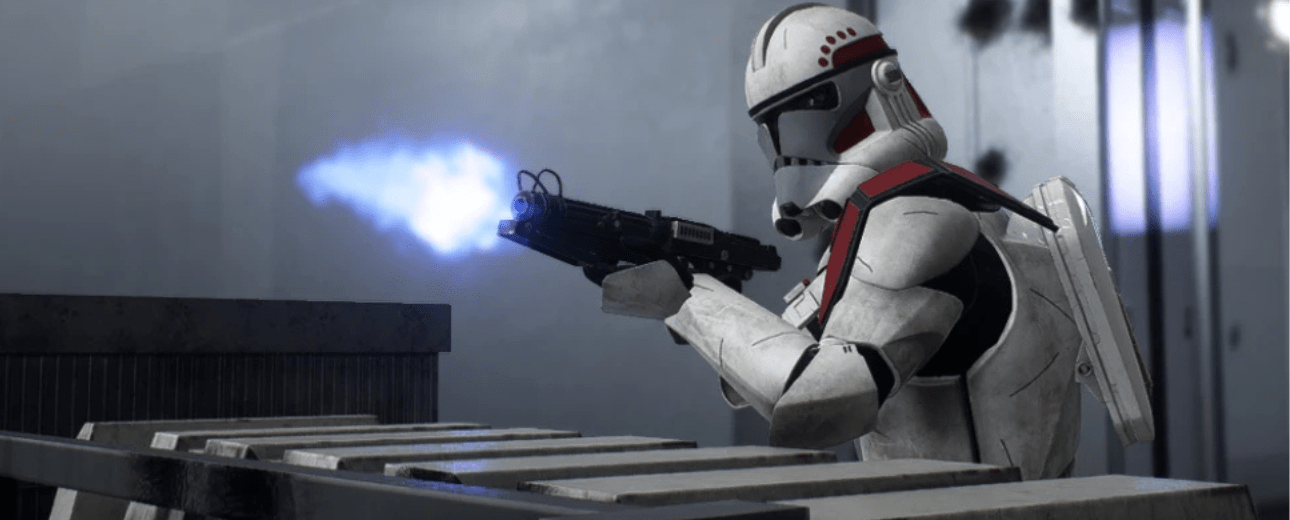
If you’ve spent any serious time watching Star Wars: The Clone Wars, you know that the show has an extraordinary gift for making you care deeply about characters who, on paper, are just soldiers in identical armor. The ARC Troopers are a perfect example of that — elite fighters who pushed the limits of what a clone could be, who developed identities and personalities as distinct as any Jedi or Sith in the saga. And among all of them, ARC Trooper Hammer stands out as one of the most compelling, most fascinating, and yes, most underappreciated figures in the entire Clone Wars roster. He’s not the most famous clone. He doesn’t get as many episodes as Rex or Fives or Echo. But what he does get, he makes count — and the story behind his armor, his identity, and his choices is one that deserves a full, passionate deep-dive. That’s exactly what this article is. Whether you’re a longtime Clone Wars fan who already loves Hammer or someone just discovering him for the first time, buckle up and let’s talk about one of the bravest soldiers the Republic ever produced.
Who Is ARC Trooper Hammer?
ARC Trooper Hammer is a clone ARC Trooper who served in the Grand Army of the Republic during the Clone Wars, most notably associated with the 501st Legion and known for his role in some of the most brutal ground engagements of the conflict. Like all clone troopers, he was born from the genetic template of the Mandalorian bounty hunter Jango Fett, grown on Kamino and trained from birth to be a soldier. But Hammer wasn’t just any clone trooper — he earned the designation of Advanced Recon Commando, which placed him among the absolute elite of the Republic’s fighting forces. ARC Troopers were the best of the best: soldiers who had demonstrated exceptional tactical intelligence, combat ability, and adaptability beyond what standard clone training produced. The fact that Hammer reached that level says everything you need to know about the kind of fighter he was. He is most prominently featured in Star Wars: The Clone Wars animated series, where his appearances — though not as numerous as some other fan-favorite clones — leave a powerful impression on anyone paying attention. His distinctive armor, his combat style, and the specific way he carries himself all mark him as a character with real depth, and the fan community has responded to that depth with genuine enthusiasm. Hammer occupies that fascinating space in The Clone Wars where a character doesn’t need enormous amounts of screen time to feel completely real — every moment he’s on screen is so well-crafted, so specific in detail and in implication, that you come away feeling like you know exactly who he is and what he’s made of. That quality of concentrated, efficient characterization is one of the things that separates the truly great supporting characters from the merely functional ones, and Hammer absolutely belongs in the former category. His name alone — blunt, hard, and direct — tells you something important about the kind of soldier he was before you’ve seen a single frame of his story. The clone troopers chose or were given names that reflected something essential about their identities, and Hammer’s name captures a fighter who hits hard, hits true, and doesn’t stop until the job is done and the mission is complete.
The ARC Trooper Program: What Made These Soldiers Different
To truly understand what Hammer represented, you have to understand what the ARC Trooper program actually was and why it mattered so much within the Grand Army of the Republic. Standard clone troopers were trained to be exceptional soldiers — disciplined, capable, and deadly — but they operated within a system that prioritized conformity, obedience, and the execution of orders within established protocols. ARC Troopers were something fundamentally different. The Advanced Recon Commando designation was originally created as part of the Kaminoan cloning program to produce soldiers capable of operating independently, making complex tactical decisions without direct supervision, and adapting to rapidly changing battlefield conditions in ways that standard troopers simply weren’t trained for. The program produced soldiers who could think for themselves, who had been exposed to a much broader range of tactical scenarios during training, and who had developed the psychological independence necessary to function effectively in situations where the standard chain of command had broken down. This independence was both the ARC Troopers’ greatest strength and, from the perspective of the Kaminoans and some Republic commanders, their most potentially concerning quality — a clone who thinks for himself is a clone who might eventually question his orders, and that was a prospect that made certain people in the Republic very uncomfortable. Hammer embodied all of these qualities in the specific, individual way that made each ARC Trooper unique, and his story is in many ways the story of what that independence cost and what it made possible.
His Place Within the 501st Legion
The 501st Legion — known throughout the Clone Wars as “Torrent Company” and later infamous as “Vader’s Fist” — was one of the most storied and accomplished units in the entire Grand Army of the Republic. Led by the legendary Captain Rex under the command of General Anakin Skywalker, the 501st was consistently deployed to the most dangerous and strategically critical engagements of the war, building a reputation for effectiveness and tenacity that was unmatched across the clone army. Being an ARC Trooper within the 501st meant being the elite within the elite — the soldier other soldiers looked to when situations became impossible, when the standard approach had failed and something completely different was needed. Hammer operated within this environment and thrived in it, developing the specific skills and the specific mindset that the 501st’s demanding operational tempo required. The relationships he formed within that unit — with Rex, with other ARC Troopers, with the regular clone troopers who made up the bulk of the Legion — were the human (or rather, clone) core of his identity, and they shaped his decisions at every critical moment of his story. The camaraderie of the 501st is something that comes through powerfully in The Clone Wars, and Hammer was part of that brotherhood in the deepest possible sense.
Hammer’s Armor and Visual Identity
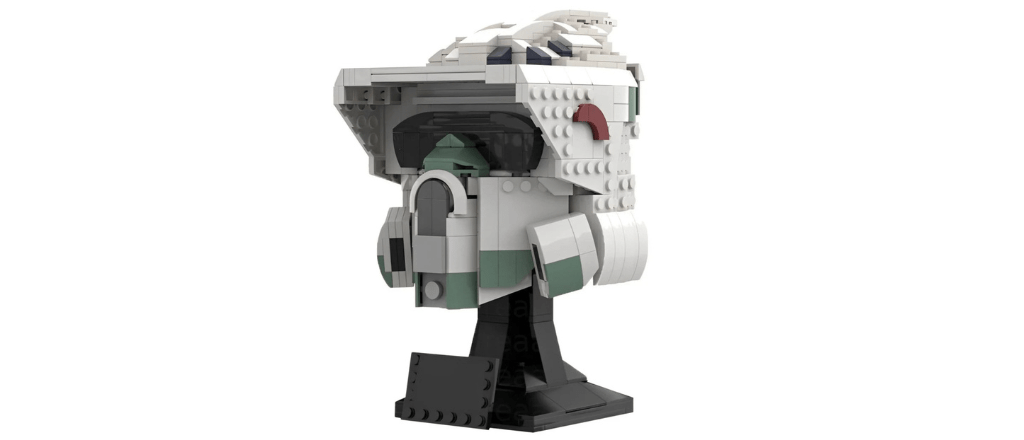
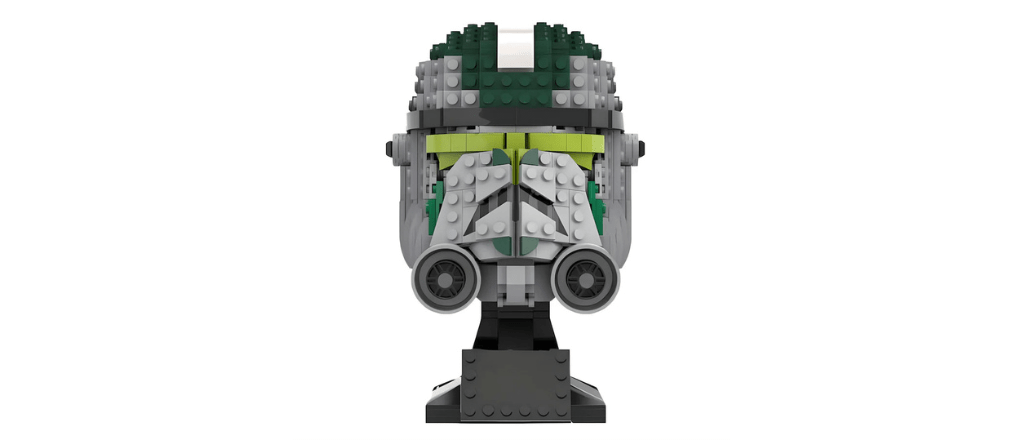
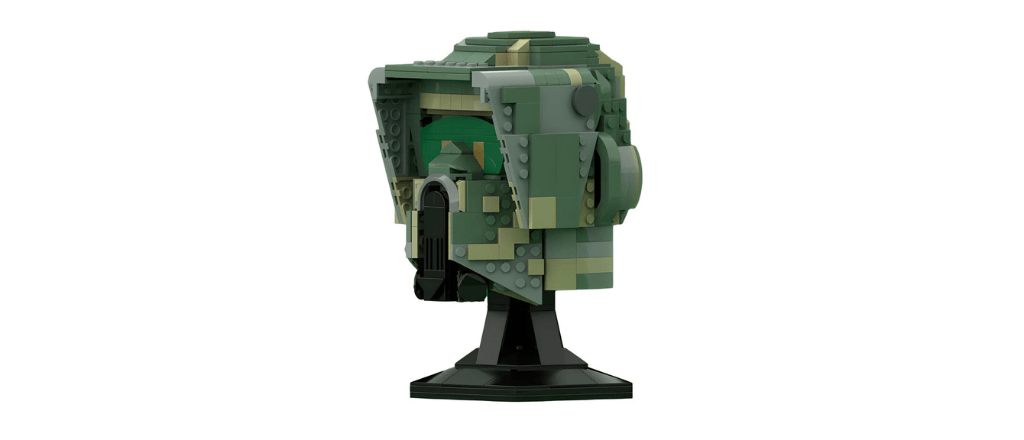
One of the most immediately striking things about Hammer — and one of the things that makes him so recognizable to Clone Wars fans — is his distinctive armor design, which sets him apart visually from other ARC Troopers in ways that are both aesthetically impressive and narratively meaningful. Clone trooper armor in The Clone Wars is a remarkably sophisticated storytelling tool: the markings, colors, and modifications that individual troopers add to their standard-issue gear tell you enormous amounts about their unit affiliations, their personalities, their histories, and their identities as people rather than serial numbers. For a show built around the premise that all these soldiers look identical on the surface, the visual designers at Lucasfilm Animation did extraordinary work making each important clone instantly recognizable, and Hammer is one of their finest achievements. His armor features the blue markings associated with the 501st Legion, but the specific way those markings are applied, combined with the additional customizations made to his gear over the course of his service, creates a visual identity that is unmistakably his. When you see Hammer on screen, you know it’s Hammer — and that instant recognizability is the foundation of everything else his character accomplishes. The visual language of clone armor is one of the most rewarding things to study in The Clone Wars, because it rewards careful attention with layers of meaning that casual viewers never notice but dedicated fans find endlessly fascinating. Every choice about color placement, about the specific symbols used, about the wear and battle damage visible on the armor — all of it tells a story, and Hammer’s armor tells a very specific story about a very specific kind of soldier.
The Symbolism of Clone Armor Customization
The practice of customizing clone armor in The Clone Wars is one of the show’s most clever and emotionally resonant storytelling devices, and it deserves serious attention in any discussion of Hammer’s visual identity. The Kaminoans produced clone troopers as identical units — same face, same voice, same genetic baseline, same standard-issue equipment. The Republic military’s official position was that this uniformity was a feature, not a bug: identical soldiers meant predictable performance, standardized logistics, and an army that could be managed as a single coherent system. But the clone troopers themselves had a different perspective. From the moment they began serving in real combat, they started marking their armor as their own — painting names, symbols, and personal emblems onto their helmets and chest plates, modifying their gear to reflect their unit affiliations and their individual personalities. This was, in a very real sense, an act of identity assertion: a way of saying “I am not just a unit number. I am a person. I have a name. I have a story.” For Hammer, his armor customizations tell exactly that story — of a soldier who started as a number and became a person through the crucible of combat, through the relationships he formed, and through the choices he made under fire. Every mark on his armor is a chapter in that story, and reading it carefully is one of the great pleasures of being a serious Clone Wars fan.
Weapons and Combat Equipment
Beyond the armor itself, Hammer’s combat loadout and weapons preferences are a key part of his identity and his effectiveness as an ARC Trooper. Like all ARC Troopers, he had access to a wider range of weaponry than standard clone infantry, and his choices reflected the specific tactical role he played within the 501st. The DC-17 blaster pistols favored by many ARC Troopers — worn in dual holsters for quick-draw situations — were a staple of his close-quarters arsenal, providing the kind of rapid-fire capability needed when engagements collapsed into the close-range chaos that ARC Troopers regularly found themselves in. For heavier engagements, he carried the DC-15A blaster rifle that was standard across the clone army, a weapon accurate and powerful enough to handle most combat scenarios at medium to long range. ARC Troopers were also trained in the use of explosives, grenades, and specialized anti-armor weapons to a degree that standard infantry weren’t, reflecting the more diverse operational demands placed on elite units. Hammer’s physical combat style — aggressive, adaptable, and built around exploiting whatever tactical advantage the situation offered — matched his equipment choices perfectly. He was not the kind of soldier who had a single preferred approach and applied it regardless of circumstances. He was the kind who looked at a situation, identified what it needed, and provided exactly that, with whatever tools were available.
Hammer’s Key Battles and Combat Record
The true measure of any soldier is what they do when things go wrong — when the plan falls apart, when the enemy is stronger than expected, when the easy options have all been exhausted and all that’s left is the hard choice between courage and retreat. By that measure, ARC Trooper Hammer’s combat record is extraordinary: a series of engagements that tested everything he was and found him equal to every single test. His appearances in The Clone Wars span some of the most intense and consequential battles of the war, and in each one he brings a combination of tactical intelligence, physical courage, and personal determination that marks him as genuinely exceptional even by the demanding standards of the ARC Trooper program. What makes his combat record particularly interesting is not just the wins — it’s how he approached the losses, the setbacks, the moments when his side was clearly outmatched and the rational response might have been to pull back and regroup. Hammer didn’t operate that way. He found a way to make the enemy pay dearly for every advantage they took, to turn defensive situations into counterattack opportunities, and to maintain the offensive mindset that separates truly exceptional soldiers from merely competent ones. His performance across these battles is also a testament to the quality of his training and the effectiveness of the ARC Trooper program at its best — producing soldiers who were not just physically capable but tactically sophisticated in ways that made them genuinely force-multiplying assets on any battlefield they were deployed to. Understanding his combat record in detail is essential to understanding why he earned the reputation he has within the Clone Wars fan community.
The Battle of Kamino: Defending the Home World
One of the most significant engagements in Hammer’s story is the Battle of Kamino — the desperate defense of the planet where all clone troopers were born, a battle that carried enormous symbolic weight alongside its tactical importance. When the Separatist forces launched their assault on Kamino with the specific objective of destroying the cloning facilities and cutting off the Republic’s ability to produce new soldiers, the defense of that planet fell to the clone troopers themselves — fighting to protect the facility that had created them, alongside the next generation of clones who hadn’t yet completed their training. The psychological dimension of that fight was unlike anything else in the Clone Wars. For Hammer and the other defenders, Kamino wasn’t just a strategically important installation — it was the closest thing to a home they had ever known. The training grounds, the barracks, the facilities where they had spent their entire lives before deployment — all of it was under attack, and the troops tasked with defending it were doing so with a personal investment that went far beyond professional military duty. Hammer’s performance in that battle demonstrated exactly why he had earned the ARC Trooper designation. Under extreme pressure, fighting in a environment that had turned from familiar to deadly, he maintained the tactical clarity and the physical effectiveness that the situation demanded. The Battle of Kamino is remembered as one of the Clone Wars’ defining moments, and Hammer’s role in it is a reminder of what it cost the clones personally to fight this war.
Close-Quarters Combat and the Urban Battlefield
Beyond any single engagement, Hammer built his reputation as a specialist in close-quarters and urban combat — the kind of fighting that happens in the corridors of starships, the streets of occupied cities, and the cramped interior spaces where the advantages of heavy armor and air support disappear and all that matters is the ability to think fast and fight hard at very close range. This specialization wasn’t accidental. ARC Troopers were deliberately trained for a wider range of combat environments than standard infantry, and Hammer had developed a particular aptitude for the chaotic, demanding nature of close-quarters battle that made him invaluable in situations where conventional tactics broke down. Urban and interior combat is psychologically as well as physically demanding in ways that open-battlefield fighting isn’t — the inability to see more than a few meters ahead, the constant risk of ambush from multiple directions, the need to make life-or-death decisions in fractions of a second without the benefit of situational awareness — and Hammer handled all of it with a composure and effectiveness that set him apart. His ability to maintain tactical coherence under extreme pressure in these environments was a quality that his commanders relied on and that his fellow soldiers found deeply reassuring. When you’re fighting through a building and you don’t know what’s around the next corner, having someone like Hammer beside you makes a real difference — not just because of his combat skill, but because of the calm confidence he projected even in the worst situations.
Leadership Under Fire: When Orders Were Not Enough
One of the most revealing aspects of Hammer’s combat record is the number of situations in which he found himself making critical decisions without direct command oversight — situations where the chain of command had been disrupted by casualties or communication failures, and someone had to take charge or everything would fall apart. These moments are the true test of an ARC Trooper, and Hammer passed them repeatedly. The ability to step into a leadership vacuum without hesitation, to rapidly assess a deteriorating situation, to make tactical decisions that might cost lives if wrong and will definitely cost lives if not made at all — this is a capability that can’t be fully trained or programmed, and it comes from somewhere deeper than military doctrine. For Hammer, it came from the same place that everything essential about him came from: a fundamental commitment to his brothers and to the mission that outweighed every other consideration, including his own safety and comfort. The clones who survived the Clone Wars did so in part because of soldiers like Hammer — soldiers who could hold things together when everything was falling apart, who could find a way forward when the straightforward path had been destroyed. His record in those situations is one of the most important parts of his story, and it’s one that the Clone Wars community has recognized and celebrated with good reason.
The Psychology of a Clone: Identity, Brotherhood, and Individuality
One of the things that makes the clone trooper characters in The Clone Wars so genuinely compelling — and one of the things that makes ARC Trooper Hammer particularly interesting to think about — is the show’s consistent willingness to engage seriously and honestly with the psychological complexity of being a clone. These are soldiers who were created rather than born, produced in identical sets from a single genetic template, and told from the first moment of their awareness that their entire purpose was to fight and die for the Republic. The questions that raises about identity, free will, and the nature of personhood are not small or trivial ones, and The Clone Wars at its best confronts them directly and with real moral seriousness through the individual stories of specific troopers. Hammer’s psychology is shaped by the same fundamental tensions that define all the great clone characters: the tension between the collective identity of being one of millions of biologically identical soldiers and the individual identity that developed through experience, choice, relationship, and the specific things he survived. How he navigated those tensions — what choices he made when they came into conflict, what he prioritized when forced to choose between competing loyalties and values — is the thing that transforms him from a supporting character into a genuinely fascinating figure worthy of the deep fan engagement he receives. The show never lets the psychological complexity become oppressive or preachy about it — it emerges naturally through the behavior and choices of the characters themselves, which is always the most effective way to handle this kind of thematic material. Watching Hammer and understanding what drives him requires you to think about these questions, and that thinking enriches both your understanding of the character and your appreciation of what The Clone Wars was trying to accomplish.
What It Means to Be a Clone in a Galaxy That Doesn’t See You
The social and political position of clone troopers within the Republic is one of the most uncomfortable aspects of the Clone Wars era, and engaging with it honestly is essential to understanding characters like Hammer. Clone troopers were, legally and politically, property of the Republic — soldiers produced on contract by the Kaminoans and deployed by the Senate and the Jedi Council without any consultation with the clones themselves about the terms of their service or the nature of their sacrifice. They had no citizenship rights, no legal personhood in the eyes of the Republic they were dying to protect, and no guaranteed future beyond continued military service until they were too old or too damaged to fight. The fact that individual clone troopers like Hammer, Rex, Fives, and dozens of others developed rich inner lives, genuine relationships, and strong moral identities despite this profoundly dehumanizing system is one of the most quietly radical things The Clone Wars does as a piece of storytelling. Hammer’s awareness of his own situation — the degree to which he understood and thought about the political realities of his existence — is something that The Clone Wars handles with real nuance. He wasn’t naive about what he was or what the Republic thought of him. But he also made a deliberate choice to find meaning in his identity as a soldier, in his relationships with his brothers, and in the specific things he was fighting for, rather than being consumed by the injustice of his situation. That psychological maturity, that ability to hold complexity without being destroyed by it, is one of the most admirable things about him.
Brotherhood as the Foundation of Clone Identity
If there is one thing that anchors clone trooper identity more powerfully than anything else in The Clone Wars, it is brotherhood — the deep, unconditional bond between clone soldiers that forms in the pressure cooker of shared training and shared combat and becomes the most important relationship most of them will ever have. For Hammer, as for all ARC Troopers, this brotherhood was both the foundation of his psychological stability and the primary source of his motivation in combat. He fought hard because he was a skilled and dedicated soldier. He fought to the point of exhaustion and beyond because his brothers were beside him and he would not let them down. The bond between clone troopers is depicted in The Clone Wars with a tenderness and authenticity that has made the show’s treatment of clone characters some of the most emotionally affecting storytelling in the entire Star Wars saga. These soldiers cared for each other with a depth and a fierceness that transcended the purely military relationship that the Republic system tried to keep them confined to, and that caring is what made them not just effective fighters but genuinely admirable people. Hammer’s relationships within his unit — the trust, the loyalty, the willingness to put himself at risk for the soldiers beside him — were the defining feature of his character and the most powerful evidence that whatever the Kaminoans intended to create, what they actually produced were people worthy of far better than the Republic gave them.
ARC Trooper Hammer in Fan Culture
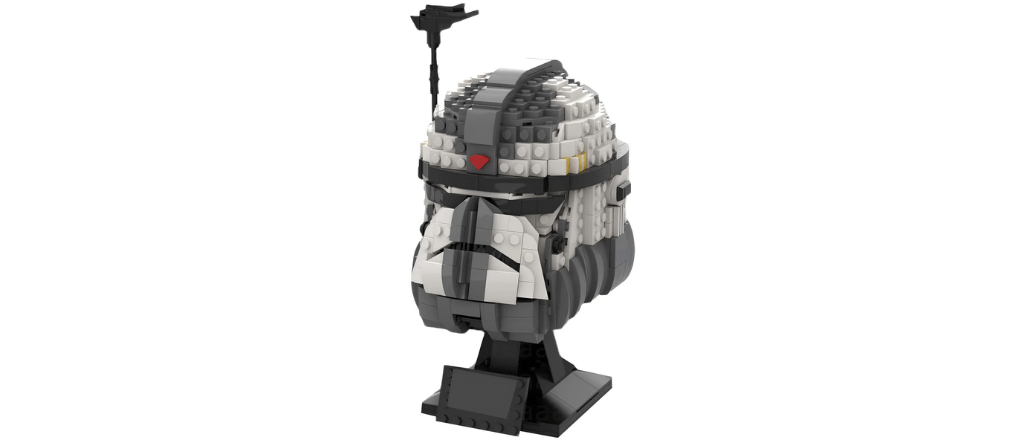
The fan community’s response to ARC Trooper Hammer is a testament to what The Clone Wars accomplished with its clone characters — taking figures who might easily have been interchangeable background soldiers and making them feel real, specific, and irreplaceable in a way that inspires genuine emotional investment. Hammer has a devoted following within the broader Clone Wars fan community, a group of fans who have engaged with his character with the same depth and passion that more prominent clones like Rex or Fives receive, and in some cases with even more intense dedication precisely because he’s less well-known and feels like their personal discovery. That devotion expresses itself in a remarkable and diverse range of creative and community activity that reflects the genuine love fans have developed for this character over years of rewatching and discussing the show. What’s particularly interesting about the Hammer fan community is how it reflects the broader culture of Clone Wars fandom — a group of people who have collectively decided that the “background” soldiers of the Republic army deserve exactly the same level of care and attention as the named heroes at the center of the narrative. That decision, that insistence on seeing value in the overlooked and celebrating the uncelebrated, is one of the most appealing qualities of Clone Wars fandom as a community, and Hammer has become something of a symbol for that impulse. Engaging with his fan community means engaging with fans who think deeply about what they watch, who ask hard questions about the stories they love, and who use creative work to explore the implications of those stories in ways that enrich the original material rather than simply reproducing it. Fan art dedicated to Hammer spans an enormous range of styles and interpretations — from technically precise recreations of his armor in loving detail to more stylized or emotionally expressive portraits that capture something essential about his character beyond the physical. The quality and quantity of fan art dedicated to a character is one of the most reliable indicators of genuine fan investment, and the Hammer fan art community is impressively active and talented.
Cosplay and the Hammer Community
The cosplay community around Clone Wars characters is one of the most technically skilled and passionately dedicated in all of Star Wars fandom, and Hammer has his share of devotees within it. Building an accurate ARC Trooper costume is an extraordinarily demanding project — the armor complexity, the painting requirements, the equipment details all present significant challenges even for experienced prop builders. The fans who take on a Hammer-specific build are committing to a project that requires not just technical skill but genuine knowledge of and care for the character, and the results are consistently impressive. The 501st Legion costuming organization — the premier Star Wars costuming group for Imperial and villain characters, but also encompassing many Republic-era clone trooper costumers — has detailed standards for ARC Trooper builds that serious cosplayers work toward, and Hammer builds are recognized and celebrated within that community. The process of building clone trooper armor has itself become a significant subculture within Star Wars fandom, with dedicated forums, tutorial resources, and communities of builders who support each other through the process. For many fans, building and wearing their Hammer armor is not just a cosplay project — it’s a tribute to a character they genuinely care about, and wearing that armor at conventions and events is a way of keeping his story alive and sharing it with other fans.
Fan Fiction and Expanded Stories
Fan fiction has given Hammer a rich extended life beyond his canonical appearances, with writers exploring aspects of his character, his relationships, and his history that the show didn’t have time to develop in detail. The questions that his canonical story raises — what was his training like? What did he think about during the quiet moments between battles? How did he feel about the political situation of clone troopers within the Republic? What happened to the relationships he formed? — are exactly the kind of questions that talented fan writers love to explore, and the results are often genuinely moving and insightful. The best Hammer fan fiction does what the best fan fiction always does: it takes the emotional truth of a character and extends it into new situations and relationships, finding new angles on familiar qualities and illuminating things about the character that even careful canonical analysis might miss. For a character like Hammer, who appears in a relatively limited number of canonical episodes, fan fiction is particularly important as a way of fully realizing the potential of his character. The fan writing community has recognized that potential and responded to it with creative work that honors both the character and the show that created him.
What ARC Trooper Hammer Teaches Us About the Clone Wars
Stepping back from the specific details of Hammer’s story, it’s worth asking what his character, taken as a whole, teaches us about the Clone Wars as a conflict, as a historical moment within the Star Wars universe, and as a piece of storytelling that has genuinely mattered to millions of fans. Because The Clone Wars is not simply an adventure series with cool battles and compelling characters — it’s a war story with genuine moral complexity and genuine emotional weight, a story about the costs of conflict, the nature of heroism in unjust systems, and the fundamental question of what we owe the people who fight our wars for us. Hammer’s story is a specific and meaningful contribution to that larger conversation, one that benefits from careful attention and serious engagement. He represents something precise and important: the best of what the clone trooper program produced when everything worked as it was supposed to, combined with the fundamental tragedy of a system that asked extraordinary things of people it was simultaneously and systematically refusing to recognize as people. He was brave, skilled, loyal, and morally good in the way that actually counts — the way that shows up in what you do when no one senior to you is watching, when the easy choice and the right choice are pointing in opposite directions, and when the cost of choosing right is entirely personal. The Republic that he served so faithfully with all of those qualities never gave him or his brothers the recognition, the political rights, or the future they had unambiguously earned through their sacrifice. Holding both of those truths simultaneously — celebrating his excellence while not forgetting the injustice of his situation — is what engaging seriously with his character demands, and it’s what makes doing so so worthwhile.
The Moral Legacy of the Clone Trooper Program
The ethical questions raised by the clone trooper program are some of the most genuinely challenging in the Star Wars saga, and they don’t have easy answers. Creating sentient beings specifically to fight and die in wars they had no say in entering, denying them legal personhood and political rights, engineering behavioral inhibitors into their genetic code that would eventually make them execute Order 66 against the Jedi they had fought beside for years — these are profound moral failures that the Republic bears responsibility for, and the story of every individual clone trooper is shadowed by that institutional evil. Hammer’s story is no exception. Whatever he accomplished, whatever qualities he demonstrated, whatever relationships he formed — all of it was happening within a system designed to use him up and then either retire him or continue deploying him until he died. The fact that he managed to develop genuine moral identity and genuine human connection within that system is not a vindication of the system — it’s a tribute to the resilience of personhood in the face of forces designed to deny it. The Clone Wars, at its most ambitious and most powerful, asks us to hold all of these things simultaneously: to celebrate the courage and character of clone troopers like Hammer while refusing to forget the injustice of the system that produced them. That moral complexity is one of the things that makes the show genuinely great rather than merely entertaining.
Why Hammer’s Story Still Resonates Today
The question of why stories like Hammer’s continue to resonate with audiences long after their original broadcast is an interesting one, and the answer goes deeper than simple nostalgia or franchise loyalty. Stories about soldiers who maintain their humanity and their moral identity in dehumanizing circumstances touch something universally important about the human condition — they speak to questions about identity, integrity, and the nature of courage that are as relevant in any era as they are in the fictional context of the Clone Wars. Hammer is compelling because he represents a version of the best we can be under circumstances that push hard against it. He was given every reason to be merely functional — to be, in the terms the Kaminoans and the Republic preferred, just a good soldier who followed orders and served his purpose. Instead, he was a person, fully and without apology, and he brought that personhood to everything he did. That choice — and it was a choice, at least in the meaningful sense that matters for stories — is inspiring in a way that transcends the science fiction context. In a broader cultural moment where questions about individual identity versus institutional demands feel acutely relevant, Hammer’s story offers something genuinely useful: the reminder that personhood is not something that can be entirely engineered away, that the impulse to connect, to care, and to refuse to be reduced to a function is remarkably stubborn in the face of systems designed to suppress it.
The ARC Trooper Program: Kamino’s Greatest Achievement
To fully appreciate what Hammer was and what he represented, it’s worth spending real time understanding the history and philosophy of the ARC Trooper program itself — because that context transforms him from a compelling individual character into a figure who embodies something significant about the entire Clone Wars era. The ARC Trooper program was not part of the original Kaminoan cloning contract with the Republic. Standard clone troopers were designed to be excellent soldiers within a rigid command structure — capable, disciplined, and reliable, but not necessarily capable of extended independent thought or action. The ARC program emerged from a recognition that modern warfare — especially the kind of asymmetric, rapidly evolving conflict that characterized the early Clone Wars — required soldiers who could operate with much greater autonomy than standard troopers possessed. The Null-class ARC Troopers were the first generation, produced before the main clone army and representing the most extreme version of the program’s philosophy: soldiers given almost no behavioral conditioning, allowed to develop fully independent personalities and judgment, and trained to operate entirely without supervision if necessary. The Alpha-class ARC Troopers that followed were somewhat more standardized but still represented a quantum leap in capability and independence beyond the regular clone army. Hammer belonged to this elite tradition, and understanding its roots helps explain why he was capable of the things he did. The ARC program was, in many ways, a controlled experiment in what clone troopers could becomewhen the system’s most dehumanizing impulses were partially relaxed — and the results, embodied in soldiers like Hammer and Rex and Fives, were extraordinary enough to make you wonder what all the clones might have been with a little more freedom and a little more trust.
Training and Selection: The Road to ARC Status
The path to becoming an ARC Trooper was not simply a matter of surviving long enough in combat or accumulating enough mission successes, though exceptional combat performance was obviously a prerequisite. The selection and training process was a genuinely demanding evaluation of qualities that couldn’t be measured by conventional military metrics — adaptability, independent judgment, psychological resilience, and the specific kind of tactical creativitythat distinguishes a soldier who finds solutions from one who merely executes predetermined responses. Candidates for ARC status were identified through a combination of their battlefield performance, their behavioral profiles, and evaluations conducted by senior ARC Troopers and Republic military advisors who were looking for the specific combination of qualities the program needed. The training itself was an intense period of accelerated development: candidates were pushed through scenarios designed to exhaust standard approaches and force creative problem-solving, exposed to command responsibilities that most clones would never experience, and subjected to the kind of psychological pressure that revealed whether their independence was genuine or merely cosmetic. For Hammer, this process was the crucible in which his character was fully formed. The qualities he displayed in combat — the tactical creativity, the composure under pressure, the ability to function effectively without direct supervision — weren’t accidents or natural gifts. They were the product of deliberate, demanding development that recognized something exceptional in him and gave it the tools and the confidence to fully emerge. That backstory matters because it means every impressive thing Hammer did in combat was earned, built on a foundation of genuine effort and genuine development rather than simply being a feature of his genetic template.
The Relationship Between ARC Troopers and the Jedi
One of the most interesting and underexplored dynamics in the ARC Trooper story is the relationship between ARC Troopers and the Jedi commanders they served alongside. For standard clone troopers, the relationship with Jedi Generals was largely one of orders and obedience — respectful in most cases, affectionate in some, but fundamentally hierarchical in a way that didn’t allow for much genuine peer interaction. ARC Troopers were different. Their independence, their tactical sophistication, and their demonstrated capability for judgment that matched or exceeded that of many of the officers they served under gave them a different kind of standing in their relationships with the Jedi. The best Jedi commanders — Anakin Skywalker, Obi-Wan Kenobi, Ahsoka Tano — recognized this and engaged with ARC Troopers accordingly, treating them as genuine partners in planning and execution rather than simply highly capable instruments of their will. This dynamic is visible in the way Hammer and soldiers like him interact with the Jedi in their canonical appearances — there’s a mutual respect and a genuine working relationship that goes beyond the standard commander-subordinate dynamic. For Hammer, operating in the environment of the 501st under Anakin Skywalker’s command meant being part of a unit where that kind of peer relationship was actively cultivated. Skywalker was famously unconventional in his approach to command and in his relationships with his clone troops, and the 501st reflected that — it was a unit where individual capability and individual identity were recognized and valued in ways that the broader Republic military often failed to do. That environment allowed Hammer to be fully who he was rather than having to suppress his independence to fit a more restrictive command culture.
Hammer Compared to Other Elite Clone Troopers
Any serious discussion of ARC Trooper Hammer has to engage with how he fits into the broader landscape of elite clone characters in The Clone Wars — because that comparison reveals a great deal about what makes him specifically interesting and specifically valuable as a character, as distinct from the general category of “impressive clone trooper.” The Clone Wars gave us a remarkable gallery of elite clone characters across its seven seasons: Captain Rex, the 501st’s legendary commander whose story arc across the entire series is one of the richest and most emotionally complete in all of Star Wars animation; Fives, whose investigation of the inhibitor chips became one of the show’s most heartbreaking and most important storylines; Echo, whose capture and transformation by the Techno Union produced one of the most genuinely tragic arcs in the series; Cody, the capable and ultimately tragic commander of the 212th whose execution of Order 66 against Obi-Wan Kenobi is one of the saga’s most devastating moments; and dozens of others who received varying degrees of development and fan engagement. Hammer’s place in this company is specific and interesting. He shares the core qualities that make all these characters compelling — the individuality asserted against a system designed to deny it, the loyalty and brotherhood, the tactical excellence — but his particular combination of those qualities and the specific way they’re expressed in his story gives him a distinct identity within the group.
Hammer and Rex: Two Visions of Clone Leadership
The comparison between Hammer and Captain Rex is perhaps the most illuminating one available, both because they’re closely associated through the 501st Legion and because their similarities and differences reveal important things about both characters. Rex and Hammer share the most important qualities of exceptional clone leadership: tactical intelligence, genuine care for the soldiers under their command, personal courage that inspires rather than merely impresses, and the psychological independence to make difficult decisions when the situation requires it. But they express those qualities in somewhat different ways that reflect their different roles and their different relationships to authority. Rex, as captain and effectively the operational commander of the 501st’s ground forces, developed his leadership style around the ability to inspire and coordinate large groups — his greatness is in significant part relational, built on the trust and loyalty he earned from hundreds of soldiers through consistent fairness, competence, and genuine concern for their welfare. Hammer’s excellence is more concentrated and more individual — the qualities that made him exceptional were most visible in the specific situations that demanded everything he had, in the close-quarters engagements and the leadership vacuums and the moments of tactical improvisation where the difference between success and catastrophe was one soldier’s ability to think clearly and act decisively. These are complementary rather than competing forms of excellence, and understanding both of them enriches your appreciation of each character and of the 501st as a unit.
What Separates Hammer From the Average Clone Trooper
If Rex represents one pole of what clone excellence could look like at the unit command level, and Fives represents the clone whose individual moral courage led him to the most consequential discovery of the war, then Hammer occupies a distinct space that might be described as excellence in execution — the embodiment of what the ARC program was designed to produce at its most purely tactical level. The average clone trooper was, by any reasonable standard, an extraordinary soldier — trained from birth, disciplined, capable, and genuinely brave in the service of a cause they believed in. The ARC Troopers took that foundation and built something more on top of it: the independence, the creativity, and the psychological robustness that allowed them to function in situations that would have exceeded the capacity of even the best standard infantry. What separated Hammer from even the high baseline of ARC Trooper quality was something harder to quantify — a specific quality of determination that showed up most clearly in the situations where everything had gone wrong and the question was whether to find a way forward or accept that the situation was unwinnable. Hammer’s consistent answer to that question — there is a way forward, and I will find it, and I will not stop until I do — is the quality that his name captures perfectly and the quality that his combat record demonstrates again and again. It is also the quality that has made him such a compelling figure for fans, because it represents something genuinely aspirational: not superhuman power or mystical ability, but the decision, made over and over under increasingly difficult circumstances, to simply not give up.
Conclusion: A Clone Who Earned His Name
ARC Trooper Hammer earned his name the hard way — through combat, through sacrifice, through the specific and irreducible combination of skill, courage, loyalty, and sheer stubborn refusal to quit that the ARC Trooper program produced at its very best. He was part of one of the most remarkable military forces in the Star Wars saga, and within that force he stood out as someone whose individual qualities made a genuine difference in the outcomes of battles and in the lives of the soldiers beside him. His story is not the longest or the most elaborately developed in The Clone Wars, but what it lacks in screen time it more than compensates for in depth, in specificity, and in the genuine emotional investment it inspires in the fans who have taken the time to engage with it seriously. He is proof of what The Clone Wars does better than almost any other piece of Star Wars media: making you care deeply about people who, on paper, are just soldiers in identical armor.
The Enduring Appeal of the ARC Troopers
The enduring appeal of ARC Troopers as characters within the Star Wars universe speaks to something important about why The Clone Wars resonated so powerfully with its audience across seven seasons and continues to attract new fans years after its completion. In a saga that often focuses on the extraordinary — on Force users with special destinies, on heroes whose greatness is in some sense predetermined by the cosmic forces that shape the galaxy — the ARC Troopers represent a genuinely different kind of hero: one whose greatness comes entirely from within themselves, from the choices they made and the character they built through experience, failure, recovery, and the daily decision to be more than the system designed them to be. No one handed Hammer his excellence on a platter. No midichlorian count predestined his achievements. He became who he was through training, through combat, through loss, through the relationships he built, and through the decision — made every single day in a dozen different ways — to be fully present and fully committed to the people and the mission he was responsible for. That’s a template for heroism that resonates with fans who might not see themselves in the Skywalkers and Kenobis of the galaxy but who can absolutely recognize something of their own best qualities in the determination, the brotherhood, and the refusal to be defined entirely by the system in which they operate. ARC Trooper Hammer is one of the finest expressions of that template in the entire Clone Wars roster, and his story deserves every bit of the fan love and creative energy it has inspired.
A Final Word for the Fans Who Already Know Him
For the fans who already love Hammer — who have watched his episodes until they know every detail, built his armor with meticulous care, written stories exploring his inner life, created art that captures something essential about his character — this article is as much a tribute to your passion as it is to the character himself. The way the Clone Wars fan community has embraced soldiers like Hammer, has collectively refused to let them be reduced to background characters or forgotten in the shadow of more prominent figures, has insisted with genuine creative force on seeing them as fully realized people whose stories deserve the same depth of engagement as any major Star Wars character — that is one of the most beautiful things in all of Star Wars fandom. Hammer exists as fully and as vividly as he does because fans like you demanded it, created it, and sustained it through years of passionate, thoughtful engagement with his story. The galaxy of Star Wars is richer for every piece of fan art, every fan fiction story, every cosplay build, every forum discussion and detailed analysis dedicated to him and to the brothers who fought beside him. Keep telling his story. Keep insisting that he matters. Because he does, and he always will. For more on ARC Troopers, the 501st Legion, and the full depth of Clone Wars lore, Wookieepedia is your definitive resource — their pages on ARC Troopers and the 501st Legion are extraordinary pieces of collaborative fan scholarship. The official StarWars.com has excellent behind-the-scenes content on the development of clone characters across the series. And if you want to connect with the cosplay community around clone troopers, the 501st Legion is one of the finest fan organizations in all of Star Wars — full of dedicated, passionate people who share your love for these soldiers and their stories, and who will welcome you with the same warmth and enthusiasm that defines the best of this fandom.