
 Canada
 USA
USA Japan
Japan



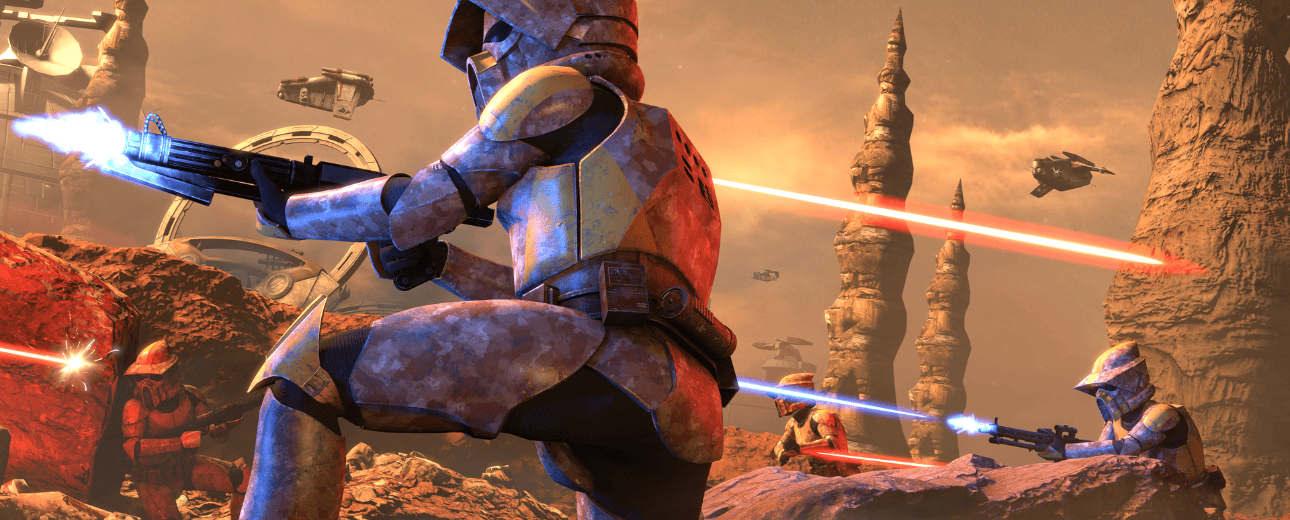
If you’ve spent any serious time with “The Clone Wars” animated series, you know that one of the show’s greatest achievements is the way it transforms the clone army from an anonymous mass of identical soldiers into a rich, diverse military culture full of specialized units, distinct personalities, and fascinating tactical variety. Among all the specialized clone trooper variants that “The Clone Wars” introduced to the Star Wars universe, few are as visually distinctive, as tactically interesting, or as genuinely cool as the ARF trooper. And yet, despite their undeniable appeal, ARF troopers remain one of the more underappreciated categories of clone specialists in fan discussions, often overshadowed by the more narratively prominent ARC troopers or the more visually spectacular clone commanders.
This article exists to fix that. Because ARF troopers — Advanced Recon Force troopers — are genuinely fascinating when you dig into what they are, what they do, how they operate, and what they represent within the broader context of the Grand Army of the Republic’s military doctrine. They are the eyes and ears of the clone army, the soldiers who go where others can’t, who gather the intelligence that makes larger operations possible, and who operate in conditions that would overwhelm less specialized fighters. They are, in the truest sense of the phrase, the tip of the spear before the spear even leaves the hand.
So let’s dig in. We’re going to cover everything: the ARF trooper’s role in the Grand Army of the Republic, their distinctive armor and equipment, their most memorable appearances in “The Clone Wars,” the real-world military concepts that inspired their design, and why they deserve a much more prominent place in the Star Wars fan conversation. Whether you’re a longtime clone trooper enthusiast or someone who has just started exploring the deeper layers of Star Wars military lore, this is the article for you.
What Is an ARF Trooper? Defining the Role and the Designation
Let’s start with the basics, because understanding what an ARF trooper actually is requires a bit of unpacking. The designation stands for Advanced Recon Force, which immediately tells you the most important thing about these soldiers: their entire purpose is built around reconnaissance. They are not frontline assault troops. They are not siege specialists or heavy weapons platforms. They are scouts, intelligence gatherers, and forward observers, trained to operate deep in enemy territory with minimal support and maximum stealth.
Within the Grand Army of the Republic’s complex hierarchy of specialized clone units, ARF troopers occupy a specific and essential niche. The Republic’s military doctrine, like all sophisticated military thinking, recognizes that information is as important as firepower. Knowing where the enemy is, how many of them there are, what their defensive positions look like, and what terrain lies between your forces and theirs is worth more than any number of additional blasters or vehicles. ARF troopers are the soldiers whose job is to generate that information, to go forward and find out what no one else knows, and to come back — or transmit back — with intelligence that shapes the decisions of commanders and the outcomes of battles.
What makes ARF troopers distinct from other recon-oriented clone units, like the more famous ARC troopers, is the specific nature of their specialization. ARC troopers are elite soldiers capable of independent action across a wide variety of mission types, with recon being just one of their capabilities. ARF troopers are more narrowly focused, more specifically optimized for the reconnaissance mission, and often more closely integrated with the large-scale operational planning of the clone army’s conventional forces. They are the professional scouts of the Grand Army, and everything about their equipment, their training, and their tactical doctrine reflects that specific purpose.
The Difference Between ARF and ARC: Getting the Terminology Right
One of the most common points of confusion in clone trooper discussions is the distinction between ARF troopers and ARC troopers, and it’s worth taking a moment to clarify this clearly, because the two designations get mixed up constantly even among enthusiastic fans. ARC stands for Advanced Recon Commando, and while the two designations share the word “recon,” they describe very different kinds of soldiers with very different training, capabilities, and roles.
ARC troopers are among the most elite soldiers in the entire Grand Army of the Republic. They are trained by the Null-class ARCs and the original Alpha-class ARCs, who were themselves trained directly by Jango Fett and represent the closest expression of Fett’s original genetic template that the clone army possesses. ARC troopers are independent operators, capable of working alone or in very small teams, trained for the full spectrum of special operations missions: direct action, sabotage, hostage rescue, long-range reconnaissance, and covert infiltration. They are, in the Star Wars universe’s military hierarchy, analogous to the most elite special operations forces in real-world militaries.
ARF troopers, while certainly skilled and specialized, operate at a different level of the military hierarchy. They are not commando-tier operators in the way that ARC troopers are. They are professional scouts integrated into the conventional army’s structure, working in support of larger operations rather than conducting the kind of completely independent deep-penetration missions that define ARC trooper deployments. This distinction is important because it shapes everything about how ARF troopers are used, how they are equipped, and what they are expected to accomplish. Understanding where they fit in the clone army’s hierarchy helps you appreciate both their capabilities and their limitations.
Their Place in the Grand Army’s Order of Battle
Within the Grand Army of the Republic’s organizational structure, ARF troopers typically operate as forward elements attached to larger conventional formations. A legion or a battalion preparing for a major assault operation might have ARF trooper elements sent ahead days or even weeks in advance, tasked with mapping the terrain, identifying enemy positions, assessing defensive strength, and locating potential vulnerabilities that commanders can exploit. The information these scouts generate flows back through the chain of command and directly shapes operational planning at every level.
This integration with conventional operations means that ARF troopers need to be capable of communicating effectively with the units they support, interpreting and transmitting complex tactical information under pressure, and making independent judgments about what intelligence is most valuable and most urgent. They are not just athletes with blasters. They are professional intelligence operatives with the field craft to operate in denied areas and the analytical capacity to understand what they are observing and communicate it effectively. This combination of physical capability and intellectual skill is part of what makes the ARF trooper specialization genuinely demanding and genuinely impressive.
The ARF Trooper’s Distinctive Armor: Form Following Function
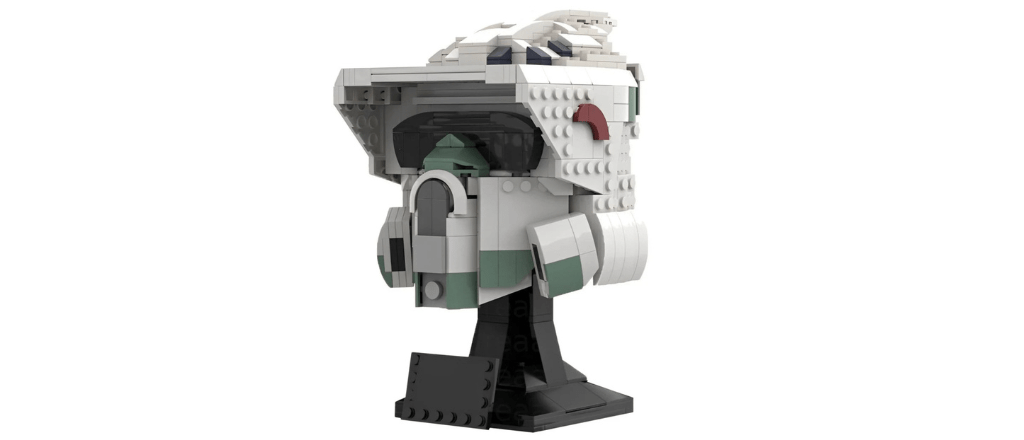
One of the first things that strikes most fans when they encounter ARF troopers is how different their armor looks from the standard Phase I and Phase II clone trooper armor that most people associate with the Grand Army of the Republic. And that visual difference is not accidental or purely aesthetic. Every significant modification to the ARF trooper’s armor kit reflects a specific tactical requirement, a specific lesson learned from the demands of reconnaissance operations in the diverse and often hostile environments that clone scouts encounter across the galaxy.
The ARF trooper armor is, compared to standard clone trooper equipment, significantly lighter and more streamlined. This is the most fundamental design principle driving all the other choices: a scout who is weighed down by heavy armor is a slower, louder, more detectable scout. The value of a reconnaissance soldier lies in their ability to move through terrain quickly and quietly, to go places where heavier soldiers cannot follow, and to remain undetected long enough to gather the intelligence that justifies the mission. Heavy armor directly contradicts all of these requirements, so ARF trooper armor strips away as much mass as possible while retaining sufficient protection for the specific threat environments scouts are likely to encounter.
The Helmet Design and Its Tactical Significance
The most visually distinctive element of the ARF trooper’s appearance is unquestionably the helmet, which features a dramatically different profile from standard clone trooper headgear. The ARF helmet has an elongated, almost insectoid quality to it, with a visor design that prioritizes wide-angle visual coverage and integrates multiple sensory systems in a package that is immediately recognizable as specialized military equipment rather than standard-issue gear.
The helmet’s elongated visor design is not purely aesthetic. It reflects the reconnaissance mission’s specific sensory demands. A scout needs to see as much of their environment as possible, in as many different spectrums as possible, to do their job effectively. The ARF helmet’s wide visor provides a broader field of vision than standard clone trooper helmets, reducing the blind spots that can get a scout killed in hostile territory. The helmet also integrates enhanced optical systems including magnification capabilities, low-light and thermal imaging modes, and rangefinding functions that allow ARF troopers to gather detailed information about targets and terrain from distances that keep them safely outside enemy detection range.
The helmet’s communications package is also more sophisticated than standard clone trooper equipment, reflecting the fundamental importance of information transmission to the reconnaissance mission. An ARF trooper who gathers extraordinary intelligence but cannot transmit it back to the units that need it has accomplished nothing. The helmet integrates encrypted long-range communication systems that allow scouts to maintain contact with their parent units across significant distances and through the electronic countermeasures that enemy forces frequently employ to disrupt Republic communications.
Body Armor Configuration and Movement Optimization
Below the helmet, the ARF trooper’s armor configuration continues to reflect the priority of mobility over protection. The chest and back plates are present but reduced in coverage compared to standard clone armor, accepting greater vulnerability in exchange for reduced weight and improved range of motion. The shoulder pauldrons are similarly streamlined, and the overall silhouette of the suited trooper is noticeably sleeker and less bulky than a standard clone in full Phase I or Phase II armor.
The leg and arm armor follow the same philosophy. Joint coverage is maintained to protect the critical articulation points that scouts depend on for movement, but the overall coverage of each limb is reduced. The boots are designed with particular attention to terrain adaptability, with soles optimized for quiet movement on a variety of surfaces. This is a detail that rewards attention: the difference between a scout who can move silently across a rocky canyon floor and one whose boots make noise with every step can be the difference between a successful mission and a catastrophic compromise.
The color scheme of ARF trooper armor also reflects tactical considerations. While ARF troopers, like all clone troopers, display the colors of their legion or unit, the base coloration of their armor tends toward patterns that support field concealment. In their appearances in “The Clone Wars,” ARF troopers frequently display color schemes that suggest adaptation to specific operational environments, with some units showing markings that clearly reference particular deployment contexts. This attention to environmental adaptation reflects a military culture that takes the concealment requirements of reconnaissance operations seriously.
Equipment and Weapons Loadout
The weapons and equipment carried by ARF troopers are as carefully selected for the reconnaissance mission as their armor. The primary weapon of choice for most ARF trooper configurations is a lighter, more compact blaster than the standard DC-15A carried by regular clone troopers. The DC-15S carbine, or variants thereof, appears frequently in ARF trooper loadouts, reflecting the preference for weapons that are easier to carry over long distances, less obtrusive in close terrain, and compatible with the kind of careful, precise shooting that reconnaissance situations often demand over the massed firepower of conventional infantry engagements.
ARF troopers typically carry enhanced sensor and scanning equipment as part of their standard loadout, including portable long-range scanners, topographical mapping devices, and environmental analysis tools that allow them to gather and transmit comprehensive intelligence packages rather than just visual observations. In the context of the Star Wars universe’s technology level, these tools allow ARF scouts to generate detailed tactical pictures of enemy positions, terrain features, and environmental conditions that give Republic commanders a significant informational advantage before any shot is fired.
The loadout also typically includes equipment for extended independent operation: rations, water purification, emergency medical supplies, and survival gear appropriate to the deployment environment. A reconnaissance mission that requires a scout to operate deep in enemy territory for an extended period demands that the trooper be able to sustain themselves without resupply. ARF troopers train extensively for this kind of self-sufficiency, and their equipment reflects it.
ARF Troopers in “The Clone Wars”: Their Most Important Appearances
“The Clone Wars” animated series is the primary source of ARF trooper appearances in Star Wars canon, and the show uses them intelligently, deploying them in contexts that authentically reflect their reconnaissance role while also giving them enough screen time to register as distinctive and memorable. For fans who want to see ARF troopers in action and understand how they function in the field, several episodes of the series stand out as essential viewing.
The show’s treatment of ARF troopers is part of its broader commitment to depicting the clone army as a genuinely complex military organization rather than a simple backdrop for Jedi heroics. Executive producer Dave Filoni and his team consistently sought to portray the clones as professional soldiers with specific skills, specific roles, and genuine tactical sophistication, and ARF troopers benefit from this approach. When they appear in the show, they feel like real scouts doing a real job, not like generic soldiers with a different paint scheme.
The Ryloth Campaign: ARF Troopers in the Spotlight
The Ryloth campaign arc in Season One of “The Clone Wars” is arguably the most significant extended appearance of ARF troopers in the entire series, and it is an excellent showcase for how the show understood and depicted their role. The three-episode arc covering the Republic’s efforts to liberate the Twi’lek homeworld from Separatist occupation gives ARF troopers a prominent and meaningful role in the ground campaign, with the scouts providing essential intelligence and forward support for the conventional forces led by General Mace Windu and Commander Cody.
What the Ryloth arc does particularly well is show ARF troopers operating in their natural tactical context: ahead of the main force, in terrain that the larger army cannot yet safely enter, gathering the information that will determine whether the main assault succeeds or fails. The episodes show scouts moving through the rocky, canyon-cut landscape of Ryloth with the kind of careful, methodical professionalism that defines genuine reconnaissance work, and the intelligence they gather has direct and visible consequences for the operation’s planning and execution.
The Ryloth arc also introduces one of the most memorable individual ARF troopers in the series, a scout whose interactions with the Twi’lek civilians add a human dimension to what might otherwise be purely tactical scenes. This is characteristic of “The Clone Wars” at its best: using specific, individual clone troopers to ground the larger military narrative in personal experience, and reminding the audience that these soldiers are people with responses and reactions that go beyond their tactical function.
Teth, Christophsis, and Other Key Deployments
Beyond Ryloth, ARF troopers appear in several other significant contexts throughout “The Clone Wars” that are worth noting for fans building a comprehensive picture of the unit type. The campaign on Christophsis, which serves as the setting for the theatrical film that launched the series, features clone scout elements operating in the urban environment of the besieged crystal planet, demonstrating the adaptability of reconnaissance doctrine across very different terrain types. The urban reconnaissance challenge is distinct from open-terrain scouting in important ways, requiring different movement techniques, different concealment strategies, and different approaches to information gathering, and the show’s treatment of scouts in urban contexts adds useful depth to the overall picture of ARF trooper capabilities.
The jungle environments that appear in several Clone Wars storylines also feature ARF trooper operations, and these appearances are particularly interesting because dense jungle terrain is simultaneously one of the most demanding and most natural environments for reconnaissance work. The combination of excellent natural concealment, severely restricted sightlines, and the constant threat of enemy ambush makes jungle scouting a discipline that requires exceptional field craft and situational awareness, and the ARF troopers who appear in these contexts demonstrate the kind of quiet, careful professionalism that the specialization demands.
Individual ARF Troopers Worth Knowing
“The Clone Wars” has a wonderful tradition of individualizing clone troopers through names, distinctive armor markings, and personality details, and ARF troopers participate in this tradition in ways that reward attentive viewing. While no ARF trooper has achieved the narrative prominence of characters like Rex, Cody, Fives, or Echo, several individual ARF scouts have appeared with enough screen presence and enough specific characterization to register as genuine individuals rather than interchangeable background soldiers.
Boil and Waxer are perhaps the most beloved individual clone troopers associated with reconnaissance operations in the series, and while their exact classification within the clone army’s specialist hierarchy is sometimes debated among fans, their operational role and their visual presentation clearly align them with the ARF trooper tradition. Their storyline in the Ryloth arc, particularly their relationship with the young Twi’lek girl Numa, is one of the most emotionally effective character moments in the entire series, and it demonstrates how the show used individual clone personalities to explore the human dimensions of a galaxy-wide war.
These individual characterizations matter enormously for understanding what ARF troopers represent in “The Clone Wars” beyond their tactical function. They are not just specialized military assets. They are people, people with responses to the civilians they encounter and the situations they face, people whose work takes them into contact with the realities of war in ways that the soldiers who follow them sometimes don’t see. The scouts go first, which means they often see the consequences of the conflict before anyone else does, and “The Clone Wars” is smart enough to understand and explore what that means for the individuals involved.
The Real-World Military Inspiration Behind ARF Troopers
One of the things that makes Star Wars military design so endlessly fascinating is the way it draws on real-world military history, doctrine, and equipment to create units and concepts that feel grounded and credible even within a fantastical science fiction context. ARF troopers are a particularly rich example of this approach, with their design and tactical doctrine reflecting real traditions of military reconnaissance that stretch back centuries and continue to shape how modern armed forces approach the problem of battlefield intelligence.
The fundamental concept of the specialized military scout — a soldier trained to move through difficult terrain ahead of the main force, observe enemy dispositions, and report back with actionable intelligence — is one of the oldest in military history. From the velites of the Roman legions to the rangers of the American frontier wars to the pathfinders of World War Two airborne operations, every sophisticated military tradition has recognized that seeing the battlefield before your opponent does is a decisive advantage, and has developed specialized soldiers trained to generate that advantage.
Light Infantry and Reconnaissance Traditions
The ARF trooper’s specific combination of light armor, mobility-focused equipment, and intelligence-gathering mission most closely parallels the tradition of light infantry and reconnaissance in modern military doctrine. In contemporary armed forces, reconnaissance units occupy a specific and important niche in the order of battle, operating forward of the main force to conduct the kind of ground-level intelligence gathering that aerial and electronic surveillance cannot fully replace. These units — in the US Army, formations like the Long Range Surveillance units and the reconnaissance elements of divisional cavalry squadrons — are trained to move quietly through enemy-controlled territory, observe and report without being detected, and avoid engagement except when absolutely necessary.
The “avoid engagement” principle is particularly important and worth dwelling on, because it reflects something fundamental about reconnaissance doctrine that “The Clone Wars” depicts accurately in its treatment of ARF troopers. A scout who gets into a firefight has almost certainly failed in their mission, regardless of how the firefight turns out. The purpose of a reconnaissance element is to gather information, not to defeat enemy forces, and engagement with the enemy compromises the secrecy that makes the intelligence-gathering mission possible. Real reconnaissance soldiers are trained to think of combat as a mission failure rather than a mission success, which is a profound departure from the mindset of conventional infantry.
Special Reconnaissance and Long-Range Patrol
At the more elite end of the military reconnaissance spectrum, the ARF trooper concept also draws on traditions of special reconnaissance as practiced by special operations forces in various military establishments. The US Army Special Forces, the British SAS, and similar units around the world have long-range reconnaissance as one of their core mission sets, conducting patrols deep into denied territory to observe and report on enemy activities over extended periods. These missions require extraordinary physical conditioning, exceptional field craft, advanced communication skills, and the psychological resilience to operate in isolation and under sustained stress for extended periods.
The ARF trooper’s design — particularly the emphasis on self-sufficiency, extended operational capability, and sophisticated communication systems — reflects this special reconnaissance tradition in ways that are clearly intentional. The soldiers who designed the Grand Army of the Republic’s doctrine, within the fiction of the Star Wars universe, clearly understood the same principles that have driven the development of special reconnaissance capability in real military establishments: information is worth more than firepower, and the soldiers who gather it need to be among the best the military produces.
Pathfinder Operations and Force Preparation
Another real-world military concept that resonates strongly with the ARF trooper role is the pathfinder tradition, specifically the use of specially trained advance parties to prepare the way for larger forces. In World War Two airborne operations, pathfinder teams were inserted ahead of the main drop to mark landing zones, assess terrain, and guide the larger forces to their objectives. In contemporary military operations, the concept has evolved into a broader practice of using specialized elements to conduct advance force operations that set conditions for the main effort.
This pathfinder function is clearly visible in how ARF troopers are depicted in “The Clone Wars,” where they frequently appear in the advance phase of larger operations, preparing the battlefield for the conventional forces that follow. They are not just gathering intelligence passively. They are actively shaping the operational environment, identifying routes, assessing obstacles, locating enemy positions that can be targeted before the main force arrives, and sometimes marking objectives for air or artillery support. This active, preparatory dimension of their role makes them genuine combat multipliers, soldiers whose contribution to an operation’s success significantly exceeds what their small numbers might suggest.
ARF Troopers and the BARC Speeder: Mobility as a Force Multiplier
No discussion of ARF troopers would be complete without addressing their close association with the BARC speeder, the high-speed reconnaissance vehicle that appears alongside ARF troops in many of their most prominent “Clone Wars” appearances. The relationship between ARF troopers and BARC speeders is one of the defining visual and tactical elements of the unit type, and understanding it adds significantly to your appreciation of how ARF recon doctrine actually works in practice.
The BARC speeder — Biker Advanced Recon Commando speeder — is a purpose-built military reconnaissance vehicle designed to give scouts the mobility to cover large amounts of terrain quickly while maintaining the speed and agility to evade enemy contact if detected. It is not a combat vehicle in any serious sense, though it can be armed and has been depicted in combat contexts. Its primary value is speed: it allows ARF troopers to cover the kind of ground that would take days on foot in hours, dramatically extending the range at which the Grand Army of the Republic can project reconnaissance capability ahead of its conventional forces.
The Tactical Logic of Mounted Reconnaissance
The pairing of specialized scouts with high-mobility vehicles is another concept with deep roots in real military history. Cavalry reconnaissance — the use of mounted soldiers to screen and scout ahead of infantry forces — was the dominant form of battlefield intelligence gathering for centuries, and the fundamental tactical logic behind it maps directly onto the ARF trooper and BARC speeder combination. Speed allows you to cover more ground, observe more of the battlefield, and respond more quickly to changing situations. It also allows you to escape contact with enemy forces that are too strong to fight, which is critical for reconnaissance elements whose primary mission is reporting rather than engaging.
In the Star Wars universe’s operational context, the BARC speeder’s speed is particularly valuable because it allows ARF troopers to conduct the kind of wide-area reconnaissance that the Grand Army needs when operating on planetary surfaces with vast distances between key terrain features. A planet like Ryloth, with its rugged canyon terrain and widely dispersed population centers, would be extremely difficult to reconnaissance effectively on foot. The BARC speeder transforms the operational calculus entirely, allowing small teams of ARF scouts to survey enormous areas and build a comprehensive tactical picture far faster than any foot-mobile force could manage.
BARC Speeder Tactics and Technique
The way ARF troopers use BARC speeders in “The Clone Wars” reflects a sophisticated understanding of mounted reconnaissance tactics that rewards close attention. They typically operate in small elements of two to four speeders, moving along parallel or intersecting routes to cover maximum ground while maintaining mutual awareness. They use terrain features — ridgelines, canyon walls, vegetation — to mask their movement and approach observation points from covered routes that minimize their exposure to enemy detection. And they maintain strict communication discipline, transmitting intelligence through encrypted channels while minimizing electronic emissions that could reveal their position to enemy sensors.
This tactical picture is not invented for the show. It reflects genuine military doctrine for mounted reconnaissance operations, translated into the Star Wars universe’s technological and environmental context. The attention to this level of tactical authenticity is part of what makes “The Clone Wars” such a rewarding show for military history enthusiasts, and it’s part of what makes ARF troopers feel like genuinely credible military specialists rather than decorative background elements.
ARF Troopers in the Broader Clone Trooper Ecosystem
To fully appreciate ARF troopers, it helps to understand how they fit within the broader ecosystem of clone trooper specializations that “The Clone Wars” depicts. The Grand Army of the Republic is not a monolithic force of identical soldiers. It is a complex military organization with an extraordinary range of specialized units, each trained and equipped for specific mission types, and each contributing to the army’s overall capability in distinct ways.
At the elite end of the specialization spectrum, you have ARC troopers and the Null-class ARCs, the most capable individual soldiers in the clone army. Below them, but still significantly above standard clone infantry in capability and specialization, you have units like the clone commandos of the Special Operations Brigade, trained for the full spectrum of special operations missions. ARF troopers occupy a distinct niche in this ecosystem: more specialized than standard clone troopers but operating at a different level than the commando-tier units, focused specifically on the reconnaissance mission rather than the full range of special operations tasks.
How ARF Troopers Complement Other Clone Specializations
The relationship between ARF troopers and other clone specializations is functionally complementary in ways that reflect genuine military thinking about combined arms operations. ARF scouts generate the intelligence that allows clone pilotsto strike targets with precision, that allows AT-TE crews to position their vehicles for maximum effectiveness, that allows clone commanders to plan maneuvers that exploit enemy weaknesses rather than attacking blindly into prepared defenses. Without the intelligence that ARF troopers provide, the rest of the Grand Army’s considerable firepower would be applied far less effectively.
This supporting, enabling role is one of the reasons ARF troopers don’t always receive the recognition they deserve in fan discussions. The soldiers who make the decisive assault, who drive the tanks and fly the fighters and storm the enemy positions, are more visually prominent and more narratively dramatic than the scouts who made those operations possible. But any military professional will tell you that the intelligence preparation of the battlefield is as important as the firepower brought to bear on it, and the soldiers who conduct that preparation are among the most skilled and most valuable in any army’s order of battle.
ARF Troopers and Jedi Generals: An Interesting Dynamic
One of the more interesting dynamics in “The Clone Wars” is the relationship between clone specialists like ARF troopers and the Jedi Generals who command the Republic’s forces. The Jedi bring extraordinary individual capabilities to the battlefield — Force sensitivity, lightsaber combat, enhanced perception and reaction speed — but they bring relatively limited formal military training in most cases. Clone officers and specialists often have a more detailed tactical understanding of conventional military operations than the Jedi who nominally command them, and the best command relationships in the show reflect a genuine partnership in which Jedi strategic leadership and Force-enhanced individual capability combine with clone tactical expertise to produce outcomes neither could achieve alone.
ARF troopers exist in an interesting position within this dynamic. Their specialized reconnaissance expertise is something that even a Jedi General typically cannot replicate or replace. A Jedi’s Force senses can provide some environmental awareness, but they cannot substitute for the systematic, trained, equipment-enhanced intelligence gathering that a professional reconnaissance unit provides. This means that Jedi commanders who understand military doctrine will defer to their ARF trooper elements on reconnaissance matters, trusting the scouts’ specialized judgment in ways that reflect genuine respect for professional expertise. The show depicts this dynamic with reasonable accuracy in the best episodes, showing Jedi commanders and clone scouts working together in ways that leverage each party’s specific strengths.
The Legacy of ARF Troopers: Impact on Star Wars Military Lore
The introduction of ARF troopers to Star Wars canon was part of “The Clone Wars” series’ broader project of building out the Grand Army of the Republic into a genuinely complex and internally coherent military organization. Before the series, the clone army of the prequel films was visually impressive but relatively undifferentiated in terms of specialist roles and doctrine. “The Clone Wars” changed that dramatically, introducing a rich taxonomy of clone specializations that gave the army real depth and made it feel like a genuine military institution rather than a plot device.
ARF troopers were an important part of this expansion because they addressed a tactical gap that was obvious once you started thinking seriously about how the clone army would actually operate in real military terms. Any credible large-scale military force needs a reconnaissance capability, needs soldiers who can go forward and see what’s out there before the main body commits. The absence of a clearly defined reconnaissance specialization in the prequel films’ depiction of the clone army was a gap that “The Clone Wars” was right to fill, and ARF troopers fill it in a way that is both tactically credible and visually compelling.
Their Influence on Star Wars Visual Design
The ARF trooper design has had a meaningful impact on the visual language of Star Wars military design more broadly. The distinctive helmet silhouette, the streamlined armor configuration, and the overall visual aesthetic of the unit have influenced subsequent depictions of specialized military forces in the Star Wars universe, establishing a design language for “scout” and “recon” type soldiers that subsequent creators have referenced and built upon.
The visual distinction between ARF troopers and standard clone infantry is itself an important design achievement. At a glance, you know you are looking at a specialist, a soldier who does something different from the regular line infantry. This immediate visual legibility is a hallmark of good Star Wars design, and it serves a real narrative function by allowing the show to communicate tactical information — “these are scouts” — through visual means without requiring explicit dialogue. It is design working in service of storytelling, which is what the best Star Wars design always does.
The Expanded Universe and Reference Material Treatment
Beyond “The Clone Wars” itself, ARF troopers have received meaningful coverage in the Star Wars expanded universe and reference literature, with materials like the “Star Wars: The Clone Wars: The Visual Guide” series providing detailed breakdowns of their armor, equipment, and role. These materials have helped establish a canonical understanding of ARF trooper capabilities and doctrine that fans can draw on for everything from cosplay construction to tabletop gaming to fan fiction writing.
The official Star Wars website at www.starwars.com maintains databank entries for ARF troopers that provide canonical reference information, and fan communities on sites like Wookieepedia at starwars.fandom.com have built extraordinarily comprehensive documentation of the unit type that draws on every canonical and legends source available. These resources are invaluable for fans who want to go deep on ARF trooper lore, and they reflect the genuine depth of the creative investment that has gone into developing this corner of the Star Wars universe.
Why ARF Troopers Matter to the Star Wars Fan Experience
We’ve covered a lot of ground in this article, from the technical details of ARF trooper armor and equipment to their tactical doctrine to their real-world military inspirations to their appearances in “The Clone Wars.” But I want to close with something a little more personal, because ultimately the reason any of us care about ARF troopers — or any Star Wars character or unit type — comes down to something emotional and imaginative rather than purely analytical.
ARF troopers matter to the Star Wars fan experience because they represent the kind of military authenticity and tactical depth that makes the Star Wars universe feel like a real place rather than a collection of cool visuals. When “The Clone Wars” shows us ARF scouts moving carefully through the canyon terrain of Ryloth, gathering intelligence that shapes the Republic’s operational planning, it is treating military operations with a seriousness and a specificity that rewards the audience’s investment. It says: this universe has thought about how armies actually work, about what the difference is between a scout and an assault trooper and a commander, about what reconnaissance actually looks like and why it matters.
The Appeal of the Specialist in Star Wars
There is also something deeply appealing about specialist characters and units in any military fiction, and Star Wars is no exception. The specialist represents a particular kind of competence: not the broad heroism of the protagonist who can do everything, but the deep, focused mastery of someone who has trained obsessively for one thing and can do that one thing better than almost anyone else. ARF troopers are the best scouts in the Grand Army of the Republic. That’s it. That’s their identity. And there is something enormously satisfying about a character or a unit whose identity is that specific and that committed.
This appeal of the specialist is something that “The Clone Wars” understands and exploits brilliantly across its entire treatment of the clone army. By giving different clones different specializations, different skills, and different roles, the show creates an army that feels genuinely diverse and genuinely interesting even though all its members are genetically identical. The differences are not physical but professional and personal, and ARF troopers are one of the clearest expressions of this approach: soldiers who are what they are because of what they have trained for and what they have chosen to become within the constraints of their existence as clones.What ARF Troopers Tell Us About the Clone Army
Finally, ARF troopers tell us something important about the clone army as a whole and about the Star Wars universe’s willingness to take seriously the question of what a galactic-scale military conflict would actually look like. War, even in a fantastical science fiction context, requires logistics, intelligence, planning, and specialization. It requires soldiers who do different jobs and do them with genuine professional commitment. The existence of ARF troopers in the Grand Army of the Republic says that someone — Lama Su and the Kaminoan cloners, the Jedi military planners, the clone officers who shaped doctrine — thought seriously about what kinds of soldiers the army needed and developed specific units to fill those needs.
That seriousness of creative purpose is part of what makes “The Clone Wars” one of the finest Star Wars projects ever produced, and it’s part of what makes ARF troopers one of the most interesting unit types in the Star Wars military universe. They are not there by accident. They are there because someone thought about what a real reconnaissance capability would look like in this universe, and then created soldiers, equipment, and doctrine to fill that requirement. The result is a unit type that rewards exactly the kind of deep fan engagement that this article has tried to provide.
For readers who want to explore ARF troopers and clone trooper lore further, the official Star Wars Databank at www.starwars.com is the best starting point for canonical reference information. The fan-maintained Wookieepedia at starwars.fandom.com provides extraordinarily comprehensive documentation drawing on every canonical and legends source. The “Star Wars: The Clone Wars: The Visual Guide” series published by DK Books offers detailed breakdowns of clone trooper equipment and specializations with beautiful reference imagery. And of course, “The Clone Wars” series itself — available on Disney+ at www.disneyplus.com — remains the essential viewing experience for anyone who wants to see ARF troopers in action and understand why the clone army of the Republic is one of the most fascinatingly detailed military forces in science fiction history.
The scouts go first. They always go first. And it’s long past time we gave them the attention they deserve.