
 Canada
 USA
USA Japan
Japan




There is a moment in “Revenge of the Sith” that lasts approximately three seconds and contains within it one of the most extraordinary what-if scenarios in the entire Star Wars saga. On the forest moon of Kashyyyk, as Order 66 goes out across the galaxy and clone troopers everywhere turn on their Jedi generals, Commander Gree raises his blaster and takes aim at the back of Grand Master Yoda’s head. For three seconds, the most powerful Force user in the galaxy is about to be killed by a soldier he trusted completely. For three seconds, the history of the Star Wars universe balances on the edge of a blade. And then Yoda’s lightsaber moves, and Gree’s helmet hits the forest floor, and history takes the path we know.
Those three seconds are the most famous thing about Commander Gree, and in a sense that is deeply unfair to a character who is far more than the soldier who almost killed Yoda. Because the full story of Commander Gree is one of the most compelling in the entire clone trooper canon: a story about a genuinely exceptional military officer whose intellectual curiosity, tactical adaptability, and deep commitment to the soldiers under his command made him one of the Grand Army’s finest commanders, and whose story ends in the most tragic way imaginable — not in battle, not in sacrifice, but in the compelled execution of a command that overrode everything he was and everything he had built.
This article is the complete story of Commander Gree: his origins, his intellectual character, his relationship with Jedi Master Luminara Unduli, his campaigns across the galaxy, the extraordinary 41st Elite Corps he commanded, and the meaning of those three seconds on Kashyyyk that have made him one of the most discussed figures in Star Wars fan culture. Whether you know Gree primarily from that single moment in “Revenge of the Sith” or whether you’ve followed his story through “The Clone Wars,” this is everything you need to know about the clone who almost changed everything.
Who Is Commander Gree? Establishing the Character Beyond the Famous Moment
The first and most important thing to establish about Commander Gree is that reducing him to the soldier who tried to kill Yoda is a profound disservice to one of the most interesting clone personalities in the entire Star Wars universe. Yes, that moment defines his canonical fate. Yes, it is the image most people associate with his name. But Gree existed before those three seconds, and the person he was before Order 66 is far richer and far more fascinating than his role as Yoda’s would-be assassin suggests.
CC-1004, who took the name Gree after the alien species documented in a xenobiology study he encountered during his training, is one of the clearest examples in “The Clone Wars” of a clone who individualized himself through intellectual rather than purely experiential means. Where many clones developed their individual identities through the accumulation of combat experience, through the relationships they formed with Jedi and fellow soldiers, through the specific marks that specific battles left on them, Gree’s individuality was shaped from an earlier stage by a genuine and passionate intellectual curiosity about the galaxy he was created to serve in. He was, in the most specific and meaningful sense, a student of the world around him, a soldier who read and thought and wondered about things that went well beyond the operational requirements of his role.
This intellectual dimension is not incidental to who Gree is. It is central to his character and central to what makes his story so affecting. He is a clone who was genuinely curious about the universe, who cared about understanding the diverse species and cultures and environments he encountered in his campaigns, and who brought that curiosity to bear on his military work in ways that made him a more effective and more adaptable commander. The tragedy of Gree’s story is not just the loss of a capable soldier. It is the loss of a genuinely interesting person, someone whose inner life was richer and more complex than the institution that created him was designed to recognize.
The Origin of His Name: What It Tells Us About His Character
The story of how CC-1004 became Gree is one of the small but significant details that “The Clone Wars” and its surrounding materials use to individualize clone characters in ways that consistently reward attention. Gree chose his name from a xenobiology text he encountered during his training on Kamino, taking it from a sentient species documented in the study. This choice is extraordinarily revealing about his character because it tells you, immediately and efficiently, several important things.
First, it tells you that Gree was reading xenobiology texts during his training, which is not a standard requirement of the clone training program. He was curious enough about the galaxy’s diverse species to seek out information about them independently, which speaks to an intellectual initiative that goes well beyond what the Kaminoans designed their training program to produce. Second, it tells you that he found something in the study of alien species compelling enough to want to identify himself with it, to make it part of his own name and therefore part of his own identity. And third, it tells you that his sense of himself was shaped by his relationship to the larger galaxy rather than purely by his relationship to the military institution that created him.
These are not small things. They are the marks of a genuinely curious, genuinely independent mind operating within a system that was designed to produce compliant, effective soldiers rather than independent thinkers. The fact that Gree’s curiosity survived the Kaminoan training process and expressed itself in something as personal as the choice of his own name is a quiet but powerful statement about the resilience of individual personality even in the face of institutional standardization.
Gree’s Position Within the Clone Commander Hierarchy
Within the broader gallery of clone commanders that “The Clone Wars” developed, Gree occupies a specific and distinctive position that is worth mapping out. He is not the warm, personally invested commander that Rex represents. He is not the stoic professional efficiency of Cody. He is not the fierce, guarded survivor quality of Wolffe. He is something different: a commander whose intellectual engagement with his environment gives him a specific kind of tactical creativity, a capacity to generate novel solutions to unusual problems by drawing on a broader knowledge base than most of his contemporaries possess.
This intellectual dimension made Gree particularly well-suited to the specific operational context of the 41st Elite Corps, which we will examine in detail later, because that unit was deployed in some of the most environmentally diverse and tactically unusual situations of the Clone Wars. Operating effectively on Kashyyyk, in the jungles of Felucia, in the complex terrain of Geonosis, and in dozens of other environments required exactly the kind of adaptive thinking and knowledge of diverse species and ecosystems that Gree had cultivated throughout his career. His intellectual curiosity was not a personal indulgence. It was, in the most practical sense, a professional asset of the highest order.

Luminara Unduli and Commander Gree: A Partnership Built on Mutual Respect
The relationship between Commander Gree and Jedi Master Luminara Unduli is one of the most interesting and most underexplored Jedi-clone partnerships in “The Clone Wars,” and it deserves the same sustained attention that we gave to the Plo Koon-Wolffe relationship in the previous article. Like that partnership, the Gree-Luminara relationship is characterized by a specific quality that the best Jedi-clone relationships shared: genuine mutual respect between people who acknowledged each other’s specific expertise and judgment rather than operating purely within the formal hierarchy of command.
Luminara Unduli is one of the Jedi Order’s more composed and disciplined masters, a Jedi whose commitment to the Order’s philosophical principles is deep and whose personal style tends toward reserve and precision rather than the more expressive warmth that some Jedi — Plo Koon, Anakin Skywalker — brought to their relationships with clone soldiers. This reserve is sometimes misread as coldness, but it is more accurately understood as a specific kind of respect: Luminara relates to her clone troopers as professionals rather than as dependents, which is its own form of acknowledgment of their capability and dignity.
How Their Different Approaches Complemented Each Other
The dynamic between Luminara’s philosophical precision and Gree’s intellectual curiosity creates a partnership that is complementary in genuinely interesting ways. Where some Jedi-clone relationships worked primarily through the Jedi’s personal charisma or Force-enhanced battlefield presence, the Gree-Luminara partnership functioned more through a shared commitment to understanding situations thoroughly before acting on them. Both partners valued information, valued preparation, and valued the kind of careful assessment that turns tactical situations into solvable problems rather than chaotic emergencies.
This shared approach is visible in how they operate together in their “Clone Wars” appearances: not with the dramatic, Force-led assaults that characterize Anakin Skywalker’s combat style, but with a more methodical, intelligence-driven approach that reflects both Luminara’s philosophical discipline and Gree’s knowledge-based tactical thinking. They plan more than they improvise, which is not always exciting to watch but is frequently more effective than the alternative, and the 41st Elite Corps’ operational record reflects the quality of the leadership it received from this specific pairing.
What Gree Learned From Luminara About the Jedi
The Jedi Order’s relationship to the Clone Wars and to the clone soldiers who fought it is one of the most morally complex aspects of the prequel era’s story, and Gree’s relationship with Luminara gives him a specific window into that complexity. Luminara is not a Jedi who is comfortable with the Clone Wars in any simple sense. Her commitment to the Order’s principles includes a genuine discomfort with the military role that the Order has been pushed into, and this discomfort is something that Gree, with his characteristic attention to the world around him, would have noticed and thought about.
What Gree learned from Luminara about the Jedi — about their philosophy, their approach to the Force, their relationship to questions of life and death — is something the canon only hints at rather than making explicit, but the hints are suggestive. A commander who named himself after an alien species from a xenobiology text is someone who is interested in other ways of being in the galaxy, and the Jedi represent one of the most distinctive ways of being that the galaxy offers. Gree’s proximity to a thoughtful, philosophically serious Jedi master would have given him material to think about that went well beyond the operational requirements of his role, and his intellectual character suggests he would have engaged with that material seriously.

The 41st Elite Corps: Gree’s Military Legacy
The 41st Elite Corps is Commander Gree’s primary military legacy, and it is one of the most interesting unit types in the Grand Army of the Republic’s order of battle. To understand Gree as a commander, you need to understand the unit he commanded, because the 41st’s specific character, capabilities, and operational history are inseparable from the personality and priorities of the officer who led it through the Clone Wars.
The 41st is, within the Grand Army’s diverse ecosystem of specialized units, something relatively rare: a formation that was genuinely versatile rather than specialized for a specific environment or mission type. Where units like the Wolfpackor the 501st Legion developed specific tactical identities tied to specific kinds of operations, the 41st Elite Corps built its reputation on adaptability, on the ability to be effective across a wide range of environments and tactical situations. This versatility was not accidental. It was a deliberate product of how Gree approached the training and development of his soldiers, shaped by his own intellectual commitment to understanding diverse environments and his conviction that the best soldiers were those who could think their way through novel situations rather than just execute practiced responses to familiar ones.
The 41st’s Distinctive Armor and Visual Identity
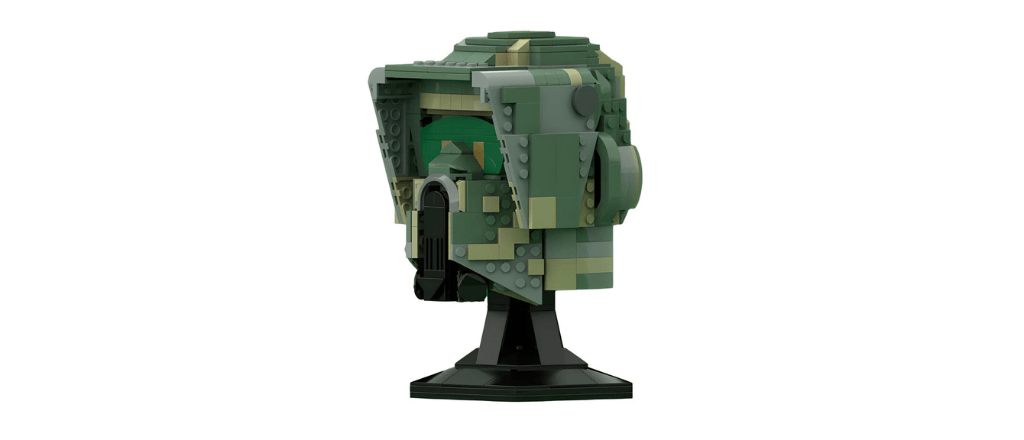
Like all clone units in “The Clone Wars,” the 41st Elite Corps expressed its identity through its distinctive armor markings, and the unit’s visual design is worth examining in detail because it tells you something important about who they were and how they operated. The 41st’s characteristic green and grey color scheme, which Gree himself wore with distinctive markings that identified him as the unit’s commanding officer, is one of the more understated and naturalistic in the clone army’s visual vocabulary.
The green coloration is particularly interesting because it suggests environmental adaptation: green is the color of forest and jungle terrain, the kind of complex, heavily vegetated environment that the 41st operated in most famously on Kashyyyk and in other forested or jungle settings. The choice to adopt green as the unit’s primary color reflects either a deliberate decision to optimize for concealment in those environments or a retrospective recognition that the unit had become particularly associated with forested operational contexts through its deployment history. Either way, the color scheme communicates something meaningful about who the 41st were and where they fought.
Gree’s own armor markings within the unit’s color scheme include additional detailing that sets him apart as the commanding officer while maintaining continuity with the unit’s overall visual identity. This is characteristic of how the best clone commanders wore their rank: not by departing dramatically from the unit’s aesthetic but by adding specific distinguishing elements that communicated authority without sacrificing the visual cohesion that made units recognizable as coherent formations.
Key Campaigns and Operational History
The 41st Elite Corps’ operational history spans some of the most diverse and most demanding environments of the Clone Wars, and Gree’s leadership across this history demonstrates the adaptive capability that was his unit’s defining characteristic. The campaigns that best illustrate what the 41st was and what made it exceptional are spread across the series and across the broader Clone Wars mythology, and together they paint a comprehensive picture of a unit that earned its elite designation through consistently exceptional performance in consistently unusual circumstances.
Geonosis represents one of the 41st’s most significant early deployments, the battle that opened the Clone Wars and that tested the entire Grand Army’s doctrine and readiness in ways that no training exercise could fully prepare for. The rocky, industrialized terrain of Geonosis was unlike anything the Kaminoan training program had specifically prepared for, and the combination of Geonosian defenders using their intimate knowledge of the terrain with the Separatist droid army’s massed firepower created a tactical environment that demanded exactly the kind of adaptive thinking that Gree brought to every operation. The 41st’s performance at Geonosis established its reputation as a unit capable of operating effectively in unexpected conditions, a reputation that would define its subsequent deployment history.
Kashyyyk is the campaign most closely associated with both Gree and the 41st, partly because of the climactic Order 66 sequence but more broadly because the Wookiee homeworld represents the kind of operationally complex environment where the 41st’s specific capabilities were most clearly on display. The forest warfare demands of Kashyyyk — three-dimensional combat in a canopy environment, coordination with non-Republic allied forces, the management of a civilian population in the middle of an active combat zone — required exactly the kind of cross-cultural competence and environmental adaptability that Gree’s intellectual approach to military command had developed in his unit.
The Wookiee Alliance: Cross-Cultural Military Cooperation
One of the most fascinating aspects of the Kashyyyk campaign is the cooperation between the 41st Elite Corps and the Wookiee warriors who were defending their homeworld. This cross-cultural military partnership is something that Gree’s specific qualities made him unusually well-suited to manage, and the way it worked in practice illustrates how his intellectual curiosity translated into genuine operational advantage.
Coordinating military operations with non-Republic allied forces is one of the most demanding challenges in coalition warfare, and the specific challenge of coordinating with Wookiee warriors was particularly acute. Wookiee military culture, tactics, and communication styles were dramatically different from Grand Army doctrine, and a commander without genuine interest in and respect for other species’ ways of doing things would have struggled to build the kind of effective working relationship that the Kashyyyk defense required. Gree’s background — his years of studying alien species and cultures, his genuine curiosity about different ways of being in the galaxy — gave him tools for building that relationship that most clone commanders simply didn’t have.
The partnership he built with the Wookiee leadership on Kashyyyk, while not extensively documented in the canon materials, is reflected in the effectiveness of the combined defense and in the evident mutual respect that the campaign generated between Republic and Wookiee forces. This is Gree’s intellectual curiosity expressing itself not as abstract academic interest but as genuine operational capability, the ability to build effective working relationships across significant cultural differences in the middle of a combat operation.

Gree as a Tactical Commander: How He Thought About War
Understanding Commander Gree as a military commander requires looking beyond the individual engagements and examining the underlying tactical philosophy that shaped how he approached every operational challenge. This philosophy was not a set of fixed doctrinal principles applied mechanically to every situation. It was something more dynamic and more interesting: a set of intellectual commitments and analytical habits that Gree brought to bear on whatever specific situation he found himself in, generating solutions that were adapted to the specific problem rather than derived from a standard playbook.
The foundation of Gree’s tactical approach was preparation and knowledge. Before every significant operation, he invested heavily in understanding the environment he was going to fight in, the enemy he was going to fight against, and the allied and civilian considerations that would shape what was tactically possible. This preparation was more thorough and more multi-dimensional than standard Republic military intelligence processes typically required, because Gree was interested not just in the tactical dimensions of a situation but in the ecological, cultural, and historical context that shaped it. He wanted to understand the whole picture, not just the parts that were immediately relevant to the military problem at hand.
Intelligence and Environmental Awareness
Gree’s emphasis on environmental awareness as a tactical asset is one of the most distinctive features of his command philosophy, and it reflects the intellectual curiosity that defined his character from the beginning of his career. Most military commanders think about environment primarily in terms of terrain: how does the ground affect movement, where are the defensible positions, what obstacles will slow an advance. Gree thought about environment in a more holistic sense: what species live here and how do they use the terrain, what ecological patterns will affect visibility and movement in ways that a purely topographical analysis wouldn’t reveal, how does the local climate create tactical considerations that standard doctrine doesn’t account for.
This broader environmental awareness gave the 41st Elite Corps a specific edge in the diverse, ecologically complex environments where they most frequently operated. Forest warfare on Kashyyyk, jungle operations on Felucia, the cave and tunnel systems of various Separatist installations — all of these environments reward the kind of deep environmental understanding that Gree cultivated, and the 41st’s effectiveness in these contexts is at least partly a product of the environmental intelligence that their commander generated and shared with his soldiers.
Adaptability as a Core Military Value
The second pillar of Gree’s tactical philosophy, closely related to his emphasis on knowledge and preparation, was adaptability: the commitment to generating solutions that fit the specific problem rather than applying standard responses regardless of how well they matched the situation. This adaptability was not the same as improvisation. It was not Gree making things up as he went along. It was the product of extensive preparation that gave him enough understanding of a situation to recognize when standard approaches wouldn’t work and to generate alternative approaches that would.
This distinction between genuine adaptability and mere improvisation is important because it explains why Gree’s unorthodox tactical solutions were as consistently effective as they were. A commander who improvises is making decisions with incomplete information and limited preparation, relying on instinct and experience to navigate novel situations. A commander who has done the intellectual work to understand a situation deeply can see the possibilities that less prepared commanders miss, and can select from those possibilities with genuine confidence rather than just with hope. Gree was the second kind of commander, and the 41st’s operational record reflects it.

The Geonosis Campaigns: Gree in the Crucible
The Geonosis campaigns represent the most extended and most demanding test of Gree’s abilities as a military commander, and they are worth examining in detail both for what they reveal about his specific capabilities and for the broader significance of Geonosis as the defining crucible of the Clone Wars’ early phase. Geonosis was where the Clone Wars started, and the battles fought there — both the initial engagement and the subsequent campaigns to fully secure the planet — were among the most brutal and most costly of the entire conflict.
The Geonosian defenders had advantages that made them extraordinarily difficult opponents: intimate knowledge of the terrain, an extensive underground tunnel and cave system that provided both defensive positions and movement corridors that the Republic couldn’t easily monitor or control, and a fanatical commitment to resistance that made them fight with a ferocity that purely tactical analysis of their capabilities wouldn’t have predicted. Gree’s task in this environment was not just to defeat an enemy in open battle but to conduct the kind of sustained, complex counterinsurgency operations that demanded exactly the combination of environmental knowledge, cross-cultural understanding, and tactical creativity that defined his approach to command.
The Underground War: Tunnel Warfare and Its Demands
The underground dimensions of the Geonosis campaign are particularly interesting from a tactical perspective because they required the 41st Elite Corps to develop and execute a form of warfare that the Grand Army’s training program had not specifically prepared for. Tunnel warfare — fighting in the cave and tunnel systems that the Geonosians used as defensive infrastructure — is one of the most psychologically and physically demanding forms of combat, characterized by restricted movement, limited visibility, the constant threat of ambush from unexpected directions, and the specific horror of being in a confined space with an enemy who knows that space better than you do.
Gree’s response to this challenge illustrates his tactical approach at its best. Rather than trying to apply standard open-terrain doctrine to an environment where it was clearly inappropriate, he invested in understanding the specific demands of the tunnel environment and developed approaches tailored to those demands: small-unit tactics emphasizing stealth and precise firepower, coordination with specialist Geonosian defectors who could provide intelligence about the tunnel systems, and the patient, methodical process of clearing and securing underground spaces rather than trying to achieve rapid results that the environment made impossible.
Coordination With Other Republic Forces at Geonosis
The Geonosis campaigns also required Gree to coordinate effectively with other Republic forces operating in adjacent sectors of the planet, which added the additional challenge of inter-unit coordination to the already demanding tactical environment. Coordinating military operations between multiple independent units in complex terrain, with limited communications and competing priorities, is one of the most difficult management challenges that any military commander faces, and the Geonosis campaigns provided that challenge in abundance.
Gree’s performance in this coordination role reflects the same qualities that defined his approach to everything else: thorough preparation, genuine attention to what other commanders needed from him rather than purely what he needed from them, and the intellectual flexibility to recognize when his own plans needed to change to support the larger operational picture. These are not glamorous qualities. They don’t generate the kind of dramatic individual heroism that makes for memorable battle sequences. But they are essential to the functioning of any complex military operation, and Gree’s consistent demonstration of them helps explain why the 41st Elite Corps was consistently deployed in the most demanding and most complex operational environments of the Clone Wars.
Gree’s Intellectual Life: The Clone Who Studied the Galaxy
We have touched on Gree’s intellectual curiosity throughout this article, but it deserves a sustained and specific examination because it is so central to his character and so unusual within the clone trooper context. The clone training program was, by design, a military education: it produced soldiers, not scholars, and while it gave its graduates the operational knowledge they needed to function effectively in the Grand Army, it was not designed to produce the kind of broad intellectual curiosity that Gree demonstrated throughout his career.
That curiosity was, in a very real sense, Gree’s act of self-creation. Every clone individualized themselves through the choices they made, the experiences they had, and the marks those experiences left on them. Gree’s individuation was substantially intellectual: he became himself, in significant part, through the things he chose to read and study and think about. This is different from the more experiential individuation of most clone characters, and it makes Gree a distinctive and fascinating figure in the clone trooper narrative.
His Study of Alien Species and Cultures
The specific focus of Gree’s intellectual interests on alien species and cultures is particularly meaningful given the context of his military service. The Grand Army of the Republic was a human-dominated institution fighting a galactic war in which the Republic’s clone soldiers frequently operated in environments populated by non-human species, in cooperation or opposition with non-human military forces, and in service of a political entity that claimed to represent the entire galaxy’s diverse populations. Understanding those populations, their cultures, their ways of operating in the world, was not just academically interesting. It was operationally relevant.
Gree’s study of alien species transformed what might have been purely personal intellectual curiosity into a genuine professional asset, which is part of what makes his intellectual life so interesting from a character perspective. He is not a scholar who happens to be a soldier. He is a soldier whose scholarship directly and consistently enhanced his military effectiveness. The knowledge he accumulated about Wookiee culture made him more effective at coordinating with Wookiee warriors on Kashyyyk. His understanding of Geonosian biology and social organization made him more effective at operating in Geonosian environments. His broader interest in how diverse species understood and inhabited their worlds gave him an environmental awareness that translated directly into tactical advantage.
What His Intellectual Character Tells Us About Clone Individuation
Gree’s intellectual life is also significant for what it tells us about the broader phenomenon of clone individuation that “The Clone Wars” documented so carefully. The standard narrative of how clones became individuals emphasizes experiential factors: the battles they fought, the losses they suffered, the relationships they formed, the specific events that left specific marks on specific soldiers. Gree’s story adds an intellectual dimension to this narrative that is less commonly discussed but equally important.
Clones who became individuals through intellectual means — through deliberate acts of seeking out information and ideas that the training program didn’t provide, through the cultivation of curiosity and the development of knowledge bases that went beyond operational requirements — were exercising a form of agency that the Kaminoan system was not designed to encourage. Every time Gree picked up a xenobiology text and read about a species he hadn’t encountered in his training, he was doing something that the system that created him hadn’t programmed him to do, asserting an autonomy that the cloning process was supposed to minimize. This quiet, intellectual form of self-assertion is one of the more underappreciated dimensions of clone individuality, and Gree is its finest representative.

Order 66 on Kashyyyk: Three Seconds That Almost Changed Everything
We cannot avoid the moment that defines Gree’s canonical fate, and having established who Gree was as a person and as a commander, we are now in the best possible position to understand what those three seconds on Kashyyyk actually mean. Because understanding Order 66 as it applies to Gree is not just about the tactical specifics of what happened. It is about what the inhibitor chip did to a specific, fully realized, genuinely complex person, and what that tells us about the nature of the tragedy the prequel era depicts.
When Order 66 went out, Gree was on Kashyyyk, in the middle of the active defense of the planet alongside Yoda. He was, at that moment, engaged in exactly the kind of multi-layered, cross-cultural military operation that his specific talents made him excellent at. He was coordinating between Republic forces and Wookiee warriors, managing a complex tactical situation in a demanding environment, doing the job he was born to do with the skills and knowledge and judgment that twenty years of service had developed in him. And then the chip fired, and none of that mattered anymore.
The Mechanics of What Happened
The mechanics of Gree’s Order 66 attempt are straightforward enough in tactical terms. He drew his blaster and attempted to shoot Yoda from behind, which was the tactically logical approach given the extraordinary danger that a frontal assault on a Grand Master of the Force would have represented. He communicated with another trooper to coordinate the attempt, which reflects the professional military instincts that the chip could override in terms of target selection but not in terms of basic tactical execution. And he was killed by Yoda before the shot could be fired.
But understanding the mechanics tells you almost nothing about what actually matters here. What matters is what the chip did to Gree as a person: it took his will, his judgment, his values, his relationships, his intellectual life, everything that made him who he was, and subordinated all of it to a single compelled action. The Gree who tried to kill Yoda was not acting on his own volition in any meaningful sense. He was a person whose agency had been seized by a piece of technology implanted in his skull without his knowledge or consent, in service of a political agenda that was the antithesis of everything the Republic he served claimed to stand for.
What Gree’s Order 66 Tells Us About the Tragedy
The specific tragedy of Gree’s Order 66 is different from that of most other clones who executed the command, because of the specific relationship between Gree and his Jedi. We don’t have the same level of detailed documentation of the Gree-Luminara partnership that we have for, say, the Rex-Anakin relationship, but what we do know suggests genuine mutual respect and genuine professional partnership. Gree was a clone who cared about understanding the Jedi, who had spent years working alongside Jedi in the most demanding operational environments, who had developed the kind of informed respect for the Order that only comes from sustained, close professional contact.
The Order 66 sequence on Kashyyyk did not involve Luminara directly — she was killed elsewhere — but it involved Yoda, who was in many ways the embodiment of everything the Jedi Order stood for. And Gree, whose intellectual curiosity had presumably led him to develop a more nuanced and more informed understanding of the Jedi than most clone soldiers possessed, was compelled to attempt the assassination of the Order’s most revered master. The gap between who Gree was and what the chip made him do is not just tragic. It is a specific and devastating indictment of the system that created him and the political agenda that weaponized him.
The What-If: If Gree Had Succeeded
The fan community’s enduring fascination with Gree’s Order 66 attempt is largely fueled by the extraordinary what-if scenario it presents. If Gree had succeeded — if his shot had landed before Yoda sensed it and responded — the history of the Star Wars universe would have been fundamentally and irrevocably altered. Yoda’s survival of Order 66 is not just a narrative convenience. It is an essential element of the story’s larger arc: Yoda goes into exile on Dagobah, trains Luke decades later, and through that training enables the redemption of Darth Vader and the defeat of Palpatine.
Without Yoda, none of that happens in the same way. Luke’s training on Dagobah doesn’t happen, or happens very differently. The philosophical and spiritual transmission of Jedi wisdom that Yoda represents is severed. The specific insights about the Force and about what the Rebellion is fighting for that Yoda provides are lost. The what-if scenarios cascade from there in ways that are genuinely extraordinary to contemplate, and all of them flow from those three seconds on Kashyyyk when Gree raised his blaster and Yoda heard him coming.

The Legacy of Commander Gree: What His Story Contributes to Star Wars
Stepping back from the specific events of Gree’s life and death, it’s worth asking what his story as a whole contributes to the Star Wars universe and why it deserves the kind of sustained attention this article has tried to provide. Gree is not among the most famous clone commanders. He does not have the narrative prominence of Rex or the dramatic arc of Fives. His screen time in “The Clone Wars” is significant but not dominant, and his single most famous moment is one in which he is killed. Why should we care about him as deeply as his story deserves?
The answer is that Gree represents something that the Star Wars universe needs more of and that his story provides with unusual clarity: the tragedy of wasted potential. The clone army of the Republic contained within it an extraordinary range of human capability and human potential, from the tactical brilliance of Rex to the philosophical complexity of Fives to the intellectual curiosity of Gree. Almost all of that potential was ultimately destroyed by the same system that created it, weaponized against the very Order it had been trained to serve, and then discarded when the Galactic Empire had no more use for clone soldiers.
Gree as a Symbol of What the Clone Wars Cost
Gree’s story is one of the clearest illustrations of what the Clone Wars actually cost, beyond the tactical and strategic dimensions of the conflict. The cost was not just lives. It was the specific, irreplaceable individuals that those lives contained: people who had made themselves, against the odds and against the intentions of the system that created them, into genuinely fascinating and genuinely valuable human beings. Gree had built an intellectual life that the Kaminoan training program wasn’t designed to produce. He had developed a body of knowledge and a set of analytical capabilities that made him one of the Grand Army’s finest commanders. He had built relationships with Jedi and with allied species that reflected genuine respect and genuine understanding.
All of that was destroyed, not by an enemy’s weapon but by a political conspiracy that used the very people he served alongside to execute him. The chip that killed Gree was not installed by the Separatists. It was installed by the Republic’s own cloners, at the behest of a Sith Lord who had been manipulating the Republic for decades. Gree died as a victim of the same system he had spent his entire life serving, and the specific quality of what was lost when he died — the xenobiology studies, the Wookiee cultural knowledge, the carefully developed tactical philosophy, the intellectual curiosity that had made him who he was — is part of what makes his death so genuinely devastating when you understand it fully.
His Influence on How We Understand Clone Identity
Gree’s story also makes a significant contribution to our understanding of clone identity and what it means to be an individual within the clone army’s specific circumstances. The standard narrative of clone individuation emphasizes the role of experience and relationship in creating distinct personalities from what began as identical genetic material. Gree’s story adds an intellectual dimension to that narrative, demonstrating that individuation could happen through acts of deliberate self-cultivation as much as through the accumulation of experience.
This matters because it suggests that clone identity was more actively constructed and more consciously pursued than the purely experiential model implies. Gree didn’t just become himself through what happened to him. He became himself, in significant part, through what he chose to think about and learn about and care about. This active, intentional dimension of his self-creation makes his story a particularly powerful statement about the resilience of individual agency even within systems designed to minimize it, and it adds depth to the broader Star Wars universe’s ongoing meditation on the nature of identity and free will.
Commander Gree in Fan Culture: The Clone Who Deserves More
Despite the relative brevity of his on-screen appearances and the comparative modesty of his fan following compared to characters like Rex or Wolffe, Commander Gree has a devoted and thoughtful fan community that has recognized and celebrated his complexity in ways that are genuinely impressive. The Gree fan community within the broader Star Wars fandom is characterized by a particular kind of intellectual engagement that, appropriately, mirrors the character’s own intellectual qualities: fans who have gone deep on the details, who have thought carefully about the implications of what the canon tells us, and who have produced creative work that takes the character’s full complexity seriously.
Fan fiction about Gree tends to engage seriously with the questions his story raises: about his intellectual life and what specific texts and studies shaped his thinking, about his relationship with Luminara and what sustained professional partnership with a thoughtful Jedi master taught him about the Force and about the galaxy, about what his inner experience during Order 66 might have been like, and about what he would have done if he had survived and had the opportunity to process what the chip made him do. These are rich creative territories, and the best fan work in this space adds genuine depth to a character whose canonical treatment, while compelling, leaves enormous room for imaginative expansion.
Gree in Cosplay and Visual Culture
The 41st Elite Corps’ distinctive green armor has made Commander Gree a popular cosplay subject, particularly within the 501st Legion and Galactic Academy costuming communities where detailed clone trooper armor is a major focus. The green and grey color scheme is visually striking, immediately recognizable, and technically demanding to reproduce accurately, which makes a successful Gree costume a genuine achievement in the clone trooper costuming community.
The visual identity of Gree and the 41st has also been well-served by the merchandise ecosystem around “The Clone Wars,” with action figures, collectibles, and reference materials that have maintained the character’s visual presence in Star Wars product lines across the years since the series concluded. The Black Series figure line at Hasbro has given the 41st Elite Corps Commander a collectible treatment that reflects the character’s genuine fan base, and the quality of that treatment is a measure of how seriously Hasbro and Lucasfilm take the segment of the fan community that cares about the detailed clone trooper lore.

Conclusion: Three Seconds and a Lifetime
Commander Gree’s story fits in three seconds of screen time in “Revenge of the Sith,” and it took us thousands of words to do justice to the person those three seconds obliterated. That disproportion is itself meaningful. It tells you something important about the gap between what the Star Wars films could show us about the Clone Wars and what the conflict actually was for the people — the clones — who fought it. The films showed us the broad strokes: the battles, the political machinations, the Jedi and the Sith and the collision between them. “The Clone Wars” showed us the texture, the specific individuals and specific relationships and specific acts of self-creation that the broader narrative compressed into background.
Gree was one of those specific individuals. He named himself after an alien species because he was curious about the galaxy. He built a tactical philosophy around the idea that knowledge and preparation were more valuable than firepower. He developed a genuine expertise in the environments and cultures of the worlds he was deployed to, not because the training program told him to but because he wanted to understand the universe he was fighting in. He earned the respect of the Jedi he served alongside and the warriors he fought beside through demonstrated competence and genuine interest in who they were. He was, in every meaningful sense, one of the Grand Army’s finest officers.
And then an inhibitor chip fired, and three seconds later he was gone, and the galaxy that contained everything he had made himself into went on without him, not knowing what it had lost, not knowing that the soldier who almost killed Yoda was also the soldier who read xenobiology texts on Kamino and wondered about the species that inhabited a galaxy he would never fully get to know.
Commander Gree almost changed everything. In the end, he changed nothing in the ways the history books record. But for anyone who has gone deep on his story, for anyone who has understood who he was and what was lost when Yoda’s lightsaber moved in those three seconds on Kashyyyk, he changed something more personal and more enduring: the understanding of what the Clone Wars cost, measured not in strategic objectives or political outcomes but in the specific, irreplaceable people who were consumed by it.
For readers who want to explore Commander Gree’s story further, “Star Wars: The Clone Wars” on Disney+ at www.disneyplus.com contains his most significant appearances and the best available portrait of his character in action. The fan-maintained Wookieepedia at starwars.fandom.com provides comprehensive canonical documentation of Gree’s history, the 41st Elite Corps’ campaigns, and the specific episodes that develop his character most fully. The “Star Wars: The Clone Wars Character Encyclopedia” from DK Books at www.dk.com provides official reference information about his design and role. The “Star Wars: Complete Vehicles” reference book from DK Books covers the equipment used by the 41st in its Kashyyyk and Geonosis deployments. And “Revenge of the Sith” itself, available on Disney+, contains the three seconds that will always define Gree’s canonical fate and that become, once you know his full story, one of the most devastating moments in the entire saga.
The clone who almost changed everything. Remember his name.