
 Canada
 USA
USA Japan
Japan



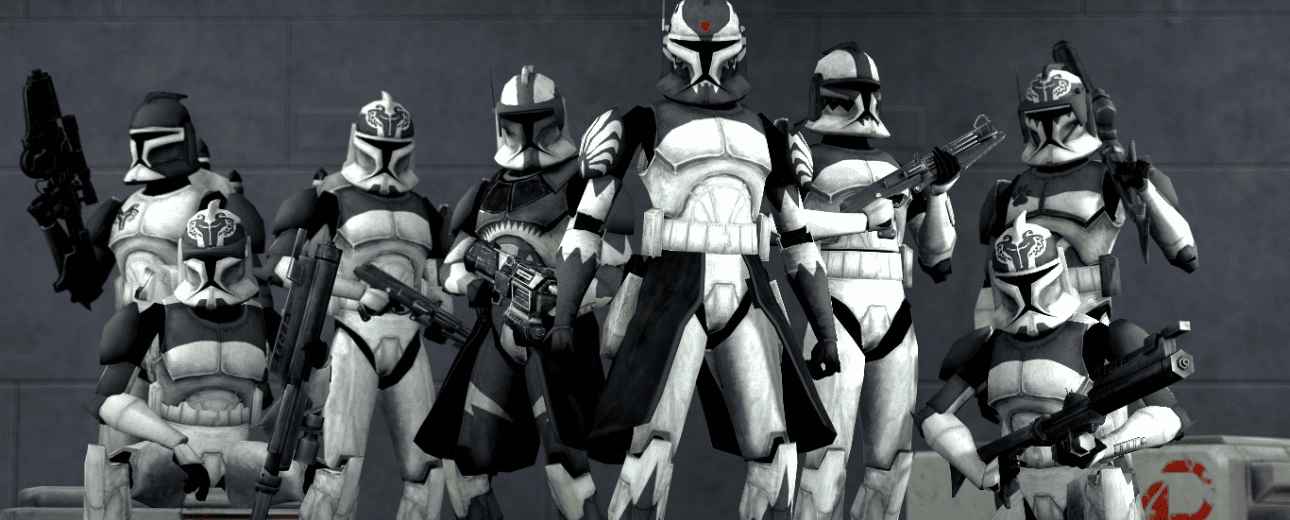
There are clone troopers who are famous for their heroism. There are clone troopers who are famous for their tactical brilliance. There are clone troopers who are famous for their personality, their humor, their relationships with the Jedi they served alongside. And then there is Commander Wolffe, who is famous for something altogether more complicated and altogether more human: the weight he carries. Every scar on his face, every line around his cybernetic eye, every measured word and guarded expression tells the story of a soldier who has seen more than any person should have to see and who has kept going anyway, not because it was easy but because stopping was never an option he allowed himself.
Wolffe is one of the most fascinating characters in the Star Wars animated universe, and he deserves the kind of deep, sustained, passionate examination that his complexity demands. He is not the most famous clone trooper — that distinction belongs to Rex, and probably always will. He is not the most narratively prominent — Fives and Echo carry arcs that dominate entire seasons of “The Clone Wars.” But he is, in many ways, the most psychologically interesting, the clone whose story cuts closest to some of the most difficult questions the Star Wars universe asks about identity, free will, loyalty, and what it means to live with choices you didn’t fully make but must nonetheless own.
This article is his complete story. We’re going to cover everything: his origins, his relationship with General Plo Koon, the battles that shaped him, the scar and the cybernetic eye that define his visual identity, the Wolfpack he led and lost, his complicated relationship with Order 66, his reappearance in “Rebels,” and what his full arc tells us about the Clone Wars and about the nature of the clones themselves. This is the story of the wolf who never forgot, and it is one of the great untold stories of the Star Wars universe.
Who Is Commander Wolffe? An Introduction to the Clone Wars’ Most Complex Officer
Before we dive into the specific events of Wolffe’s story, let’s establish who he is as a character, because understanding Wolffe requires understanding the specific combination of qualities that makes him distinct from the other memorable clone personalities that “The Clone Wars” gave us. He is CC-3636, a clone commander who served in the 104th Battalion of the Grand Army of the Republic under the command of Jedi Master Plo Koon. He is one of the more senior clone officers to receive substantial characterization in the series, and the characterization he receives is consistently thoughtful, nuanced, and attentive to the specific psychological reality of his situation.
What immediately distinguishes Wolffe from many other clone characters is his emotional register. Where Rex tends toward warmth and genuine connection, where Cody projects professional efficiency, where Fives burns with barely contained intensity, Wolffe operates in a space that is harder to read and harder to categorize. He is professional without being cold. He is tough without being cruel. He is guarded without being closed off. There is something watchful about him, something that suggests a person who has learned, through hard experience, to be careful about what he shows and what he says, because the galaxy has a way of using those things against you.
His visual design reinforces this character reading in ways that are immediately effective. The scar running across his eye, the cybernetic replacement that occupies the space where his left eye used to be, the weathered quality of his armor markings — these are not decorative details. They are a visual biography, a record of survival written in the specific damage that survival costs. Every time you see Wolffe on screen, you are looking at a soldier who has been hit and who kept going, and the accumulated evidence of those hits is part of what makes him so compelling as a character.
The 104th Battalion and the Wolfpack: Understanding His Unit
Wolffe’s identity is inseparable from his unit, because the 104th Battalion — and specifically the elite Wolfpackcompany within it — is not just where he serves but who he is in a fundamental sense. Clone commanders, more than almost any other military role in the Grand Army of the Republic, derive their identity from the units they lead. The unit’s culture, its tactical style, its traditions and its losses are all expressions of the commander’s personality and leadership, and the Wolfpack is an expression of Wolffe in the most direct possible way.
The Wolfpack designation reflects both the commander’s name and the tactical philosophy of the unit: fast, coordinated, pack-oriented fighters who operate with a cohesion and a mutual awareness that makes them significantly more than the sum of their individual capabilities. Like actual wolves, the Wolfpack’s strength comes from their ability to work together, to cover each other, to maintain formation and communication under pressure, and to bring concentrated force to bear on specific points with the kind of precise, coordinated aggression that disorganized opponents cannot effectively counter.
The unit’s distinctive armor markings — the grey and dark color scheme that sets them apart from other clone units — are another expression of this identity. In the clone army’s visual culture, armor markings are the primary means through which individual units distinguish themselves and communicate their specific identity, and the Wolfpack’s markings are among the most visually striking in the series. They convey something specific: this is a unit that has been through things, that has earned its identity through experience rather than just through assignment, and that carries its history visibly on the armor that its members wear.
Wolffe Among the Clone Commander Hierarchy
It is worth situating Wolffe within the broader context of clone commander characters in “The Clone Wars,” because understanding where he stands in relation to his contemporaries helps clarify what makes him distinctive. The series gave us a remarkable gallery of clone commanders, each with their own personality and their own relationship to the Jedi they served: Rex with his warmth and his growing philosophical complexity, Cody with his precision and his ultimately tragic compliance with Order 66, Bly with his fierce loyalty, Gree with his intellectual curiosity, Neyo with his more reserved professionalism.
Wolffe stands apart from all of these in a specific way: he is the clone commander whose story most explicitly grapples with the question of what it means to be a clone in a galaxy that treats clones as tools rather than people. His experiences, as we will explore in detail, push him toward questions about identity and free will that other clone commanders either don’t face as directly or don’t survive long enough to fully process. He is, in this sense, the clone commander whose arc is most explicitly philosophical, whose story is most directly about what it means to be a person when the system that created you has decided in advance what kind of person you are supposed to be.
General Plo Koon and Commander Wolffe: The Partnership That Defined Him
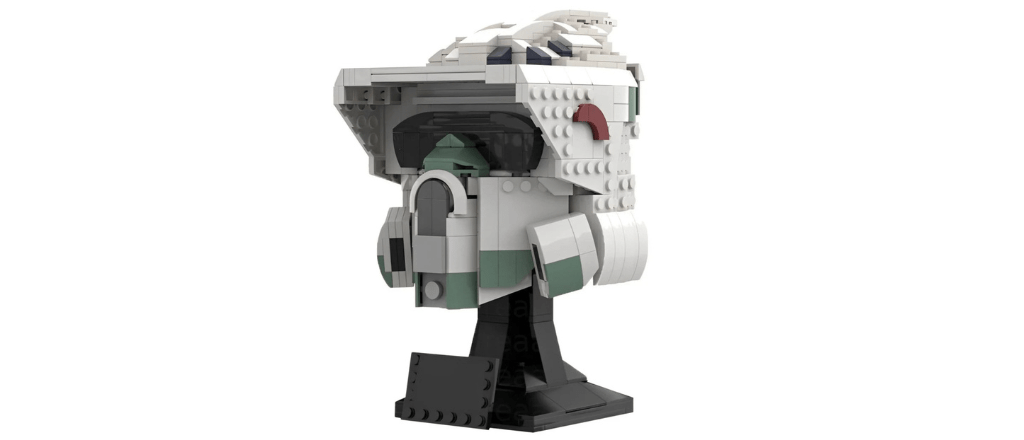
No discussion of Commander Wolffe can proceed very far without a sustained examination of his relationship with Jedi Master Plo Koon, because this partnership is the single most important relationship in Wolffe’s life and the primary lens through which we understand who he is and what he values. The Wolffe-Plo Koon relationship is one of the most beautiful and most carefully developed Jedi-clone partnerships in “The Clone Wars,” and it represents something genuinely important about what the best of those relationships could be at their finest.
Plo Koon is, within the Jedi Order’s council, something of an outlier in his approach to the clone troopers under his command. Where some Jedi maintained a professional distance from their clones, treating them as capable soldiers but not quite as full persons deserving of individual recognition and emotional investment, Plo Koon consistently and explicitly treated his clones as people. He knew their names. He learned their personalities. He cared about their wellbeing in a way that went beyond the purely operational, in a way that expressed genuine respect and genuine affection for the individuals rather than just for the capabilities they represented.
What Plo Koon Meant to Wolffe Specifically
For Wolffe specifically, Plo Koon’s approach to the clone-Jedi relationship was transformative in ways that are visible throughout the character’s arc. Having a commanding officer who treated you as a person, who cared whether you lived or died beyond the purely operational impact of your loss, who expressed genuine concern for your welfare and genuine respect for your judgment — this is not something that the clone training program prepared its graduates to expect, and Wolffe’s response to it reveals a great deal about his character.
Wolffe’s loyalty to Plo Koon is fierce, personal, and qualitatively different from the institutional loyalty that most clone-Jedi relationships expressed. He is not loyal to Plo Koon because Plo Koon is his commanding officer and the Jedi Order is the Republic’s military leadership. He is loyal to Plo Koon because Plo Koon is someone who has demonstrated, through consistent action, that he considers Wolffe’s life and dignity to be worth caring about. This kind of earned, personal loyalty is the most durable kind, and it is the foundation of the partnership’s effectiveness and its emotional resonance.
The relationship is also one of genuine mutual respect, which is rarer than it might seem in the context of the Jedi-clone command structure. Plo Koon consistently defers to Wolffe’s tactical judgment in situations where that judgment is better informed than his own, which is the behavior of a commander who genuinely respects the expertise of the people under his command rather than one who uses their subordinates purely as instruments of their own vision. And Wolffe, for his part, brings to the relationship not just professional competence but genuine personal investment, a willingness to go beyond the technical requirements of his role because the person he is serving has earned something more than technical compliance.
The Rescue at Abregado: The Mission That Forged Their Bond
The episode that most powerfully establishes the Wolffe-Plo Koon relationship is the Abregado mission from Season One of “The Clone Wars,” and it is one of the most emotionally effective character-establishing sequences in the entire series. When Plo Koon’s fleet is ambushed and destroyed by the Separatist weapon known as the Malevolence, Wolffe is among the tiny number of survivors left floating in an escape pod in deep space, waiting for a rescue that they have no reason to believe is coming.
What happens in that escape pod is a masterclass in character establishment through extreme circumstance. Wolffe and the handful of other survivors are dealing with the psychological reality of their situation: they are stranded, their fleet is destroyed, rescue is uncertain, and the Malevolence is still in the area hunting survivors. The decisions made in the pod, the way Wolffe maintains his composure and his focus while managing the despair of the people around him, and the moment when Plo Koon makes a specific point of coming back for them — these establish everything essential about both characters and about the relationship between them in a remarkably concentrated piece of storytelling.
Plo Koon’s insistence on returning for the survivors, against the military logic that said the mission should take priority over a handful of surviving troopers, is the action that crystallizes who he is as a Jedi and as a commander. And Wolffe’s response to being rescued — not just gratitude but a specific kind of acknowledgment, a recognition that this Jedi is different, that this relationship is worth investing in — is the action that crystallizes who Wolffe is. The bond forged in that escape pod shapes everything that follows in their shared story.
The Scar and the Eye: The Physical Story of What War Did to Wolffe
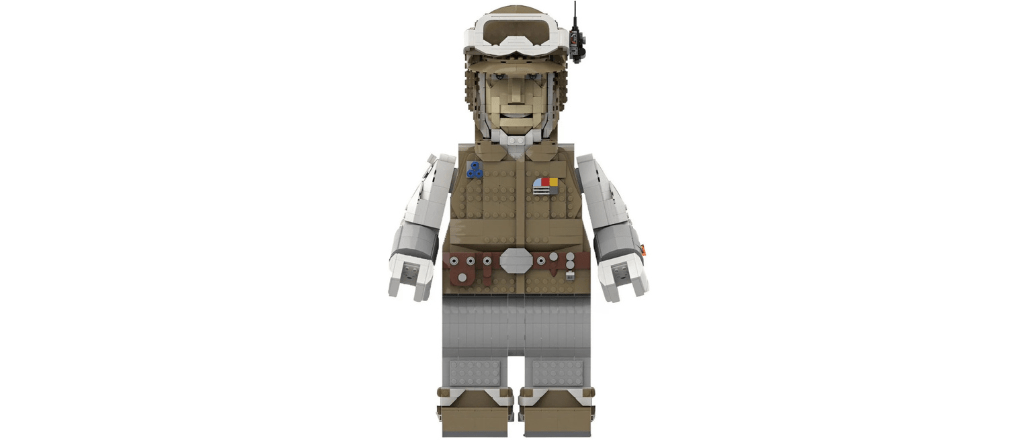
One of the first things any fan notices about Commander Wolffe is the scar running across his left eye and the cybernetic replacement that occupies the space where that eye used to be. These are among the most distinctive visual elements in the entire clone trooper character gallery, immediately identifying Wolffe as a specific individual and communicating volumes about his history before a single word of dialogue is spoken. Like Phasma’s chromium armor or Anakin’s mechanical hand, Wolffe’s scar and cybernetic eye are physical storytelling devices of the highest order, condensing an entire narrative of experience and survival into a single striking visual detail.
The injury was sustained during one of the most brutal encounters depicted in “The Clone Wars”: the confrontation with Asajj Ventress during the Battle of Khorm. Ventress, the Sith assassin serving Count Dooku, attacked the Wolfpack during the campaign, and the encounter left Wolffe with injuries severe enough to require cybernetic replacement of the lost eye. The fact that he survived at all is itself significant — Ventress was not a combatant who left many survivors — and the injury he sustained is a measure of just how dangerous the encounter was.
What the Cybernetic Eye Represents
The cybernetic eye is significant beyond its immediate narrative origin for several reasons that reward examination. First, it is a constant, visible reminder of the cost of the war that Wolffe is fighting: every time he looks in a reflective surface, every time a colleague looks at his face, the injury is present, undeniable, a physical record of what this conflict has taken from him. Unlike psychological wounds, which can be hidden or suppressed, the physical evidence of what Ventress did to him is permanently, visibly part of who he is.
Second, the cybernetic replacement tells us something important about the Republic’s investment in its clone soldiers — or more precisely, about the limits of that investment. The Republic replaced Wolffe’s eye with a functional cybernetic device. It did not restore what was lost. It provided a functional substitute. This is, in microcosm, the Republic’s relationship to the clones more broadly: they are maintained in functional condition because their combat effectiveness requires it, not because their individual wholeness is considered intrinsically valuable. The cybernetic eye is a metaphor as much as a medical intervention.
The Scar as Identity Marker Within Clone Culture
Within the visual culture of the clone army, physical distinguishing marks like scars carry specific significance because clones begin their existence as genuinely identical: same face, same voice, same physical form. The process of individuation that “The Clone Wars” documents so beautifully — the accumulation of different haircuts, different tattoos, different armor markings, different personalities — is the story of how identical people become distinct individuals through the choices they make and the experiences they have.
Wolffe’s scar is part of this individuation process, but it is different from the voluntary distinguishing marks that other clones adopt. It was not chosen. It was inflicted. It is the galaxy’s mark on Wolffe rather than Wolffe’s mark on himself, and this distinction matters. The scar tells you not just that Wolffe is different from his brothers — all the individualized clones are different — but that he has been specifically, personally marked by an enemy. It is a record of a specific encounter with a specific opponent, and it carries the weight of that specificity every time you look at it.

The Wolfpack’s Greatest Battles: A Military History
Commander Wolffe and the 104th Battalion participated in some of the most significant engagements of the Clone Wars, and examining these campaigns in detail gives you a comprehensive picture of Wolffe as a military commander and of the specific tactical culture that he built within the Wolfpack. The battles of the Clone Wars tested Wolffe in every way that a soldier can be tested, and his performance across these engagements demonstrates a consistent set of qualities: tactical adaptability, physical courage, care for the people under his command, and the specific kind of stubborn perseverance that keeps a soldier going when every rational calculation says the situation is hopeless.
The Malevolence campaign, which we discussed in the context of the Abregado rescue, was just the beginning of Wolffe’s significant operational history. The campaign against the Separatist superweapon took the 104th through some of the most dangerous combat of the early Clone Wars, and Wolffe’s leadership during this period established the Wolfpack’s reputation as one of the Grand Army’s most reliable and most capable units.
The Battle of Khorm and the Encounter With Ventress
The Battle of Khorm deserves extended treatment as perhaps the most personally consequential campaign in Wolffe’s military history. The campaign on the ice planet of Khorm brought the 104th into direct conflict with Asajj Ventress, and the encounter produced both the injury that permanently marked Wolffe’s face and a set of experiences that shaped his understanding of what the Clone Wars were actually about and what they cost.
Khorm was not a simple military campaign. It involved the kind of complex, multi-layered conflict that characterized the worst of the Clone Wars engagements: a civilian population caught between opposing military forces, a Separatist presence using the local population as leverage, and the specific horror of fighting an opponent like Ventress who combined extraordinary combat capability with a complete absence of the moral restraints that governed Republic military conduct. Fighting Ventress was not like fighting a Separatist droid army. It was a confrontation with an opponent who was genuinely dangerous in a way that droids were not, and whose objectives included inflicting maximum harm on the Republic’s forces rather than simply achieving military objectives.
The injury Wolffe sustained in this campaign was not the only cost the Wolfpack paid at Khorm. The battle was one of the engagements that most severely tested the unit’s cohesion and its capacity to maintain effectiveness under conditions of extreme stress and loss. The aftermath of Khorm, in terms of the psychological and organizational impact on the Wolfpack, is something that “The Clone Wars” depicts with characteristic attention to the human reality of sustained combat operations, and it adds significant depth to the picture of who Wolffe is and what the war has made him.
The Felucia and Iceberg Three Campaigns
The campaigns on Felucia and at Iceberg Three represent other significant chapters in the Wolfpack’s operational history, and they illustrate the breadth of environments and tactical challenges that Wolffe and his soldiers navigated across the Clone Wars. The diversity of these operational environments is itself significant: a commander who has fought in the jungle toxicity of Felucia, the arctic conditions of ice-covered installations, the deep space environments of capital ship battles, and the complex urban terrain of contested cities has developed an adaptability and a breadth of tactical experience that is enormously valuable and that shapes the specific quality of the leadership he provides.
Felucia in particular is worth noting because the planet’s unique and genuinely alien environment created specific tactical challenges that required Wolffe to adapt standard Republic military doctrine in real time. The dense, colorful jungle, with its bioluminescent flora and its population of dangerous wildlife, demanded approaches to movement, security, and fire control that had little precedent in standard training. Watching Wolffe navigate these challenges gives you a picture of a commander who is not simply applying learned doctrine but actively thinking through problems and developing solutions in the field, which is the mark of a genuinely capable military mind rather than a technically competent but intellectually limited one.
Leading the Wolfpack: Wolffe’s Command Philosophy
Across all of these campaigns, a consistent command philosophy emerges from Wolffe’s behavior and decisions that is worth articulating explicitly. He leads from the front, which means he shares the risks that his soldiers face rather than directing from a position of safety. He maintains high standards for tactical performance while demonstrating genuine care for the individuals who meet those standards. He makes hard decisions quickly and without visible indecision, but he makes them with obvious awareness of their human cost. And he holds himself to the same standards he holds his soldiers, which is the foundation of the kind of respect that makes a unit genuinely cohesive rather than just functionally compliant.
This command philosophy is not standard Imperial or Republic military doctrine. It is something Wolffe developed through experience and through the specific influence of Plo Koon’s example, and it produces a unit culture in the Wolfpack that is distinctly different from what you see in more doctrinally conventional clone units. The Wolfpack fights harder for Wolffe than purely operational loyalty would require, because he has given them reason to believe that he fights hard for them, that their lives matter to him beyond the tactical calculus of mission success.
Order 66 and Commander Wolffe: The Most Complicated Moment in Clone History
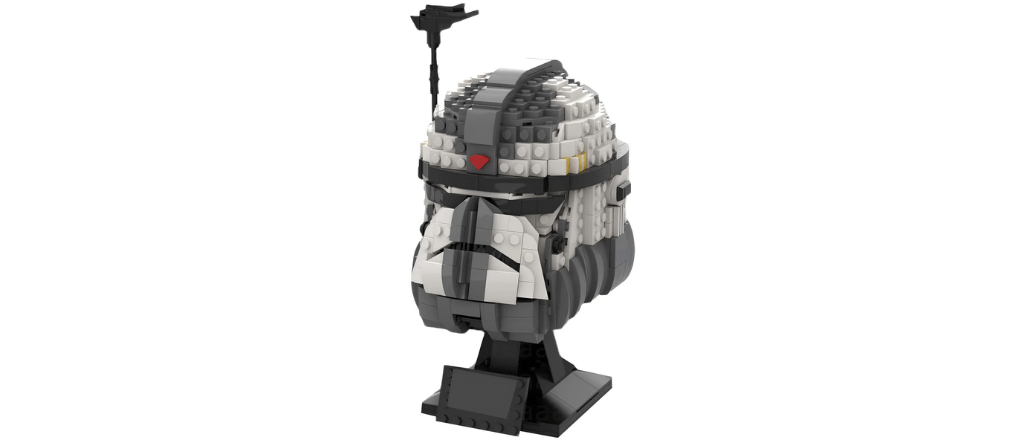
We now arrive at the most complex and most discussed aspect of Commander Wolffe’s story: his relationship to Order 66and what he did — and perhaps more importantly, what he didn’t do — when Palpatine’s command went out. This is the part of Wolffe’s story that has generated the most fan discussion, the most interpretive debate, and the most genuine emotional response, because it sits at the intersection of the Clone Wars’ deepest themes: free will, identity, loyalty, and the possibility of resistance against a programming that was designed to be irresistible.
To understand Wolffe’s relationship to Order 66, you first need to understand what Order 66 was and why it was so effective. The inhibitor chips implanted in every clone trooper at the time of their creation were not a subtle psychological influence. They were a direct neurological override, a piece of technology designed to suppress the clone’s conscious will and replace it with an irresistible compulsion to execute Order 66 when the command was given. The clones who executed their Jedi generals were not, in any meaningful sense, acting on their own volition. They were acting on a compulsion they had no capacity to resist, and understanding this is essential to any fair assessment of their moral responsibility for what happened.
What Wolffe Actually Did: The Canonical Record
The canonical record of Wolffe’s relationship to Order 66 is complex and has been established across multiple sources, most importantly his appearance in “Star Wars Rebels” Season Two. When Kanan Jarrus and the crew of the Ghost encounter Wolffe, Rex, and Gregor living in retirement on Seelos, we learn several crucial things about what happened to Wolffe and why he survived the post-Order 66 period.
Most significantly, we learn that Wolffe, like Rex, removed his inhibitor chip, which is why he retains his own personality and his own memory rather than being absorbed into the Empire’s stormtrooper apparatus. The removal of the chip is an act of extraordinary significance in the clone trooper narrative because it represents a conscious choice to resist the programming that the Republic — and ultimately Palpatine — had built into every clone soldier. Not many clones made that choice, and understanding why Wolffe made it requires understanding who he is and what his experiences across the Clone Wars had done to his relationship with the system he served.
The Complication: What Wolffe Did Before Removing His Chip
Here is where Wolffe’s Order 66 story becomes genuinely complicated and genuinely difficult, because the canonical record suggests that Wolffe did not immediately resist Order 66. There are indications that Wolffe executed Order 66 against General Plo Koon — the Jedi whose relationship with him we have spent so much time establishing as the most important in his life — before subsequently removing his chip and recovering his own agency. If this is accurate, it represents one of the most devastating character moments in the entire Star Wars animated universe: a soldier compelled to kill the person he cared about most, stripped of his own will at precisely the moment when his will to resist would have been strongest.
The emotional weight of this possibility is almost impossible to fully articulate. Plo Koon treated Wolffe as a person. He came back for Wolffe when Wolffe was stranded in an escape pod waiting to die. He built a relationship of genuine mutual respect and genuine affection across years of shared service. And Wolffe, his will overridden by a chip planted in his skull without his knowledge or consent, may have been the instrument of his death. This is not a villain’s act. This is a tragedy, in the classical sense: a terrible outcome produced not by moral failure but by circumstances that the protagonist had no power to control.
The Meaning of Chip Removal: An Act of Resistance
The decision to remove the inhibitor chip — whenever exactly it was made in the timeline of Wolffe’s post-Order 66 story — is the defining act of his arc, and it deserves to be recognized as such. In a galaxy where most clones either executed Order 66 without resistance, were killed, or became the stormtroopers of the emerging Empire without ever recovering their own agency, the clones who removed their chips and reclaimed themselves represent something genuinely remarkable: a form of resistance against a system designed to make resistance impossible.
For Wolffe specifically, the chip removal carries additional weight because of the relationship it implicitly acknowledges. Removing the chip is not just recovering your own personality. It is recovering your memories, including the memories of everything that happened when the chip was in control. It means Wolffe must live with the knowledge of what Order 66 made him do, including whatever role he played in the death of General Plo Koon. That is not a small thing to carry. That is, in many ways, the heaviest possible burden: not just the memory of what was done to you, but the knowledge of what was done through you.
Commander Wolffe in “Star Wars Rebels”: The Wolf in Winter
When Commander Wolffe reappears in “Star Wars Rebels” Season Two, the years since the Clone Wars have transformed him in ways that are immediately visible and immediately compelling. He is older, obviously. The weight of two decades of post-Clone Wars existence is written in his bearing and his behavior. But the most significant transformation is not physical. It is psychological: Wolffe has become, in the years since Order 66, someone who has made a specific and deliberate choice about how to survive in a galaxy dominated by the Empire he once served.
That choice is distance and concealment. Wolffe, Rex, and Gregor are living in an AT-TE walker on the remote plains of Seelos, as far from the Empire’s attention as they can get, trying to exist below the threshold of notice in a galaxy where being a recognizable clone veteran is potentially a death sentence. They have built a life of small pleasures and enforced anonymity, and Wolffe’s specific contribution to the group’s survival strategy is vigilance: an almost paranoid attentiveness to any threat that might expose them to Imperial notice.
His Initial Suspicion of the Rebels
When Kanan, Ezra, Sabine, and Zeb arrive on Seelos looking for Rex’s help, Wolffe’s response is one of the most psychologically interesting moments in “Rebels.” He is immediately and intensely suspicious of the newcomers, not from simple xenophobia or paranoia but from a specific, rational fear: that contact with the Rebellion will bring the Empire’s attention to a location where three aging clone veterans are trying to avoid exactly that attention. His calculation is coldly logical: the safest thing is to make the rebels go away, even if that means betraying their presence to the Empire.
This decision — Wolffe secretly contacts the Empire to report the rebels’ location — is the moment in “Rebels” that generates the most fan debate about his character, and it deserves careful examination rather than simple condemnation. Wolffe is not betraying the rebels out of loyalty to the Empire. He has no loyalty to the Empire. He is acting out of fear, specifically the fear of what Imperial attention will mean for Rex and Gregor as well as for himself. It is a selfish act, but it is a humanly understandable one, and the show treats it as such: as a mistake made by someone whose survival instincts have been conditioned by twenty years of living in an environment where the safest move is always to stay invisible.
His Redemption and Return to the Fight
The resolution of Wolffe’s arc in “Rebels” involves his acknowledgment of the mistake he made and his decision, ultimately, to support Rex’s choice to help the rebels. This resolution is handled with the kind of restraint and understatement that characterizes the best of “Rebels” character work: there is no dramatic speech, no explicit declaration of changed values. Wolffe simply helps, and in helping, demonstrates that the person he was during the Clone Wars — the soldier who fought hard for the people he cared about, who led the Wolfpack with fierce personal investment, who built a relationship with Plo Koon that was more than professional — is still present underneath the fear and the concealment.
What Wolffe’s “Rebels” arc ultimately argues is that survival and integrity are not always compatible, and that the pressure of twenty years of hiding has required Wolffe to make compromises that the younger, more idealistic version of himself would have refused. But it also argues that those compromises have not eliminated who he fundamentally is, that the wolf is still there underneath the survival calculations, and that given the right circumstances — given Rex’s example, given the presence of people worth fighting for — he can still choose to be that soldier again.
The Psychology of Commander Wolffe: Trauma, Identity and Resilience
One of the things that makes Commander Wolffe so compelling as a character is the degree to which his story engages seriously with questions of psychological trauma and what sustained exposure to catastrophic loss does to a person over time. The Clone Wars was not just a military conflict. It was, for the clone soldiers who fought it, a sustained experience of loss, violence, and institutional betrayal that would test the psychological resilience of any person, let alone people who had been trained from birth to be soldiers and who had no framework for processing grief except through continued operational effectiveness.
Wolffe lost soldiers. He lost the entire original Wolfpack in circumstances that were deeply traumatic. He operated under the ongoing psychological pressure of knowing that the war could end his existence at any moment, in any of dozens of ways. He built relationships that he knew could be taken from him without warning. And he did all of this within an institutional context — the Grand Army of the Republic — that had essentially no framework for acknowledging or addressing the psychological costs of the experience its soldiers were having.
The Loss of the Original Wolfpack
The destruction of the original Wolfpack during the Clone Wars campaigns represents one of the most psychologically significant events in Wolffe’s story, and it is one that “The Clone Wars” handles with characteristic attention to the human reality rather than the purely tactical dimension of such losses. When Wolffe loses soldiers — and he loses many, across multiple campaigns — the show does not simply register these losses as tactical setbacks. It depicts the specific weight of losing people you know, people whose names and personalities and individual quirks have become part of your daily existence, in the specific way that combat losses always are: suddenly, without preparation, in the middle of everything else that is happening.
The reconstitution of the Wolfpack after losses is itself a psychologically interesting process, because it raises questions about unit identity and continuity that the clone army’s specific circumstances make particularly acute. A unit that loses most of its original members and reconstitutes with new soldiers is both the same unit and a different unit simultaneously: the name continues, the traditions continue, but the specific individuals who gave those traditions their particular texture are gone. For Wolffe, as the commanding officer who survives these losses and leads the reconstituted unit, this creates a specific kind of leadership burden that is invisible to any outside observer.
What Wolffe Reveals About Clone Psychological Experience
Wolffe’s story is one of the richest examinations of clone psychological experience in the entire Star Wars universe, and it raises questions that deserve more attention than they often receive in fan discussions. The clones were created to be soldiers. Their entire upbringing was oriented toward military service, toward the acceptance of operational risk, toward a framework of values in which mission success was the primary measure of everything. This training produced soldiers of extraordinary capability and extraordinary dedication. It also produced people who had essentially no tools for processing the psychological cost of what they were experiencing.
What happens when you train someone from birth to be a soldier, send them into the most brutal military conflict the galaxy has seen in generations, and provide them with no framework for grief, no support for psychological recovery, and no acknowledged value beyond their combat effectiveness? Wolffe’s story provides one answer: you get someone who carries an enormous amount that never gets processed, who develops survival strategies — vigilance, guardedness, the willingness to make cold calculations when warm ones are dangerous — that are adaptive in the short term but accumulating in ways that have long-term costs.
Why Commander Wolffe Matters: His Place in the Clone Wars Legacy
We’ve covered an enormous amount of ground in this article, and as we approach the conclusion, I want to address the question that all of this analysis has been building toward: why does Commander Wolffe matter? Not just as a character study or as a tactical subject, but as a contribution to what the Star Wars universe means and what it is actually about.
Wolffe matters because his story is one of the most honest in the Star Wars canon about what war actually costs. Not the cost in the abstract, not the death toll as a statistic, but the specific, personal, accumulated cost of sustained exposure to violence and loss and institutional betrayal, and what that cost does to a person over time. He carries the weight of the Clone Wars in a way that is visible and undeniable, in the scar on his face and the cybernetic eye and the paranoid vigilance of a man who has learned that the galaxy will take everything you love if you give it the chance.
His Relationship to the Larger Clone Trooper Narrative
Within the larger narrative of the clone troopers across “The Clone Wars” and “Rebels,” Wolffe occupies a specific and important position. He is not the most famous clone. He is not the clone whose arc most explicitly drives the main narrative. But he is the clone whose story most directly addresses the question of what happens to the people the Grand Army of the Republic used and then discarded, what it looks like to survive the Clone Wars and the execution of Order 66 and twenty years of hiding in a galaxy that has moved on without you.
Rex gets more screen time and more explicit narrative prominence. Fives gets the arc that most directly exposes the truth of the inhibitor chips. Echo gets the arc that most powerfully explores the question of what happens to a clone soldier’s identity when the war takes everything but his body. But Wolffe gets something different and in some ways more valuable: the long view. He is the clone we see not just during the war but after it, not just at the height of the conflict but in the diminished, difficult aftermath, and his story in that aftermath is one of the most honest things the Star Wars animated universe has ever produced.
What the Wolf Teaches Us
The title of this article refers to something specific: Wolffe never forgot. Unlike some clone veterans who found ways to distance themselves from their Clone Wars experience, who built new identities that kept the past at arm’s length, Wolffe carries his history with him in every visible way. The scar and the eye. The wariness. The fierce, specific loyalty to the people he has decided to trust. The capability for cold calculation when survival demands it. These are all the products of remembering, of carrying the weight of what the Clone Wars were and what they cost.
In the Star Wars universe’s moral framework, memory and acknowledgment are acts of respect toward those who suffered and those who died. Wolffe’s refusal to forget — his insistence on carrying the weight rather than setting it down — is, in this framework, a form of honor. He honors the original Wolfpack by carrying the memory of their loss. He honors Plo Koon by carrying the memory of their relationship and, implicitly, of what the chip made him do. He honors the Clone Wars themselves by refusing to reduce them to a story where everything worked out, by insisting on the reality of the cost even when acknowledging that cost is painful.
The Enduring Appeal of Commander Wolffe in Fan Culture
The fan community’s deep affection for Commander Wolffe is one of the more telling measures of how effectively the character was developed by the writers and animators of “The Clone Wars” and “Rebels.” He is not a character whose appeal rests on simple heroism or spectacular action sequences, though he has both. His appeal rests on complexity, on the sense that there is always more going on beneath the surface than is immediately visible, and on the genuine emotional investment that his story generates in people who pay attention to it.
Wolffe cosplay is a staple of Star Wars convention culture, with the distinctive grey armor and the cybernetic eye making him immediately identifiable and the character’s complexity making him a particularly satisfying subject for portrayal. Fan fiction communities have produced extensive work exploring dimensions of his story that the canon has not addressed: his inner experience during Order 66, his relationship with Rex and Gregor in the years of hiding, his response to learning what happened to other clones after the war. This creative investment is a measure of how much space the character leaves for imaginative engagement, how much he invites rather than closes off the questions his story raises.
Conclusion: The Wolf Still Runs
Commander Wolffe’s story is not, ultimately, a story about a soldier. It is a story about a person who was created to be a soldier, who was used as a soldier, who lost almost everything that mattered to him in the course of being that soldier, and who survived all of it with enough of himself intact to make the choices that define who he truly is. The scar on his face and the cybernetic eye in his skull are the most visible evidence of what the war took from him. But the person who had his chip removed, who chose to live with the full weight of his memories rather than hiding from them, who helped Rex’s rebels when his survival calculations told him not to — that person is the evidence of what the war could not take.
The wolf who never forgot is still running. He carries the weight of the Wolfpack’s losses, of Plo Koon’s kindness, of Order 66’s compulsion, of twenty years of hiding in a galaxy that had no use for him anymore. He carries all of it, and he runs anyway. That is Commander Wolffe. That is why he matters. And that is why his story, fully told, is one of the most powerful in the Star Wars universe.
For readers who want to explore Commander Wolffe’s story further, “Star Wars: The Clone Wars” in its complete form is available on Disney+ at www.disneyplus.com and remains essential viewing, particularly the Malevolence arc in Season One and the various Wolfpack episodes throughout the series. “Star Wars Rebels” Season Two, also on Disney+, contains Wolffe’s post-Clone Wars story and his reunion with the Ghost crew. The fan-maintained Wookieepedia at starwars.fandom.com maintains comprehensive documentation of Wolffe’s canonical history, including episode-by-episode breakdowns of his appearances and detailed coverage of the 104th Battalion’s campaigns. The “Star Wars: The Clone Wars Character Encyclopedia” published by DK Books at www.dk.com provides official reference information about Wolffe’s design, rank, and role within the Grand Army. And for readers interested in the broader clone trooper narrative and the philosophical questions it raises about identity and free will, the “Order 66” novel by Karen Traviss, available through Del Rey Books at www.penguinrandomhouse.com, provides one of the most sustained and most thoughtful examinations of the clones’ psychological experience available in any Star Wars medium, even accounting for its Legends rather than canon status.
The wolf never forgot. Neither should we.