
 Canada
 USA
USA Japan
Japan



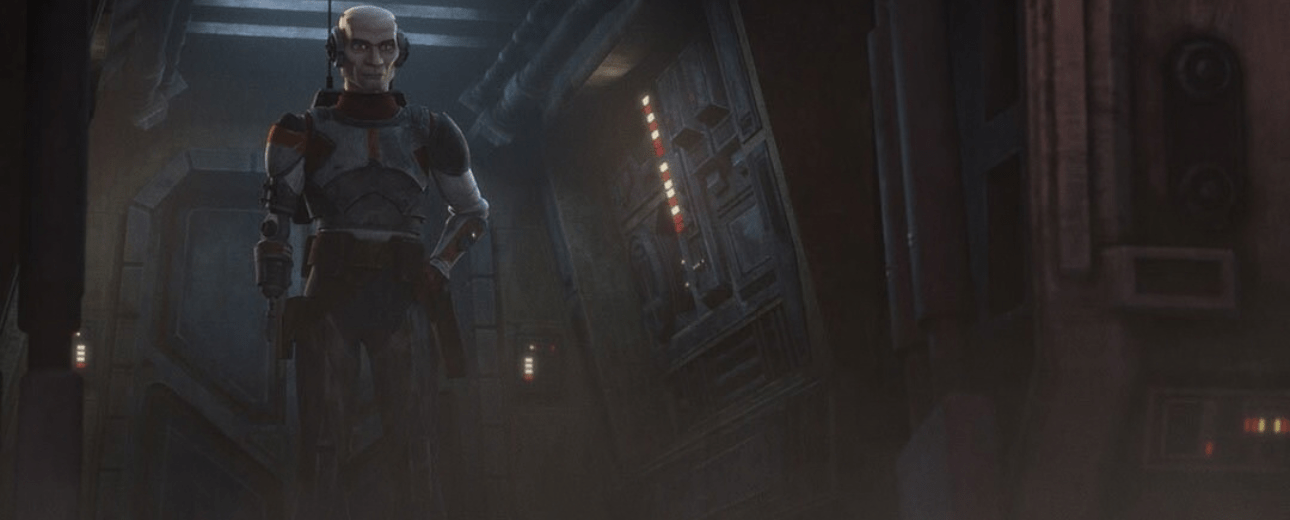
Some characters in Star Wars are defined by what they do. Others are defined by what is done to them — by the specific ways that the galaxy’s violence and indifference shape a person into something that their origins never anticipated and that their creators never intended. Echo is the second kind of character, and he is the most complete and most devastating example of it in the entire franchise. He began as CT-1409 — a clone trooper of the Domino Squad, known for his meticulous adherence to regulation and his encyclopedic knowledge of Republic military protocol. He was the clone who followed the rules, who knew the handbook, who believed in the system with a sincerity that his squadmates found equal parts admirable and mildly annoying. He was, in the most specific sense, the Republic’s ideal soldier.
And then the war happened to him. Repeatedly. Catastrophically. In ways that would have destroyed anyone less fundamentally stubborn about the business of surviving.
Echo’s story spans “The Clone Wars” animated series, the Bad Batch arc of its final season, and “The Bad Batch” animated series — making him one of the few clone characters whose canonical story is documented across multiple series and across the full arc of the Clone Wars era and its aftermath. It is a story about identity — about what survives when everything external that defined you is stripped away, when your body is modified beyond recognition, when you are used as a tool by people who see you as a machine rather than a person. It is a story about brotherhood — about the specific relationships that sustain people through the unsurvivable. And it is, ultimately, a story about becoming — about the specific way that the most complete destruction of a person can, in the right circumstances and with the right people around them, become the foundation for something new rather than simply the end of something old.
This is the complete story of Echo — everything Star Wars canon tells us about him, analyzed with the depth and the passion that his extraordinary journey deserves.
Domino Squad: Where Echo’s Story Begins
Echo’s story begins with failure — which is, for a character defined by rule-following and protocol adherence, a particularly pointed starting point. In the Domino Squad arc of “The Clone Wars” Season 3, we meet CT-1409 as a member of a clone cadet squad that cannot pass its graduation assessment. The Domino Squad — named because, like dominoes, when one falls they all fall — is a unit whose members cannot function as a cohesive team, each pursuing their own approach to problems rather than achieving the coordination that the assessment requires. Echo, designated at this point by the nickname that reflects his tendency to repeat regulations back at his squadmates, is in some ways the most frustrating member of this dysfunctional team: he knows exactly what the right procedure is, he can cite the relevant protocol chapter and verse, and this knowledge does him and his squad exactly no good because knowing what should be done and being able to actually do it together are entirely different skills.
The Domino Squad arc is one of the most carefully constructed character introduction sequences in Clone Wars history, because it does several important things simultaneously. It introduces five distinct individuals — Echo, Fives, Cutup, Droidbait, and Hevy — with enough specificity that each becomes immediately recognizable as a person rather than a type. It establishes the specific dynamic of their relationships, particularly the bond between Echo and Fives that will become one of the most important in the series. And it creates the baseline from which all subsequent development will be measured — the point of origin that makes Echo’s eventual transformation so meaningful because we know exactly who he was before it happened.
The Rishi Moon Battle: The First Transformation
The Battle of Rishi Moon — the engagement that follows the Domino Squad’s graduation and that serves as their first real combat assignment — is the first transformation in Echo’s story, and it is a transformation produced by exactly the kind of crucible that combat provides: the sudden, violent gap between training and reality that forces individuals to discover what they actually are rather than what they were told they were.
The Rishi Moon assignment should have been quiet — a posting to a listening station on a remote moon whose primary function was monitoring Separatist activity in the system. What it became was a desperate defense against a Separatist commando droid assault that killed most of the station’s personnel and left the surviving Domino Squad members — Echo, Fives, and Hevy — fighting to alert the Republic fleet to the attack on their own. The performance of these three soldiers in that engagement — the initiative they showed, the tactical creativity they demonstrated, the courage they expressed in circumstances that would have broken less resilient individuals — was the first evidence that the Domino Squad’s graduation-assessment struggles had been about team coordination rather than about individual capability.
The cost of Rishi Moon established the tragic pattern that would run through Echo’s story: success purchased with loss. Hevy died destroying the station to alert the Republic fleet. Echo and Fives survived, decorated and promoted, carrying the weight of a victory that had cost them their first squadmate. The joy of the decoration ceremony and the grief of Hevy’s absence coexist in that moment in a way that the series handles with remarkable emotional honesty — refusing to let the triumph be simple, insisting that the audience hold both the achievement and the loss simultaneously.
Fives and Echo: The Brotherhood That Defined Both of Them
The relationship between Fives and Echo is the emotional center of both characters’ stories and one of the most important relationships in the Clone Wars animated series. They are, in many ways, complementary opposites: Fives is instinctive, emotionally expressive, willing to bend rules when his moral judgment tells him the rules are wrong; Echo is methodical, protocol-oriented, someone whose trust in the system is genuine and whose adherence to its standards reflects a sincere belief in their value. These differences should create friction, and occasionally they do. But they more frequently create the specific complementarity of people whose different strengths make the combination stronger than either individual, and whose different weaknesses are covered by the other’s strengths.
What binds Fives and Echo together more than their complementary qualities is the shared experience of the Domino Squad — of being the survivors, of having watched their squadmates die, of carrying that survival forward into a war that would keep testing how much they could endure. They are each other’s witnesses — the people who know the full story, who remember the others, who are the living record of what the Domino Squad was and what it cost. This function of mutual witness is one of the deepest and most enduring forms of human connection, and it is the foundation on which the Fives-Echo friendship rests.
The 501st and the Road to Kamino
Following Rishi Moon, Echo and Fives were assigned to the 501st Legion — Anakin Skywalker’s unit, one of the Republic’s elite formations — and this assignment was the context in which Echo’s specific qualities as a soldier were most fully expressed before his capture. In the 501st, Echo found a military environment that valued exactly what he offered: precision, protocol knowledge, tactical reliability, the specific kind of soldier who could be counted on to do exactly what was needed in exactly the right way at exactly the right time. He thrived in this environment, developing into a combat veteran whose early protocol-obsession had been tested and refined by actual experience into genuine military competence.
The Battle of Kamino — the Separatist assault on the cloning facilities that produced the Republic’s army — was Echo’s defining engagement in the 501st period and the battle that led directly to his apparent death and his actual capture. The battle was one of the most significant of the Clone Wars’ middle period, both strategically — an attack on the source of the Republic’s clone army was an obvious Separatist strategic priority — and narratively, as the context in which Echo’s story took its most devastating turn.
The Capture and the Transformation: What the Separatists Did
The apparent death of Echo at the Battle of Kamino — the explosion that seemed to kill him, that led his squadmates and his commanders to mourn him, that led Fives to carry the weight of being the last Domino Squad survivor — was not a death. It was a capture, and what followed the capture was a transformation so complete and so horrifying that it challenges the concept of identity at its most fundamental level.
The Separatists did not capture Echo because they wanted a prisoner. They captured him because they wanted a weapon — specifically, because a clone trooper with Echo’s specific combination of 501st operational experience, tactical knowledge, and implanted Republic military access codes was more valuable as an intelligence asset than as a corpse. They took Echo — a person, a soldier, a friend, someone who had developed an individual identity and individual relationships over years of service — and they converted him into a machine. Not metaphorically. Literally. They installed cybernetic modifications that interfaced his brain with Separatist computer systems, used his neural network as a processing medium for tactical algorithms, and maintained him in a state of unconscious captivity while mining his knowledge and his capabilities for their military advantage.
The Techno Union’s Role and Its Horror
The Techno Union — the Separatist industrial conglomerate whose technological resources were among the most advanced in the galaxy — was responsible for Echo’s transformation, and the specific horror of what they did to him is amplified by the clinical indifference with which they did it. For the Techno Union, Echo was not a person being violated. He was a resource being optimized — a biological system with specific valuable properties that could be enhanced through technological modification to serve their operational needs more effectively.
This clinical indifference is one of the most chilling aspects of Echo’s captivity, because it represents a specific failure of moral recognition — the failure to see a person as a person rather than as a resource — that is among the most fundamental forms of ethical failure available to beings capable of ethical thought. The Techno Union did not hate Echo. They did not even particularly notice him as an individual. They simply identified his value, extracted it as efficiently as possible, and maintained the biological components necessary to sustain that value without any consideration of what those biological components experienced or needed. This is the specific horror that Echo’s captivity represents: not malice but indifference, which in some ways is worse.
What Echo Experienced During Captivity
The question of what Echo experienced during his years of Separatist captivity is one of the most psychologically significant questions his story raises, and “The Clone Wars” handles it with a restraint that is ultimately more powerful than explicit depiction would have been. We do not see Echo’s captivity from the inside — we do not have access to whatever consciousness he maintained during the years when his body was connected to Separatist systems and his mind was being used as a tactical processing medium.
What we do have is the Echo who is recovered — who is found by Fives, Rex, and the Bad Batch in the Separatist installation on Skako Minor, who has been maintained in a state that kept him alive but that is barely recognizable as the soldier who was lost at Kamino. His physical condition at recovery — connected to systems, partially mechanized, weakened by years of captivity — communicates without explicit statement what he has been through, and his psychological state in the immediate aftermath of recovery — the disorientation, the uncertainty about his own identity, the specific trauma of someone who has been used as a tool and must now re-learn how to be a person — is rendered with a care that respects the seriousness of what he has experienced without exploiting it for dramatic effect.
The Recovery and Its Immediate Challenges
The immediate aftermath of Echo’s recovery from Separatist captivity is one of the most psychologically realistic sequences in “The Clone Wars,” and its realism is what makes it so valuable as storytelling. Echo does not simply return to being himself because he has been rescued. The recovery of his physical freedom does not automatically restore the psychological and identity wholeness that his captivity had disrupted. He is, in the most literal sense, someone who has been remade — whose body has been modified, whose experience of selfhood has been interrupted, and who must now do the difficult work of understanding who he is in the wake of what has been done to him.
The specific modifications that remain after his rescue — the cybernetic components that have become part of his body, the interface systems that are now integrated with his neural architecture — are not simply physical alterations. They are permanent marks of what was done to him, reminders that his captivity was real and that its effects cannot be simply reversed. This permanence is crucial to the honesty of Echo’s story: the modifications do not disappear when he is saved, and the narrative does not pretend that rescue is the same as restoration.
Echo and the Bad Batch: Finding a New Family
The Bad Batch arc of “The Clone Wars” Season 7 — the storyline that introduced Clone Force 99 and that served as the narrative bridge between “The Clone Wars” and the subsequent “The Bad Batch” series — is the context in which Echo begins the process of rebuilding his identity in the wake of his captivity. His assignment to work with the Bad Batch for the Skako Minor mission was a tactical decision — his knowledge of Separatist systems, combined with the Bad Batch’s specific capabilities, made the team ideally suited for the infiltration operation. But what began as a tactical arrangement became something more significant: the beginning of a relationship with a group of people who were, in their own way, as outside the standard clone framework as Echo had become.
The Bad Batch — Hunter, Wrecker, Tech, Crosshair, and Echo — were all, in different ways, clones who did not fit the standard template. The original four had genetic mutations that gave them enhanced capabilities but that also marked them as different from the clone army’s standard product. Echo’s modifications were not genetic but were equally distinguishing — equally markers of a clone who was no longer standard, who occupied a category that the Republic’s clone management systems did not quite know how to classify. This shared outsider status was the foundation of his connection to the Bad Batch, the specific quality of recognition that made them, more than any standard clone unit, a place where he could belong.
What the Bad Batch Offered Echo That the 501st Could Not
The specific thing that the Bad Batch offered Echo that the 501st Legion — his previous home, the unit where he had thrived and that he had genuinely loved — could not offer in the wake of his captivity is worth examining carefully, because it illuminates what Echo needed and what the Bad Batch’s specific character provided. The 501st was a standard clone unit — an extraordinary one, shaped by Anakin Skywalker’s unconventional leadership and by the specific culture that Rex had built within it, but fundamentally a unit whose identity was built around standard clone parameters with modifications at the margins. Echo, post-captivity, was no longer a standard clone. He was something different, something modified, something that the standard clone framework did not have a clear place for.
The Bad Batch had no standard framework to violate. They were already different — already defined by their deviation from the clone standard rather than by their adherence to it. For Echo, this meant that his modifications were not disqualifying features in the Bad Batch context but simply another form of difference in a group entirely composed of differences. He did not need to overcome his modifications to belong to the Bad Batch. His modifications were, in the Bad Batch context, simply part of what he was — as unremarkable, in the specific way that matters for belonging, as Wrecker’s enhanced strength or Tech’s analytical capability.
Echo’s Technical Role and Its Personal Significance
Echo’s technical role in the Bad Batch — his ability to interface with enemy computer systems through his cybernetic modifications, to access and extract information from Separatist and later Imperial networks — is the most direct expression of the transformation that his captivity produced, and its significance operates on multiple levels simultaneously. At the tactical level, his interface capability makes him the Bad Batch’s most versatile intelligence asset — someone who can extract information from secured systems in ways that no amount of conventional hacking can match. At the personal level, it represents the specific way that Echo has converted his victimization into capability — has taken what was done to him without his consent and made it something that he owns and uses rather than something that simply defines him as a victim.
This conversion of imposed modification into personal capability is one of the most psychologically significant aspects of Echo’s post-captivity development, and it is handled with enough subtlety that its significance is felt rather than stated. Echo does not make speeches about reclaiming his modifications. He simply uses them — competently, confidently, in service of missions he believes in — and the act of using them on his own terms, for his own purposes, in service of people he chooses to serve, is the most complete expression of the identity recovery that his post-captivity arc is about.
The Question of Identity: Am I Still Echo?
The identity question that Echo’s modifications raise — the implicit question of whether he is still the person he was before his captivity, whether the modifications that were imposed on him have changed who he fundamentally is — is the philosophical heart of his story and the question that the narrative returns to repeatedly without ever resolving it in a simplistic way. This is a question that Star Wars rarely engages with this directly and this honestly, and it is one of the reasons that Echo’s story is so valuable to the franchise’s broader exploration of what identity means.
The answer that Echo’s story provides to this question is neither simple affirmation nor simple denial. He is not simply the same person he was before — the modifications are real, the experience of captivity has changed him, and pretending otherwise would be a dishonesty that the narrative consistently refuses. But he is also not a different person in the sense that his fundamental self — his values, his relationships, his specific way of engaging with the world — has been replaced by something alien. He is Echo, modified. He is Echo, changed. He is Echo, who has been through something terrible and who has survived it and who is doing the ongoing work of integrating that survival into a coherent sense of self.
The Bad Batch Series: Echo’s Full Development
“The Bad Batch” animated series — which followed Clone Force 99 through the transition from the Clone Wars to the Empire — gave Echo the opportunity for the most extended and most fully developed characterization of any period in his story, and what that characterization revealed was the specific quality of his moral development and his growing clarity about what he valued and who he wanted to be.
Echo in the Bad Batch series is a Clone Force 99 member who is simultaneously the most recently recovered from trauma and the most explicitly morally engaged — the member of the team who is most consistently asking the question of whether what they are doing is right, who is most attentive to the ways that the Empire’s emerging order is creating victims whose situations mirror his own, and who is most willing to advocate for intervention even when intervention is costly and complicated.
Echo’s Moral Compass in the New Empire
The moral evolution of Echo across the Bad Batch series is one of the most carefully developed character arcs in the show, and its development reflects the specific way that his experience of victimization has sharpened his moral sensitivity. Having been captured, modified, and used as a tool without his consent, Echo has a visceral and personal understanding of what it means to be treated as less than a person — to be seen as a resource rather than an individual. This personal understanding makes him attentive to the situations of others who are being similarly treated, and it consistently drives him toward advocacy and intervention even when the tactical or personal costs of that advocacy are high.
The specific situations that draw Echo’s moral attention in the Bad Batch series — the enslaved populations, the exploited workers, the individuals whose personhood is being denied by Imperial systems — are all variations on his own experience, and his response to them reflects a kind of moral empathy that is rooted in personal knowledge rather than abstract principle. He does not advocate for these people because he has theorized about justice. He advocates for them because he knows, from the inside, what it costs to be treated as less than human, and he cannot observe that cost being imposed on others without feeling the obligation to respond.
The Decision to Leave: Echo’s Most Important Choice
Echo’s decision to leave the Bad Batch — to join Rex and work directly with the nascent Rebellion rather than continuing with Clone Force 99 — is the most significant choice of his post-captivity life and the one that most completely expresses who he has become. It is not a rejection of the Bad Batch or a judgment of their choices. It is a clarity about his own — a recognition that the work of actively opposing the Empire and helping the people it is victimizing is the work that he needs to be doing, that the Bad Batch’s more mercenary approach to their post-Clone Wars existence is not where his specific calling lies.
This decision reflects the full arc of Echo’s development from the protocol-following cadet of Domino Squad to the morally engaged individual who knows what he values and acts on that knowledge even when action is costly. The Echo who follows the rulebook because the rulebook is right has become the Echo who follows his conscience because his conscience has been tested and refined by everything he has experienced and has emerged from that testing as something reliable. The rules he follows now are not the Republic’s protocols. They are his own — developed through experience, tested through loss, clarified by suffering.
Echo and Rex: The Reunion That Completes a Circle
The reunion between Echo and Rex — the man who led the rescue mission that recovered him from Separatist captivity, whose specific loyalty and specific love for Echo was among the primary motivations for that rescue — is one of the most emotionally resonant ongoing relationships in the Bad Batch series, and it completes a circle that Echo’s story has been drawing since Rishi Moon. Rex is, for Echo, the living connection to everything he was before his captivity — to the 501st, to Fives, to the person he was when he still believed in the Republic and its systems. Their reunion, and Echo’s decision to work alongside Rex in the emerging Rebellion, is the most complete expression of the continuity of identity that Echo’s story has been arguing for all along: that he is still, through everything, the soldier that Rex trained and loved and risked everything to recover.
Why Echo’s Story Matters: What He Means for Star Wars
Echo’s significance in the Star Wars canon extends beyond his individual story into the broader questions that the franchise has always been interested in: what is identity, what makes a person who they are, and what survives the most complete attempts to strip that personhood away. These questions are central to Star Wars at its most thoughtful, and Echo engages them with more directness and more personal specificity than almost any other character in the franchise.
His story is also significant for what it says about the clone army — about the specific human cost of creating a population of genetically identical soldiers and deploying them in a war that was designed, by the war’s architect, to destroy them. Echo’s captivity and modification by the Separatists is the most extreme version of what was done to every clone soldier: used as a tool, valued for capability rather than for personhood, maintained in the specific conditions necessary to sustain that capability without consideration of what the individual being maintained needed or experienced. The Separatists made this explicit and mechanical. The Republic made it institutional and normalized. But the fundamental dynamic — the treatment of persons as resources — is the same in both cases, and Echo’s story makes that dynamic impossible to ignore.
The Legacy of Fives in Echo’s Story
The legacy of Fives — Echo’s brother, the last fellow Domino Squad survivor before Echo’s apparent death, the clone who came closest to exposing Order 66 and who was killed for it — runs through Echo’s entire post-captivity story as a presence that is felt even in its absence. Echo is, in a specific sense, the continuation of Fives — the surviving brother, the one who carries forward the Domino Squad’s history, the one whose existence honors Fives’s memory by continuing to live and to be the specific kind of person that their brotherhood shaped him to be.
The Fives-Echo relationship is one of the most complete explorations of brotherhood in Star Wars, and its completion — through Fives’s death before Echo’s recovery, leaving Echo to carry forward a brotherhood that can no longer be reciprocal — is one of the most quietly devastating elements of Echo’s story. He survived. He was recovered. He was given the opportunity that Fives was denied. And the best way he knows to honor that opportunity is to be the person that their brotherhood made him — someone who fights for the people the system fails, who refuses to see persons as resources, who carries the Domino Squad’s specific humanity forward into a galaxy that has repeatedly tried to extinguish it.
For readers who want to explore Echo’s complete story, “Star Wars: The Clone Wars” Seasons 1, 3, and 7 and “Star Wars: The Bad Batch” are all available on Disney+ at disneyplus.com — the Domino Squad arc, the Kamino arc, the Bad Batch arc, and the Bad Batch series together constitute one of the most complete and most emotionally rich character journeys in Star Wars animation. Wookieepedia at starwars.fandom.com maintains comprehensive documentation of Echo’s canonical history across all appearances. The “Star Wars: The Clone Wars — The Complete Series” collector’s edition provides the full context for Echo’s Clone Wars development. For community discussion and fan analysis, the Star Wars subreddit at reddit.com and the dedicated Clone Wars and Bad Batch communities host some of the most thoughtful analysis of Echo’s character and his significance. The “Star Wars: The Bad Batch — The Art of the Series”available at amazon.com documents the visual development of Echo’s post-Clone Wars design and the creative decisions behind his continued characterization. And “Star Wars: Battles That Changed the Galaxy” published by DK Books at dk.com provides detailed documentation of the battles — Rishi Moon, Kamino, Skako Minor — that defined Echo’s service and his transformation.
He was CT-1409. He was the clone who followed the rules. He was lost and found and remade and recovered. He chose his conscience over his orders and his brothers over his programming. He became something new without losing what he was. That is Echo’s story. And it is one of the best stories Star Wars has ever told.