
 Canada
 USA
USA Japan
Japan



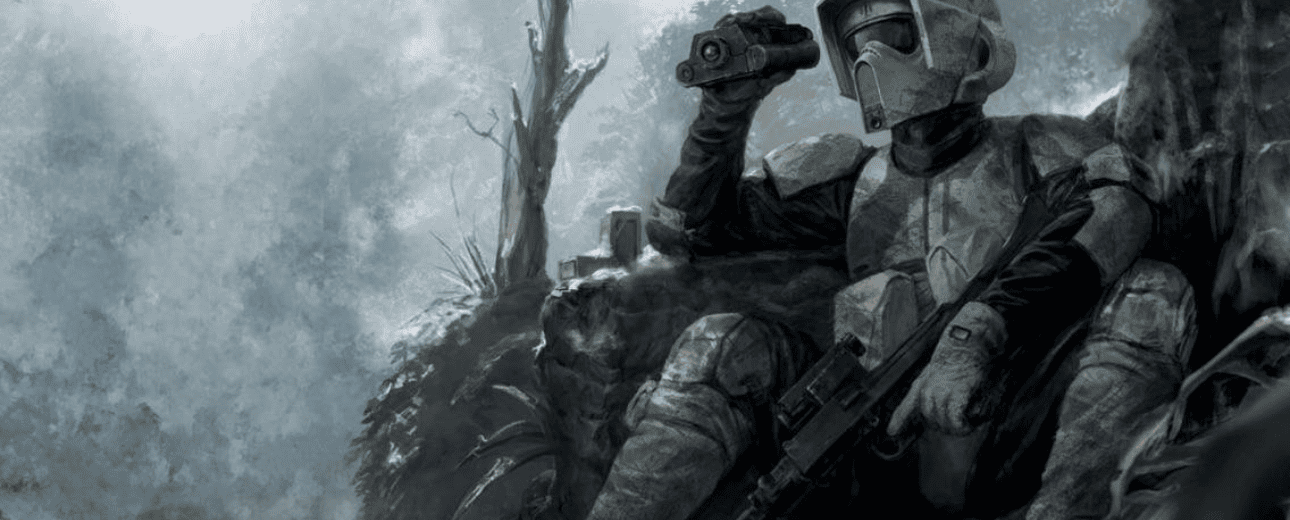
Ask any Star Wars fan to name their favorite stormtrooper variant and you will get a wide range of answers. Some will say the Death Troopers, with their imposing black armor and their association with Director Krennic’s most dangerous operations. Some will say the Phase II clone troopers of the Republic era, whose armor design bridged the gap between the prequel and original trilogies so elegantly. Some will say the snowtroopers of Hoth, with their distinctive cold-weather silhouette and their role in one of cinema’s most spectacular battle sequences. But a significant and deeply passionate segment of the Star Wars fan community will give you a different answer entirely, one that reflects a specific appreciation for a specific kind of soldier: they will say the Scout Trooper.
And they will be right to say it. Because the Imperial Scout Trooper is, when you examine the full picture of what this soldier is, what they do, how they operate, and what they represent within the Empire’s military doctrine, one of the most fascinating and most well-designed military archetypes in the entire Star Wars universe. They are lighter than standard stormtroopers. They are faster. They are trained for independent operation in environments that would challenge less specialized soldiers. They are the Empire’s eyes in hostile territory, the advance force that sees what’s coming before the main body arrives, and the rapid response element that can be anywhere a speeder bike can reach in a fraction of the time it would take conventional infantry.
This article is the complete guide to Imperial Scout Troopers: their history, their armor, their weapons, their vehicles, their tactical doctrine, their most memorable appearances across film, television, and the expanded universe, and their enduring place in Star Wars fan culture. Whether you’re a longtime devotee of the Scout Trooper aesthetic or someone who has just started appreciating what these soldiers bring to the Star Wars military universe, this is everything you need to know. Let’s go fast.
What Is a Scout Trooper? Defining the Empire’s Most Mobile Soldier
To understand Scout Troopers fully, you need to start with the question of what they are actually for, because their entire design — their armor, their weapons, their vehicles, their training — flows from a specific military requirement that the standard stormtrooper was not designed to meet. The Imperial Army, like all large military organizations, needed a capability that its standard infantry couldn’t provide: a fast, lightly equipped, independently operating reconnaissance and screening force capable of operating in advance of conventional units, gathering intelligence, screening flanks, and responding rapidly to threats or opportunities across wide areas of terrain.
The Imperial Scout Trooper, officially designated as the Imperial Scout Trooper or sometimes as the biker scout, was the solution to this requirement. These soldiers are the Empire’s dedicated reconnaissance and light cavalry force, trained and equipped specifically for the missions that standard stormtroopers — heavy infantry optimized for massed assault and garrison duty — were never designed to perform. They operate in pairs or small teams rather than in the larger formations that standard stormtrooper doctrine requires, they rely on speed and terrain knowledge rather than firepower and armor, and they are expected to make independent tactical judgments in situations where they have no immediate access to the chain of command.
This combination of independence, mobility, and specialized skill set makes Scout Troopers one of the most distinctive military types in the Empire’s order of battle, and it is the foundation of everything that makes them so visually and tactically compelling as a subject for Star Wars analysis. They are not just stormtroopers on speeder bikes. They are a fundamentally different kind of soldier, shaped by a fundamentally different set of requirements and a fundamentally different tactical philosophy.
The Scout Trooper’s Place in Imperial Military Doctrine
Within the Empire’s extraordinarily complex military hierarchy, Scout Troopers occupy a specific and well-defined niche that is worth mapping out in some detail. The Imperial military, at its most basic level, divides ground forces into two broad categories: the Imperial Army, which handles conventional ground combat operations, and the Stormtrooper Corps, which handles elite assault operations and provides the Emperor’s most visible instrument of military power and political intimidation. Scout Troopers are part of the Stormtrooper Corps rather than the regular Imperial Army, which is significant because it means they share the Corps’ emphasis on elite selection, intensive training, and deployment in the most demanding operational environments.
Within the Stormtrooper Corps itself, Scout Troopers represent a specialization track that diverges from the standard stormtrooper training pipeline at a relatively advanced stage. A soldier who becomes a Scout Trooper has already completed the basic Stormtrooper Corps training program, which is itself substantially more demanding than standard Imperial Army training. They then undergo additional specialized training focused on reconnaissance techniques, independent operation, speeder bike handling, survival in austere environments, and the specific skills required for the scout mission. This two-stage training process produces soldiers who combine the Corps’ general elite capabilities with the specific expertise of professional military scouts.
How Scout Troopers Differ From Standard Stormtroopers
The differences between Scout Troopers and standard stormtroopers are profound enough that the two soldier types represent genuinely distinct military cultures rather than just variants of the same basic soldier. Standard stormtroopers are optimized for collective action: they fight in formations, they rely on mutual support, they are most effective when they can bring concentrated firepower to bear on a fixed objective. Their armor reflects this collective, assault-oriented doctrine: it is heavier than Scout Trooper armor, providing better protection against the sustained firefights that assault operations typically involve, at the cost of the mobility and endurance that independent operation requires.
Scout Troopers, by contrast, are optimized for individual and small-team action. They are most effective when operating ahead of or away from the main force, in situations where they must rely on their own judgment, their own skills, and their own resources rather than on the support of a larger unit. Their training emphasizes qualities that standard stormtrooper doctrine does not prioritize: fieldcraft, navigation, environmental adaptation, self-sufficiency, and the specific psychological resilience required to operate alone or in very small teams in hostile territory for extended periods.
This cultural difference is something that the expanded universe materials about Scout Troopers explore in interesting ways. Scout Troopers tend to develop a particular kind of professional identity that sets them apart from their standard stormtrooper colleagues, a sense of themselves as a different kind of soldier doing a different kind of work. They are, within the Stormtrooper Corps’ culture, something like the equivalent of special operations forces within a conventional military: respected for their capabilities, somewhat apart from the main body of the organization, and defined by a specific expertise that most of their colleagues do not share.
The Armor That Defined a Generation: Scout Trooper Equipment Breakdown
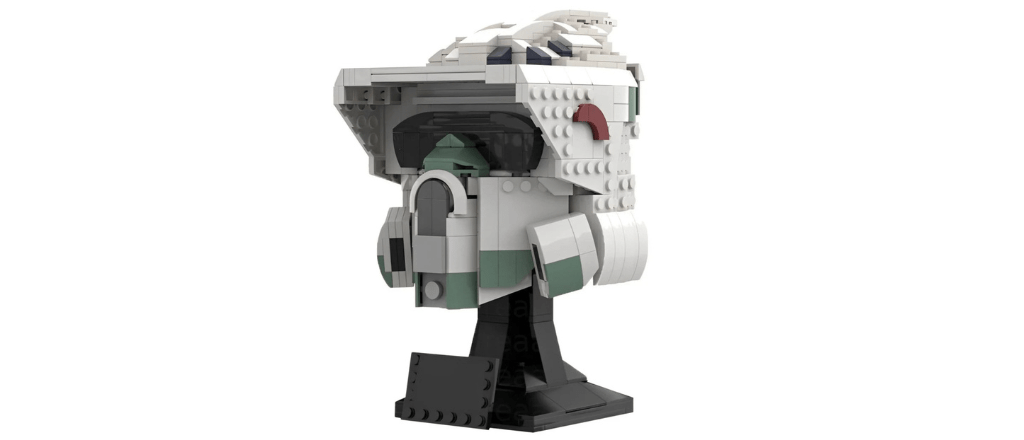
If there is one thing that every Star Wars fan can agree on about Scout Troopers, it is that their armor is extraordinary. The Scout Trooper’s distinctive white and black equipment package is one of the most recognizable visual signatures in the entire Star Wars franchise, a design that communicates the character’s function, identity, and tactical role with remarkable efficiency. You know, the instant you see a Scout Trooper, that you are looking at a different kind of Imperial soldier: lighter, more agile, built for speed rather than frontal assault.
The armor’s genius lies in the way its design reflects actual military logic. Every significant departure from standard stormtrooper armor has a tactical rationale, every reduction in coverage and every modification to standard components serves a specific operational requirement. The Scout Trooper’s armor is not a fashion statement or a purely aesthetic choice. It is a functional military kit optimized for the specific demands of the reconnaissance and screening mission, and understanding those demands helps you appreciate why the armor looks the way it does.
The Helmet: The Scout Trooper’s Most Iconic Feature
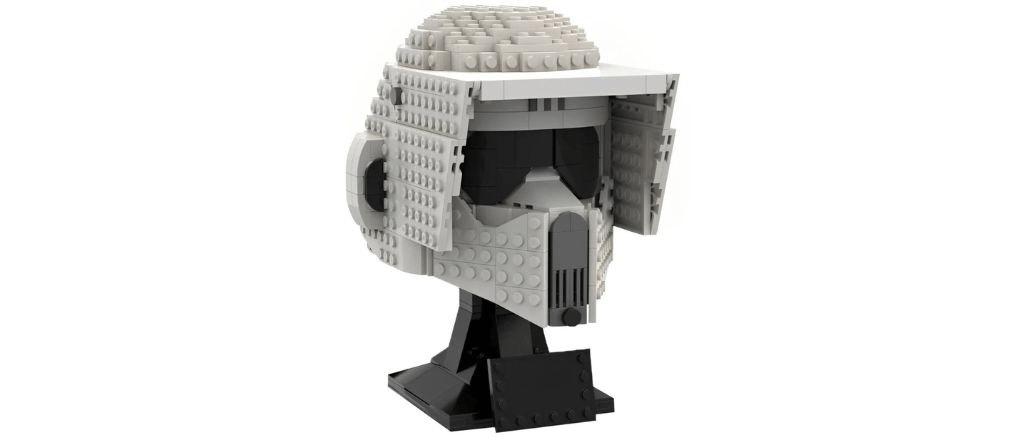
The Scout Trooper helmet is, without question, one of the greatest individual design achievements in Star Wars visual history. Its elongated, somewhat insectoid profile, with the distinctive visor design and the reinforced brow ridge, creates a silhouette that is immediately recognizable and genuinely unlike anything else in the franchise’s visual vocabulary. It is simultaneously alien and functional, strange and logical, a design that rewards close examination because the more you look at it, the more you can see the practical requirements it is designed to meet.
The helmet’s most important functional feature is its enhanced sensory suite, which is substantially more sophisticated than the equivalent systems in standard stormtrooper helmets. The visor incorporates enhanced optical systems that provide magnification, thermal imaging, and low-light capabilities that allow Scout Troopers to gather detailed information about terrain and targets at distances that keep them safely outside enemy detection range. This optical enhancement is not a luxury. It is a core capability for a soldier whose primary mission is observation and intelligence gathering, and the helmet’s design prioritizes it accordingly.
The enhanced communications package integrated into the Scout Trooper helmet is another critical feature that reflects the reconnaissance mission’s specific requirements. A scout who cannot communicate effectively with the units they support has accomplished nothing regardless of how much intelligence they gather. The helmet integrates encrypted long-range communication systems, frequency-hopping technology to defeat enemy signals intelligence, and the kind of robust, redundant communications architecture that allows Scout Troopers to maintain contact with Imperial command elements across significant distances and through challenging electromagnetic environments.
The helmet also provides the full suite of environmental protection that all stormtrooper helmets include: atmosphere filtering, vacuum sealing for brief exposure to hostile atmospheres, temperature regulation for operation in extreme environments, and protection against the blunt trauma and shrapnel that combat consistently produces. These capabilities make the Scout Trooper helmet a genuinely sophisticated piece of military technology, not just a striking visual design element, and they contribute significantly to the Scout Trooper’s ability to operate effectively across the diverse range of environments that the Empire’s galaxy-wide deployments require.
Body Armor Configuration: The Philosophy of Less Is More
Below the helmet, the Scout Trooper’s armor configuration makes a series of deliberate and militarily logical sacrifices in protection in exchange for the mobility and endurance that the reconnaissance mission demands. The chest and back plates are present but noticeably reduced in coverage compared to standard stormtrooper armor. The shoulder protection is significantly reduced, replaced by a more streamlined configuration that allows a far greater range of arm movement. The overall effect is a soldier who looks lighter and more agile than their standard stormtrooper colleagues, because they are lighter and more agile.
The leg and arm protection follows the same philosophy. The thigh armor covers the critical areas while leaving the knee and lower leg with reduced coverage, accepting greater vulnerability to low-level threats in exchange for the freedom of movement that extended dismounted patrolling requires. The boots deserve particular attention: Scout Trooper footwear is designed with a specific emphasis on all-terrain capability and quiet movement, reflecting the field craft requirements of soldiers who frequently need to approach observation positions without being detected. The difference between boots that make noise on a forest floor and boots that don’t can be operationally significant, and Scout Trooper equipment design takes this seriously.
The gloves worn by Scout Troopers are another detail that rewards examination. The fingerless or partially fingered glove configuration that appears in many Scout Trooper depictions is a practical choice for soldiers who need to maintain fine motor control for speeder bike operation, sensor equipment manipulation, and the precise trigger work that accurate marksmanship requires. Full gloves, while providing better protection, reduce the tactile sensitivity that these tasks demand. The Scout Trooper glove design is a compromise between protection and dexterity that reflects genuine thinking about the job these soldiers actually do.
The Belt and Equipment Harness
The Scout Trooper’s belt and equipment harness is more prominent and more elaborate than the equivalent system on standard stormtrooper armor, reflecting the greater self-sufficiency requirements of soldiers who operate independently for extended periods. Where a standard stormtrooper can rely on unit logistics for resupply and support, a Scout Trooper operating well ahead of the main force must carry everything they need on their person or on their vehicle.
The belt typically carries ammunition pouches, a survival kit, communications equipment, and the various tools required for extended independent operation. Reference materials from the expanded universe suggest that Scout Trooper standard equipment loads include water purification capability, emergency rations, basic medical supplies weighted toward the injuries most likely in the field, and navigation tools for use in environments where electronic navigation might be disrupted or unavailable. This self-sufficiency equipment adds weight, but it adds capability that is essential for the mission, and the Scout Trooper’s overall equipment philosophy accepts this trade-off as operationally necessary.
The 74-Z Speeder Bike: The Vehicle That Made Scout Troopers Legendary
You cannot talk about Scout Troopers without talking about the 74-Z Military Speeder Bike, because the relationship between the Scout Trooper and the speeder bike is one of the defining partnerships in the Star Wars universe. The speeder bike is not just a vehicle that Scout Troopers happen to use. It is an integral part of their tactical identity, an extension of their capabilities that transforms what they can accomplish and how they operate, and one of the most iconic pieces of machinery in the entire franchise.
The 74-Z, manufactured by Aratech Repulsor Company, is a purpose-built military reconnaissance vehicle designed specifically for the Imperial Scout Trooper mission. Unlike civilian speeder bikes, which are optimized for comfort, economy, or performance in specific recreational contexts, the 74-Z is a military tool built around the specific requirements of fast, independent reconnaissance operations: high speed, good agility, reasonable range, and enough weapons capability to allow the rider to fight their way out of contact if detected. It is not a combat vehicle in any serious sense — it is far too lightly armed and far too vulnerable to sustained fire for that role — but it is not purely passive either.
Performance Characteristics and Tactical Capabilities
The 74-Z’s performance characteristics are extraordinary by any standard. Its top speed of approximately 500 kilometers per hour makes it one of the fastest ground vehicles in the Imperial military’s inventory, capable of covering distances that would take conventional infantry days in a matter of hours. This speed is the fundamental tactical advantage that the speeder bike provides: it allows Scout Troopers to conduct reconnaissance across areas so large that foot-mobile scouts could never cover them effectively, and it allows rapid response to developing situations that slower vehicles could never reach in time.
The bike’s maneuverability is as important as its speed. The 74-Z can navigate through terrain that would stop or slow wheeled or tracked vehicles: dense forest, rocky canyon systems, urban environments, and the varied, complex terrain that characterizes most planetary surfaces where Imperial operations take place. This terrain-crossing capability is essential for a reconnaissance vehicle, because the most valuable intelligence is often found in the most difficult terrain, the places that conventional forces cannot easily reach and that therefore the enemy considers relatively safe from observation.
The weapons system mounted on the 74-Z consists of twin laser cannons positioned forward of the rider, providing a limited but genuine offensive capability. These weapons are not powerful enough to take on armored vehicles or fortified positions in any sustained way, but they are effective against unprotected personnel and light vehicles, and they give Scout Troopers the ability to engage targets of opportunity and to fight their way out of contact situations. The forward mounting means that the Scout Trooper must aim the weapons by pointing the entire bike at the target, which requires a specific and demanding riding technique that is part of the advanced speeder bike training program.
The Endor Chase Sequence: Cinema’s Greatest Speeder Bike Moment
No discussion of the Scout Trooper and the 74-Z speeder bike would be complete without an extended treatment of the Endor forest chase sequence in “Return of the Jedi,” which remains, more than four decades after its creation, one of the most exhilarating action sequences in cinema history. The chase, in which Luke Skywalker and Leia Organa pursue a pair of Scout Troopers through the forests of the Endor moon on stolen speeder bikes, is a masterclass in practical effects filmmaking, spatial storytelling, and the specific visual and kinetic pleasures of speed.
What makes the Endor chase particularly interesting from a Scout Trooper perspective is what it reveals about the riders’ capabilities. The two Scout Troopers being chased are not passive targets. They are active, reactive fighters who use the forest terrain with obvious skill, ducking branches, threading between trees, and attempting to shake their pursuers with maneuvers that demonstrate genuine speeder bike expertise. They communicate with each other, they adjust their tactics in response to the developing situation, and they make the kind of rapid, intuitive judgments that high-speed vehicle operation in complex terrain demands.
The sequence also demonstrates the 74-Z’s genuine performance envelope in a way that no briefing room description could match. The bikes’ ability to navigate the dense forest at extraordinary speeds, banking around trees, ducking under branches, and maintaining coherent formation despite the chaos, is a visceral demonstration of why this vehicle is so valuable to the Scout Trooper mission. Watching the Endor chase, you understand immediately why the Empire invested in this capability and why Scout Troopers trained so extensively to master it.
Maintaining and Operating the 74-Z in the Field
The practical realities of operating and maintaining the 74-Z in field conditions are something that the expanded universe materials explore in interesting detail, and they add significant texture to the tactical picture of Scout Trooper operations. The speeder bike, for all its performance capabilities, is a piece of sophisticated repulsor technology that requires regular maintenance to keep operating reliably, and Scout Troopers who depend on their bikes for their tactical effectiveness have a strong motivation to develop the maintenance skills required to keep them running.
Imperial Scout Trooper training includes a substantial component focused on field maintenance and repair of the 74-Z, covering the most common mechanical issues that arise in operational use and the emergency procedures for dealing with critical system failures in the field. A Scout Trooper who cannot perform basic maintenance on their vehicle is significantly less effective than one who can, and the training program reflects this by treating maintenance skills as a core competency rather than a secondary capability.
Scout Troopers in “Return of the Jedi”: Their Defining Screen Appearance
“Return of the Jedi” is the film that introduced Scout Troopers to the world, and it remains their most substantial and most defining on-screen appearance across the entire Star Wars saga. The film deploys Scout Troopers in multiple contexts across the Endor sequences, giving audiences a comprehensive introduction to what these soldiers are, what they do, and how they operate, and the result is a character type that lodged permanently in the fan consciousness from the moment the film released in 1983.
Scout Troopers appear on Endor in several distinct roles that together paint a fairly complete picture of their operational function. They conduct mounted patrols through the forest on their speeder bikes, providing the mobile reconnaissance and screening capability that protects the Imperial installation from ground-level approach. They man fixed security positions around the shield generator bunker, providing close-in security for a critical installation. And they respond rapidly to developing security threats, demonstrating the kind of quick reaction capability that their speeder bikes make possible.
The Shield Generator Bunker Defense: Scout Troopers as Security Forces
The shield generator bunker on Endor is one of the most strategically important installations in the galaxy at the time of “Return of the Jedi” — it is the only thing protecting the second Death Star from the Rebel fleet attacking it in orbit — and Scout Troopers are prominently featured among its defenders. This deployment reflects something important about how the Empire uses Scout Troopers that goes beyond pure reconnaissance: they are also deployed as security and quick-reaction forces for installations that require mobile, rapid-response protection in complex terrain.
The forest environment surrounding the bunker is exactly the kind of terrain where Scout Troopers’ speeder bike mobility gives them a decisive advantage over foot infantry. The dense forest makes it extremely difficult to establish comprehensive fixed defensive positions, and any attacker who understands the terrain can find routes of approach that fixed defenses cannot cover. Scout Troopers on speeder bikes can respond to threats across this complex terrain far more rapidly than any foot-mobile security force, and their ability to conduct continuous mounted patrols means that the forest approaches to the installation are under surveillance in a way that static positions alone could never achieve.
The Ewok Problem: What Endor Revealed About Scout Trooper Limitations
The Battle of Endor also reveals something important and somewhat uncomfortable about Scout Trooper capabilities: they were completely unprepared for the specific threat that the Ewoks represented. The Imperial security forces on Endor, including the Scout Troopers conducting forest patrols, had clearly assessed the Ewoks as a non-threat, a primitive indigenous species with no capability to seriously challenge Imperial military forces. This assessment turned out to be catastrophically wrong, and the consequences for the Imperial forces on Endor were severe.
The Ewoks’ ability to defeat Imperial forces, including Scout Troopers, using primitive weapons and guerrilla tactics in familiar terrain illustrates a genuine and enduring vulnerability in military reconnaissance doctrine: the tendency to underestimate threats that don’t conform to expected patterns. Scout Troopers were trained and equipped to deal with the kinds of threats that galactic military forces typically pose: blasters, vehicles, organized tactical formations. They were not trained or equipped to deal with an indigenous population using their intimate knowledge of the local terrain to conduct asymmetric warfare with primitive but effective weapons.
This is not a critique unique to the fictional Imperial military. Real-world military forces throughout history have made exactly the same error, underestimating indigenous opponents in complex terrain, and have paid for that underestimation in exactly the ways that the Imperial forces on Endor paid for it. The Battle of Endor, viewed from this angle, is a case study in the dangers of threat assessment failure, and the Scout Troopers’ experience is a central part of that lesson.
Scout Troopers in “The Mandalorian”: A New Generation Discovers an Old Favorite
If “Return of the Jedi” introduced Scout Troopers to the world, then “The Mandalorian” reintroduced them to a new generation and, in the process, created two of the most beloved supporting characters in recent Star Wars history. The Scout Troopers who appear in the first season finale of “The Mandalorian” — the two soldiers assigned to deliver Groguto Moff Gideon — spend less than ten minutes on screen total, but in that brief appearance they achieve something that decades of background appearances in various Star Wars projects had never quite accomplished: they become specific, individual, genuinely funny personalities rather than anonymous Imperial soldiers.
The scene in question is a masterpiece of character comedy inserted into a dramatic context, and it works precisely because it takes the Scout Trooper’s established identity — competent, professional, dedicated — and gently but thoroughly subverts it. These two troopers are waiting in a canyon with their prisoner, bickering about their situation with the kind of petty, specific complaints that characterize soldiers everywhere who are stuck doing an unpleasant assignment while waiting for something to happen. They punch Grogu repeatedly when he keeps Force-pulling one of their communicators. They debate the relative quality of their marksmanship. They are, in short, completely human in a way that no previous Scout Trooper appearance had quite achieved.
Why Those Two Troopers Became Instant Fan Favorites
The two Scout Troopers from “The Mandalorian’s” first season finale became immediate fan favorites for reasons that go beyond their comedic function in the scene. They represented something that Star Wars fans had always known intellectually but had rarely seen dramatized so effectively: the ordinary humanity of the people inside the Imperial uniforms. Not every Imperial soldier is a committed ideologue or a sadistic enforcer. Many of them are just people doing a job, people with the same petty complaints and small frustrations and moments of unprofessional behavior that characterize soldiers everywhere throughout history.
The voice performances by Jason Sudeikis and Adam Pally are a significant part of why the scene works as well as it does. Both performers bring a naturalistic, improvisational quality to their lines that makes the characters feel genuinely spontaneous and genuinely real, and the chemistry between them creates the impression of two people who have been working together long enough to have developed the specific, slightly irritated familiarity of longtime colleagues. In a handful of minutes, they establish a more vivid individual identity than many Star Wars characters achieve in much more screen time.
The Mandalorian’s Broader Treatment of Scout Troopers
Beyond the famous canyon scene, “The Mandalorian” deploys Scout Troopers in other contexts throughout its run that are worth noting for fans building a complete picture of the character type’s portrayal in the Disney era. The show uses Scout Troopers as indicators of Imperial presence and Imperial reach in the Outer Rim, deploying them in environments and situations that reflect the post-Imperial period’s specific military and political dynamics. Seeing Scout Troopers operating in the lawless, resource-stripped Outer Rim years after the Empire’s official defeat tells you something important about how the Imperial remnant maintains its presence and projects its power in a period when it no longer has the resources to deploy conventional military force at scale.
The show’s treatment of Scout Troopers in these later appearances maintains the humanity established in the canyon scene, depicting them as soldiers rather than symbols, people doing a job in difficult circumstances rather than purely ideological instruments of Imperial oppression. This nuanced approach to Imperial military personnel is one of “The Mandalorian’s” consistent virtues, and Scout Troopers benefit from it more than almost any other Imperial soldier type.
The Expanded Universe: Scout Troopers Beyond the Screen
The expanded universe — encompassing novels, comics, reference materials, and the various other media through which Star Wars storytelling has extended beyond the films and television — has given Scout Troopers significant coverage over the decades, building out their history, their doctrine, their equipment, and their individual stories in ways that substantially enrich the on-screen depictions. For fans who want to go deep on Scout Trooper lore, the expanded universe offers an extraordinary amount of material to explore.
The “Imperial Handbook: A Commander’s Guide”, published as part of the Star Wars Legends continuity, provides one of the most detailed official treatments of Scout Trooper doctrine and organization, describing their training program, their equipment specifications, and their operational employment in terms that feel genuinely credible as military documentation. It establishes the intellectual framework for understanding Scout Troopers as a professional military specialty rather than a visual design choice, and it does so with a level of specificity that rewards careful reading.
Scout Troopers in Comics and Novels
The Marvel Comics Star Wars series, which has been producing canonical Star Wars stories since Disney’s acquisition of Lucasfilm in 2012, has given Scout Troopers meaningful appearances in several storylines that explore their operational role in the post-Battle of Yavin period. These appearances are valuable partly for their narrative content and partly for the visual treatment of Scout Troopers in a medium that can explore their appearance and movement with a freedom that live-action filming doesn’t always allow.
The “Alphabet Squadron” novel trilogy by Alexander Freed, set in the period immediately following the Battle of Endor, includes substantial material about the collapsing Imperial military in the post-Endor period, and Scout Troopers appear in this context in ways that reflect the specific pressures of a military force losing a war. Seeing Scout Troopers in a context of Imperial decline — still professional, still capable, but operating within an institution that is running out of resources, territory, and strategic coherence — adds a dimension to the character type that the films, with their clear-cut moral framework, couldn’t fully explore.
Reference Materials and Visual Guides
The “Star Wars: Complete Vehicles” reference book, published by DK Books, provides extraordinarily detailed coverage of the 74-Z speeder bike and other Scout Trooper vehicles, with technical specifications, operational history, and visual detail that is invaluable for cosplayers, modelers, and fans who want the most comprehensive possible picture of the equipment. The book situates Scout Trooper vehicles within the broader context of Imperial military transport and provides the kind of technical specificity that makes the vehicles feel like real pieces of engineering rather than fictional props.
Similarly, the “Star Wars: Complete Locations” reference volume provides detailed treatments of Endor and the shield generator installation that give context for the Scout Trooper deployment depicted in “Return of the Jedi,” including information about the installation’s security arrangements and the tactical logic behind the deployment of Scout Trooper units in the forest environment. These reference materials are available through DK Books at www.dk.com and represent some of the best official Star Wars reference publishing available.
The Real-World Military Inspiration Behind Scout Troopers
Like the ARF troopers we examined in a previous article, Imperial Scout Troopers draw on real-world military traditions in ways that make them feel credible and grounded even within the fantastical context of the Star Wars universe. Understanding these real-world inspirations enriches your appreciation of what the Scout Trooper design is trying to accomplish and why it resonates so strongly with audiences who may not consciously recognize the military history being referenced.
The most obvious real-world parallel is the tradition of cavalry reconnaissance that has shaped military doctrine across centuries of warfare. From the light cavalry of Napoleon’s armies to the horse-mounted scouts of the American frontier wars to the motorcycle reconnaissance units of World War Two, military establishments have consistently recognized the value of fast, mobile, lightly equipped soldiers who can cover ground quickly, observe and report on enemy dispositions, and maintain the kind of continuous forward presence that slower, heavier forces cannot achieve.
The Motorcycle Reconnaissance Tradition
The specific parallel to motorcycle reconnaissance units of World War Two is particularly strong and almost certainly intentional in the Scout Trooper’s design. German Kradschützen units — motorcycle infantry who combined reconnaissance, screening, and light combat roles — were a distinctive feature of early World War Two German military operations, and their combination of speed, agility, and independent operational capability maps closely onto the Scout Trooper concept. The visual parallel between a German motorcycle reconnaissance soldier and a Scout Trooper on a 74-Z speeder bike is striking enough that it seems clear that the World War Two tradition was at least part of the inspiration for the Star Wars design.
American and British motorcycle reconnaissance units of the same period provide similar parallels, with the cavalry reconnaissance squadrons of the US Army in particular using motorcycles and light vehicles to perform exactly the kind of forward screening and intelligence-gathering missions that Scout Troopers perform for the Imperial military. These real-world units operated with the same combination of speed and relative vulnerability that characterizes Scout Trooper operations: fast enough to avoid most threats, but lacking the armor and firepower to stand and fight against serious opposition.
Special Operations Reconnaissance in the Modern Context
At the more elite end of the military reconnaissance spectrum, Scout Troopers also reflect the traditions of special operations reconnaissance as practiced by elite military units around the world. The Long Range Reconnaissance Patrol concept, developed extensively during the Vietnam War by American special operations forces and subsequently refined into the modern Long Range Surveillance unit doctrine, involves small teams operating deep in enemy territory to observe and report on enemy activities over extended periods. The self-sufficiency requirements, the emphasis on avoiding contact, and the sophisticated communication capabilities that characterize these real-world units all have clear parallels in the Scout Trooper design and doctrine.
The British Special Air Service and similar special operations forces around the world have also developed extensive expertise in vehicle-mounted reconnaissance operations, using modified civilian and military vehicles to conduct long-range surveillance missions in complex terrain. The SAS’s famous Long Range Desert Group operations in World War Two, using heavily modified trucks to conduct reconnaissance across vast desert spaces, represent one of the historical traditions that the Scout Trooper concept draws on in developing its picture of fast, independent, vehicle-mounted military scouts.
Scout Troopers as Cultural Icons: Their Place in Star Wars Fan Culture
It would be impossible to complete a comprehensive guide to Scout Troopers without addressing their extraordinary status as cultural icons within the Star Wars fan community. Scout Troopers have achieved a level of fan appreciation that goes well beyond their screen time, driven by the combination of their extraordinary visual design, their compelling tactical concept, their association with some of the franchise’s most memorable moments, and the humor and humanity that “The Mandalorian” brought to the character type.
The cosplay community has embraced Scout Troopers with particular enthusiasm, and for good reasons. The distinctive armor is visually striking, immediately recognizable, and technically achievable for dedicated costume builders working across a wide range of skill levels and budgets. The 501st Legion, the international Star Wars costuming organization at www.501st.com, has an extensive and detailed Scout Trooper costuming standard that specifies every element of an accurate costume, from the helmet proportions to the boot configuration to the belt equipment layout, and Scout Trooper costumers within the organization are among the most active and most passionate in the group.
The Merchandising Legacy of Scout Troopers
The merchandise ecosystem around Scout Troopers is extensive and reflects their enduring popularity across four decades of Star Wars fan culture. From the original Kenner action figures of the early 1980s, which gave countless children their first encounter with the character type, to the sophisticated Hot Toys collectible figures of the present day, Scout Trooper merchandise has maintained consistent commercial relevance and collector interest that speaks to the character’s genuine and lasting appeal.
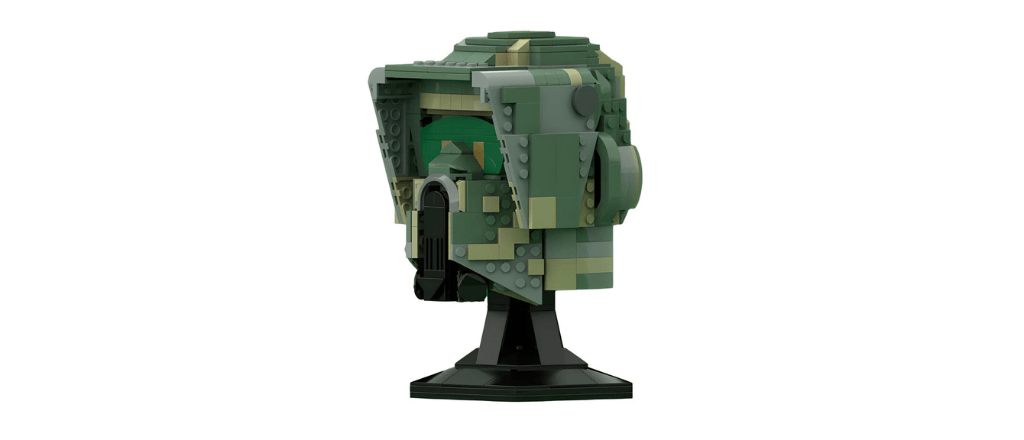
The LEGO sets featuring Scout Troopers and speeder bikes are perennial favorites in the Star Wars LEGO line, regularly updated and consistently popular with both the children and adult collectors who represent the line’s dual audience. The speeder bike set in particular has been produced in multiple iterations over the years, each reflecting improvements in LEGO’s building system and design capabilities, and each selling strongly enough to justify continued production. This commercial consistency is a meaningful indicator of how deeply the Scout Trooper has embedded itself in popular culture’s awareness of Star Wars.
Scout Troopers in Fan Fiction and Creative Communities
The fan fiction and creative communities surrounding Star Wars have produced a rich body of work centered on Scout Troopers, ranging from serious military fiction that explores the tactical and psychological dimensions of the scout mission to comedic work that builds on the humanity established in “The Mandalorian.” The range of this creative output reflects the genuine versatility of the character type as a creative subject: Scout Troopers can support serious, grounded military storytelling, they can support comedy, and they can support the kind of morally complex character studies that ask what it means to serve an authoritarian empire and whether the people who do so bear responsibility for that institution’s crimes.
The question of Imperial soldier culpability is one that the Star Wars fan community debates with genuine seriousness, and Scout Troopers are frequently at the center of these discussions. They are not the architects of Imperial policy. They are not the officers who give the orders to destroy planets or massacre civilians. They are soldiers doing a job, people who made a choice to serve an institution that committed atrocities, and the moral weight of that choice is something that thoughtful fan fiction has explored in ways that add genuine depth to what might otherwise be a purely aesthetic appreciation of the character type.
Why Scout Troopers Matter: Speed, Stealth, and Something More
We have covered an enormous amount of ground in this article, from the technical specifications of the 74-Z speeder bike to the real-world military traditions that inspired Scout Trooper doctrine to the two canyon soldiers who made an entire generation of Star Wars fans fall in love with a character type they already liked. But I want to close with something that gets at why Scout Troopers matter not just as military archetypes or design achievements but as a contribution to what Star Wars is and what it means.
Scout Troopers represent, in the Star Wars universe’s visual language, a specific and important idea: that military effectiveness does not require brute force. In a franchise dominated by the visual language of massive firepower — Death Stars, Star Destroyers, AT-ATs, the Emperor’s Force lightning — Scout Troopers stand for something different. They stand for the idea that speed, skill, knowledge of terrain, and the ability to operate independently can be as militarily valuable as any amount of raw destructive capability. They are the smart option in a universe that usually reaches for the powerful option, and there is something genuinely appealing about that.
The Aesthetic Appeal of the Lighter Path
There is also something deeply aesthetically satisfying about the Scout Trooper’s visual and tactical identity that goes beyond purely military analysis. The image of a Scout Trooper on a speeder bike, threading through a forest at extraordinary speed with perfect confidence and precise control, is one of the most kinetically exciting images in the Star Wars visual vocabulary. It captures something about the pleasure of mastery, the specific satisfaction of doing something difficult with apparent ease, that resonates at a level below conscious analysis.
The Scout Trooper’s lighter armor, their emphasis on mobility over protection, their preference for skill and speed over firepower and mass — these are choices that reflect a philosophy of military action that is genuinely different from the Empire’s typical approach, and that difference is part of what makes them interesting. The Empire usually solves problems by applying overwhelming force. Scout Troopers solve problems by being faster, smarter, and better informed than the opposition, and there is something admirable about that approach even when it is deployed in the service of an authoritarian empire.
What Makes Them Endure Across Generations
Finally, Scout Troopers endure across generations of Star Wars fans because they represent a version of the Imperial military that feels genuinely human and genuinely interesting rather than purely symbolic. They are not the faceless, interchangeable stormtrooper mass that the Rebellion fights against as an abstraction. They are specific, individual soldiers with specific skills, specific equipment, and — as “The Mandalorian” made wonderfully clear — specific personalities and specific small frustrations that make them recognizable as people rather than symbols.
That humanity, combined with the extraordinary visual design of their armor and the kinetic excitement of their speeder bike operations, is what has kept Scout Troopers in the fan conversation for more than four decades. They arrived in “Return of the Jedi” as a striking new visual element and a compelling new tactical concept, and they have only grown in the estimation of the fan community since then. They are fast, they are stealthy, and in the right hands they are lethally effective. But more than any of that, they are interesting — and in the end, that is the quality that makes any Star Wars character truly matter.
For readers who want to explore Scout Troopers further, the official Star Wars Databank at www.starwars.com maintains comprehensive canonical entries for both the Scout Trooper and the 74-Z speeder bike. The fan-maintained Wookieepedia at starwars.fandom.com provides extraordinarily detailed documentation drawing on every canonical and Legends source. The “Star Wars: Complete Vehicles” and “Star Wars: Complete Locations” reference volumes from DK Books at www.dk.com are essential references for the equipment and deployment contexts. The 501st Legion at www.501st.com maintains detailed Scout Trooper costuming standards for fans interested in building their own armor. And “The Mandalorian” on Disney+ at www.disneyplus.com remains essential viewing, not just for the famous canyon scene but for the show’s consistently thoughtful treatment of what Imperial soldiers look like as human beings rather than as symbols.
Speed. Stealth. Lethality. And just enough humanity to make you care. That is the Scout Trooper, and that is why we will never stop talking about them.