
 Canada
 USA
USA Japan
Japan



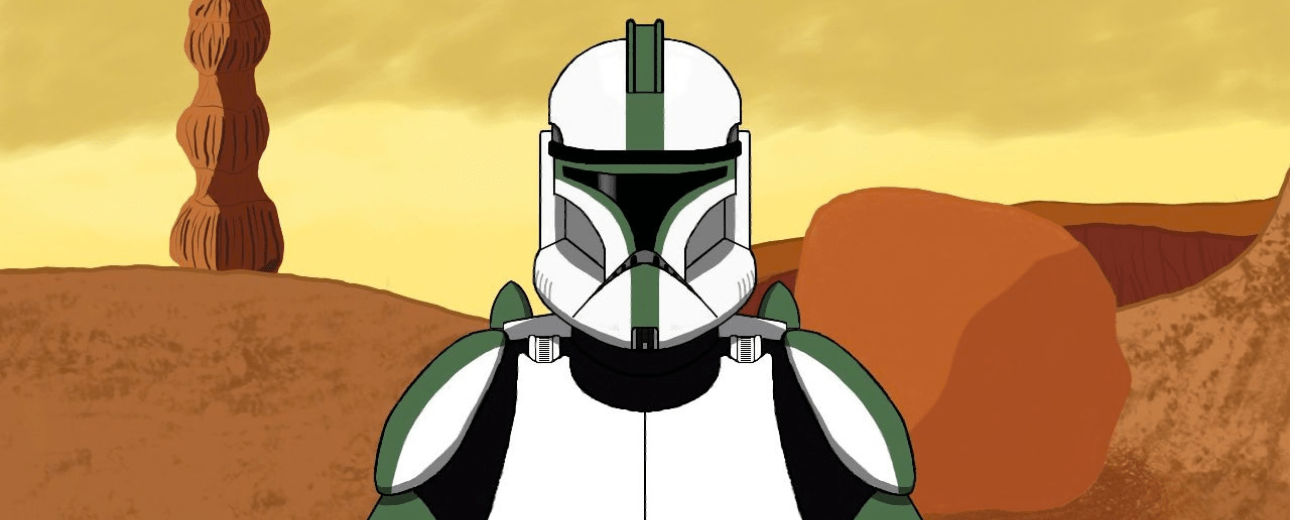
There is a specific kind of nostalgia that hits Star Wars fans when they see Phase 1 Clone Trooper armor — that white, rounded, almost organic-looking suit that appeared at the Battle of Geonosis and announced to the world that the Republic had an army. It is the armor of the beginning, the armor of the first terrible days of a war that nobody was fully prepared for, the armor that turned a generation of genetically identical men into the most recognizable soldiers in the galaxy. It is not the most sophisticated armor in the Star Wars universe. It is not the most personalized or the most visually complex. But it carries a specific weight — the weight of the Clone Wars’ opening chapters, of the shock of Geonosis, of the moment when the galaxy discovered that peace was over — that no subsequent armor configuration has quite replicated.
Phase 1 Clone Trooper armor debuted in “Attack of the Clones” (2002) and served as the primary armor of the Republic’s clone army through the early years of the Clone Wars. It was designed by the Kaminoans — the tall, graceful alien cloners whose civilization had produced both the clones themselves and the equipment they would carry into battle — and it reflected the specific design philosophy of its creators: functional, biologically informed, rounded in its forms in ways that echoed the organic technology that Kaminoan science preferred. It was the first-generation solution to the question of how to armor and equip a million identical soldiers, and like all first-generation solutions, it was both genuinely effective and genuinely limited by the fact that it was designed before the specific demands of the war it would serve were fully understood.
This guide is everything you need to know about Phase 1 Clone Trooper armor: its origins and design philosophy, its technical specifications, its variants and specialized configurations, its limitations that led to Phase 2, the personalization culture that emerged even within its constraints, its role in the Clone Wars’ most significant early battles, and why it remains one of the most beloved pieces of military design in the entire Star Wars franchise. Let’s start from the beginning.
The Origins of Phase 1: Kamino and the Design Process
The story of Phase 1 Clone Trooper armor begins on Kamino — the oceanic planet whose civilization had spent generations developing the most advanced cloning technology in the galaxy and who had been contracted, secretly, to produce an army for the Republic a decade before that army would be needed. The Kaminoans were not simply biological engineers — they were complete military system designers who understood that a functional army required not just soldiers but everything that equipped and sustained those soldiers, including armor that could protect them in the specific conditions of the combat they were designed to fight.
The Kaminoan design philosophy that produced Phase 1 armor is visible in every aspect of the suit’s aesthetic and functional character. The rounded forms, the smooth surfaces, the almost sculptural quality of the assembled armor — these reflect a design tradition that preferred organic forms over angular ones, that drew on biological models rather than industrial ones, and that prioritized the integration of the armor with the specific physiology of the clone soldiers it was designed to protect. The Kaminoans had designed the soldiers themselves, and they designed the armor as an extension of that biological project — something that worked with the clone body rather than simply encasing it.
The Kaminoan Design Philosophy and Its Aesthetic Legacy
The specific aesthetic of Phase 1 armor — its rounded helmet, its organically curved chest plate, its layered limb protection — is the most direct visual expression of the Kaminoan design philosophy, and understanding this philosophy helps explain why Phase 1 looks the way it does and why it looks different from almost every other military armor in the Star Wars universe. Most Star Wars military equipment — Stormtrooper armor, Mandalorian beskar, Separatist droid chassis — has a more angular, more industrial aesthetic that reflects design traditions rooted in manufacturing logic rather than biological logic. Phase 1 armor stands apart from these traditions precisely because it came from a civilization whose primary expertise was biological rather than mechanical.
The helmet is the most immediately recognizable expression of this philosophy. Its distinctive T-shaped visor, its rounded dome, the way the face plate curves rather than angles — all of these are choices that reflect biological reference points rather than industrial ones. The helmet is recognizably related to the Mandalorian helmet tradition that influenced its design, but it softens and rounds the angular Mandalorian forms into something that feels simultaneously more organic and more alien. This specific aesthetic has proven extraordinarily enduring — Phase 1 helmet silhouette is one of the most recognizable in Star Wars, instantly identifiable even in profile or at distance.
The Timeline of Phase 1’s Development and Deployment
The development timeline of Phase 1 armor is one of the more interesting aspects of its history, because the armor was designed and produced for a war that had not yet started — created to specification for a conflict whose specific demands were not yet known from direct experience. The Kaminoans worked from projections and strategic analysis rather than from combat data, which meant that Phase 1 represented their best theoretical prediction of what a clone soldier would need rather than a design refined by actual battlefield experience.
This pre-combat design context is important for understanding both the strengths and the limitations of Phase 1. The Kaminoans were extraordinarily skilled at their work — their theoretical predictions about what clone soldiers would need were largely accurate, and Phase 1 performed well across the diverse conditions of the Clone Wars’ opening campaigns. But no theoretical prediction, however sophisticated, fully anticipates the specific demands of actual combat, and the limitations that Phase 1 revealed in service — the limitations that would eventually drive the development of Phase 2 — were precisely the limitations of a design created without the benefit of direct combat experience.
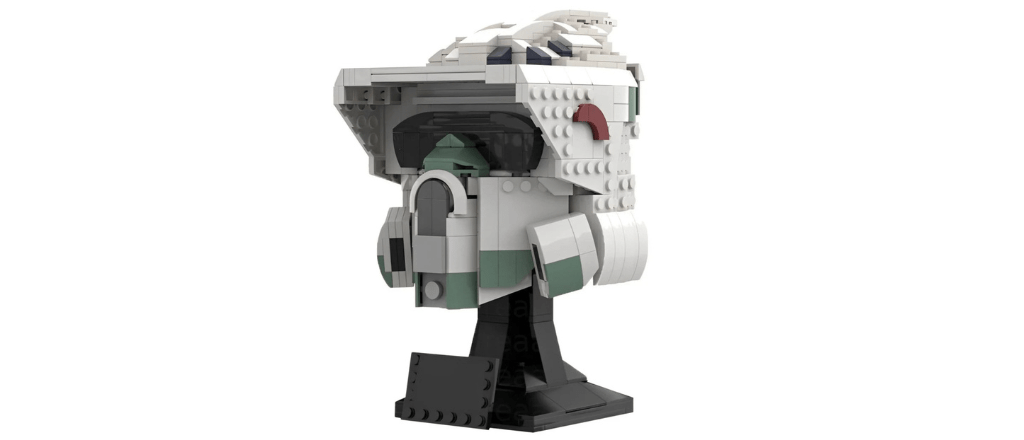
Technical Specifications: What Phase 1 Armor Actually Does
Understanding Phase 1 Clone Trooper armor as a functional piece of military equipment — rather than simply as a visual design — requires engaging with its specific technical capabilities, the materials from which it was constructed, and the specific protective functions it was designed to perform. This technical foundation is the basis on which all subsequent evaluation of the armor’s effectiveness and its limitations rests.
Phase 1 armor was constructed from plastoid composite — a synthetic material that provided a specific combination of protective properties that the Kaminoans had determined was optimal for the projected combat conditions of the clone army’s deployment. Plastoid composite is not the strongest material available in the Star Wars universe — beskar, the Mandalorian iron, significantly outperforms it in raw protective capability — but it was selected for a combination of properties that made it more suitable for mass military production: its protective performance against standard blaster fire was adequate, its weight was manageable, it could be manufactured to precise specifications at the quantities required for an army of millions, and it could be maintained and repaired in field conditions without specialized equipment.
Protective Performance Against Standard Threats
The protective performance of Phase 1 armor against the specific threats that clone soldiers encountered in the Clone Wars is one of the most discussed topics in Star Wars military analysis, and the honest assessment is more nuanced than either its defenders or its critics typically acknowledge. Against standard blaster fire — the most common threat on Clone Wars battlefields — Phase 1 armor provided genuine protection in most engagement scenarios, capable of deflecting or absorbing hits that would be fatal to an unarmored soldier. The armor’s coverage across the torso, limbs, and head was comprehensive enough that the most vulnerable areas of the clone body were protected in most combat orientations.
Against heavy weapons — repeating blasters, rocket launchers, the heavy cannons mounted on Separatist vehicles — Phase 1 armor’s protection was significantly more limited. The plastoid composite could not absorb the energy of heavy weapons fire without failing, and clone soldiers who took direct hits from these weapons were typically killed or severely wounded regardless of their armor. This limitation was not a design failure — no practical infantry armor can provide complete protection against heavy weapons — but it was a real constraint on what Phase 1 armor could and could not protect against, and it had tactical implications for how clone commanders used their soldiers in combat.
Environmental Sealing and Its Limitations
The environmental sealing capability of Phase 1 armor is one of its most significant functional limitations and one of the primary drivers of the Phase 2 upgrade. Phase 1 armor provided some protection against atmospheric contaminants and against extreme temperatures, but its sealing was insufficient for the full range of environments that the Clone Wars proved to require. Clone soldiers deployed to aquatic environments, to atmospheres with significant contaminant levels, or to extreme temperature environments — both hot and cold — consistently found that Phase 1’s environmental protection was inadequate for extended operations.
The specific failures of Phase 1 environmental sealing were documented across multiple campaigns and environments: clone soldiers on Kamino itself, fighting in its perpetual storms, found that water infiltration through Phase 1 seals created comfort and function problems during extended wet-weather operations. Clone soldiers deployed to the volcanic environments of Mustafar and similar worlds found that Phase 1’s thermal protection was insufficient for sustained operations in extreme heat. And soldiers deployed to the arctic conditions of worlds like Orto Plutonia found that Phase 1’s cold weather protection was inadequate without significant supplementary equipment. These documented failures were central inputs to the Phase 2 design brief.
Communication and Sensor Systems Integration
The communication and sensor systems integrated into Phase 1 armor are one of its strongest technical aspects and represent some of the most sophisticated engineering in the overall design. The helmet’s communication system provided clone soldiers with reliable unit communication over tactical ranges — sufficient for coordinating within squads and platoons — and its integration with Republic military communication networks allowed broader coordination at the battalion and division level. The reliability of this communication system was high enough that it remained one of the elements carried forward with relatively minor modification into Phase 2.
The sensor systems embedded in Phase 1 helmets — targeting assistance, environmental monitoring, basic threat detection — were more limited than what soldiers would have ideally wanted in combat conditions but represented a reasonable balance between capability and the practical constraints of mass production. The targeting assistance in particular was valued by clone soldiers for the precision advantage it provided over enemy combatants using unassisted aiming, and the helmet’s sensor data could be shared across units in ways that gave Republic forces a genuine tactical intelligence advantage in many engagements.
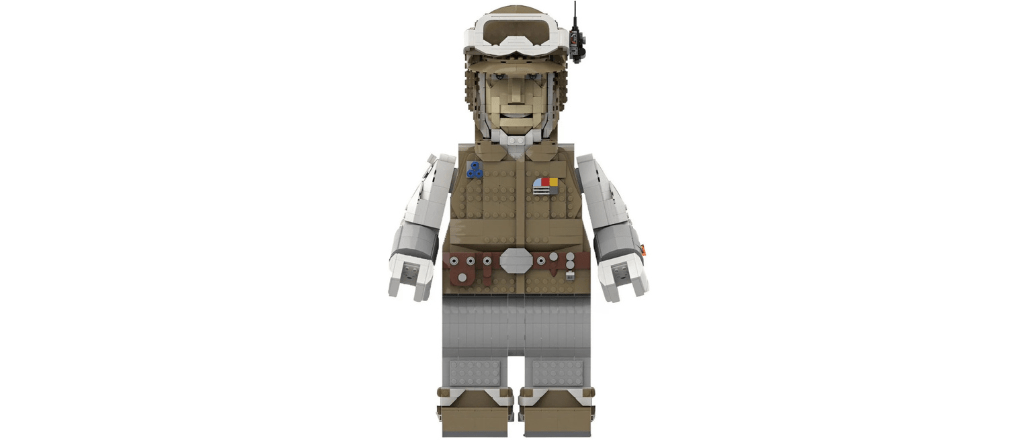
Phase 1 Variants: Specialized Configurations for Every Mission
The Phase 1 armor system was not a single monolithic design but a platform that supported numerous specialized variants tailored for specific operational environments and tactical roles. These variants demonstrated the inherent flexibility of the Phase 1 design despite its first-generation status and produced some of the most visually distinctive and most militarily interesting armor configurations in the Clone Wars era.
Understanding these variants requires appreciating the specific operational challenges that drove their development. The Clone Wars was fought across an extraordinary diversity of environments — from the underwater environments of Mon Calamari to the frozen surfaces of Orto Plutonia to the urban environments of Coruscant to the jungle worlds of countless systems — each of which imposed specific demands on soldier equipment that standard Phase 1 armor could not fully meet. The variant program was the Republic military’s systematic response to these demands, developing specialized configurations that could meet specific environmental challenges while maintaining the core Phase 1 platform.
ARC Trooper Phase 1 Configurations
The ARC Trooper — Advanced Recon Commando — Phase 1 configurations are among the most visually impressive and most heavily modified expressions of the base platform, reflecting both the elite status of ARC Troopers within the clone military hierarchy and the specific operational demands of their special operations role. ARC Troopers in Phase 1 armor added several elements to the base configuration that became defining visual characteristics: the kama (the fabric half-skirt that would later become standard for clone commanders), the pauldron (shoulder armor that provided both additional protection and rank identification), and the rangefinder attached to the helmet for enhanced targeting and surveillance capability.
The Phase 1 ARC Trooper armor is particularly significant in Clone Wars history because it represents the earliest expression of the personalization culture that would fully flower with Phase 2 — the earliest systematic modification of the standard clone armor to reflect both functional specialization and individual identity. ARC Troopers like Alpha-17and the legendary Fordo wore Phase 1 configurations that were distinctly theirs — marked, modified, and personalized in ways that announced their elite status and their individual identities within a force otherwise defined by uniformity.
Cold Assault and Environmental Variants
The cold assault variants of Phase 1 armor — developed for operations in arctic and cold environments — represent one of the most practical and most necessary adaptations of the base platform, addressing one of its most clearly documented environmental limitations. Clone soldiers deployed to worlds like Orto Plutonia in standard Phase 1 armor quickly demonstrated that the base configuration was insufficient for sustained cold-environment operations, leading to the rapid development of supplementary cold-weather components that could be integrated with the existing Phase 1 structure.
The Phase 1 cold assault configuration added insulated underlayers, modified boot configurations for traction on ice and snow, and enhanced environmental sealing around the joints where cold air infiltration was most significant. The visual result — white armor with additional cold-weather equipment — created one of the most distinctive Phase 1 variant aesthetics and proved influential on subsequent cold-weather military designs in the Star Wars universe. These cold assault troopers at the Battle of Orto Plutonia provided one of the earliest demonstrations of the variant program’s value and one of the clearest arguments for the more comprehensive environmental sealing that Phase 2 would eventually provide.
Clone Pilot Phase 1: Aviation Integration
The Clone Pilot Phase 1 configuration addresses one of the most specific and most demanding operational contexts in the Republic military: the operation of starfighters and other aircraft in conditions ranging from atmospheric flight to space combat. Standard Phase 1 armor, designed for ground combat, was inadequate for aviation operations in several specific ways — its pressure sealing was insufficient for high-altitude and space operations, its communication systems were not optimized for aviation frequencies, and its overall configuration was not designed for the specific physical requirements of pilot cockpit operation.
The Phase 1 Clone Pilot configuration systematically addressed these limitations through targeted modifications while maintaining the core Phase 1 platform. Enhanced pressure sealing and an integrated life support system provided the environmental protection required for space operations. Modified helmet communications optimized for aviation frequencies and for integration with starfighter avionics systems. Streamlined limb armor that maintained protection while allowing the specific range of motion required for fighter cockpit operation. The result was one of the most functionally specialized Phase 1 variants — immediately visually distinctive with its darker color scheme and modified helmet design — and one that would prove essential to the Republic’s air and space operations throughout the Clone Wars.
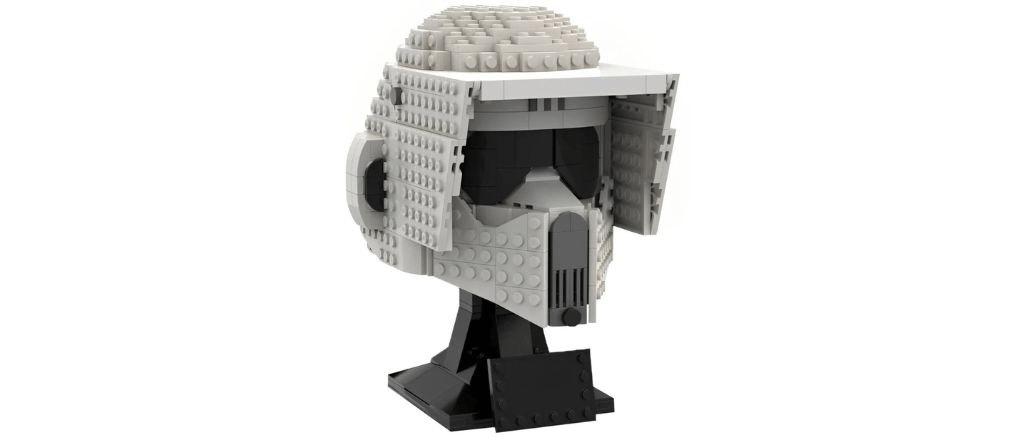
The Personalization Culture: Identity Within Uniformity
One of the most fascinating aspects of Phase 1 Clone Trooper armor is the personalization culture that emerged among clone soldiers despite — or perhaps because of — the radical uniformity that defined their existence. Clone soldiers were genetically identical, dressed in identical armor, fighting in formations that emphasized collective function over individual expression. And yet, from the earliest days of the Clone Wars, clone soldiers found ways to mark their armor, their equipment, and their bodies as their own — to assert individual identity within a system designed to produce interchangeable warriors.
The Phase 1 personalization culture was more constrained than what would develop with Phase 2 — the base Phase 1 design offered less surface area and less official accommodation for unit markings and personal modifications than the Phase 2 system would later provide. But the impulse was present from the beginning, and its earliest expressions are some of the most historically significant in the clone army’s social history. Clone soldiers painted their armor with unit colors and personal symbols. They modified their equipment with additions that reflected their specific roles and personalities. They developed individual fighting styles that expressed themselves even through identical armor and identical training.
Unit Colors and Their Emergence in Phase 1
The unit color system that would become fully developed and officially recognized in Phase 2 had its origins in Phase 1, with specific units developing distinctive color markings that identified them to allies and enemies alike. The 501st Legion began developing their iconic blue markings during Phase 1, creating the visual identity that would become one of the most recognized in the Clone Wars. The 212th Attack Battalion similarly developed their orange markings during the Phase 1 period, establishing a unit visual identity that expressed the specific character and the specific pride of Cody’s soldiers.
These early Phase 1 unit colors were not officially standardized or systematically encouraged by the Republic military command — they emerged organically from the clone soldiers’ own cultural development, from their need to express identity and unit pride within the constraints of a uniform system. The fact that they emerged at all, under the constraints of Phase 1’s less accommodating surface design, is evidence of how fundamental the impulse to individual and collective expression was in clone soldiers — how deeply the desire to be someone, not just something, was embedded in individuals who had been designed to be interchangeable.
The First Personal Modifications and What They Revealed
The first personal modifications that clone soldiers made to their Phase 1 armor are documented in “The Clone Wars” animated series with a specificity that rewards attention, because they reveal something important about the psychological development of clone soldiers in the war’s opening period. These modifications were not cosmetic vanity — they were expressions of identity formation, of the development of individual self-concept in beings who had been created without the expectation that they would develop such concepts.
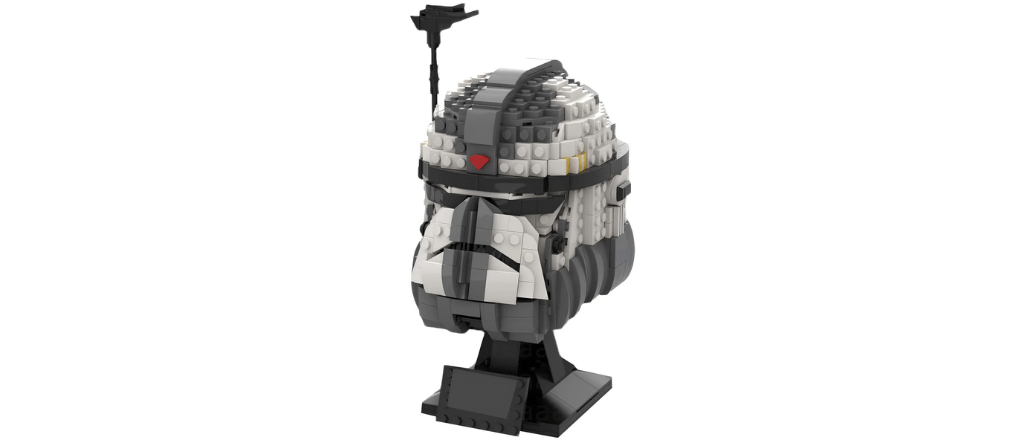
Commander Cody’s Phase 1 modifications — the specific way he wore and marked his armor even before Phase 2 provided more accommodation for such expression — are a perfect example of this early personalization culture. The modifications he made were subtle by Phase 2 standards, but their existence is significant: they announce that Cody was already, in the Phase 1 period, developing the individual identity that would make him one of the most distinctive and most memorable Clone Commanders of the entire war. The armor modifications are not decoration. They are self-portrait.
Phase 1 in Battle: The Geonosis Crucible
The Battle of Geonosis is the defining combat debut of Phase 1 Clone Trooper armor — the engagement that announced the clone army to the galaxy and that tested Phase 1 for the first time in actual large-scale combat conditions. It was not a gentle introduction. Geonosis was one of the most intense and most chaotic battles of the early Clone Wars, fought across a planet whose terrain, atmospheric conditions, and fortified installations created challenges that pushed Phase 1 armor to its limits from the very first engagement.
The clone army that landed on Geonosis was fighting in Phase 1 armor that had never been tested in large-scale combat — armor whose theoretical performance was about to meet the reality of actual battle for the first time. The soldiers wearing it had been trained extensively but had never fought an actual war. Their Jedi commanders had combat experience but had never commanded armies of this scale. Everything about Geonosis was a first, and the performance of Phase 1 armor under those first-time conditions was the inaugural test that would shape the Republic military’s understanding of what the armor could and could not do.
What Geonosis Proved About Phase 1
The lessons that Geonosis taught about Phase 1 armor were both encouraging and sobering, and they fed directly into the development priorities that would eventually produce Phase 2. On the encouraging side, Phase 1 provided genuine protection against the standard blaster fire of Battle Droids and Super Battle Droids in the majority of engagement scenarios — the armor did what it was designed to do against the most common threats on the Geonosis battlefield, and the clone soldiers’ survival rates in standard infantry engagements were significantly higher than they would have been without it.
On the sobering side, Geonosis revealed specific vulnerability patterns — the heavy weapons vulnerabilities, the joint protection inadequacies, the communication system limitations under the electromagnetic interference created by massed weapons fire — that would become development priorities for the Phase 2 program. The Republic militarysystematically documented these failure patterns at Geonosis and in subsequent early Clone Wars engagements, building the evidence base that would eventually drive the Phase 2 upgrade. Phase 1 performed well enough at Geonosis to justify confidence in the clone army as a military force. It performed poorly enough in specific contexts to make clear that the armor would need to be significantly improved for sustained campaigning.
The Early Clone Wars Campaigns and Phase 1’s Performance
The early Clone Wars campaigns that followed Geonosis — the battles of Christophsis, Ryloth, Malastare, and the dozens of other engagements that defined the war’s first year — provided an increasingly comprehensive picture of Phase 1 armor’s performance across diverse operational conditions. These campaigns were fought in environments that differed significantly from each other and from Geonosis, testing different aspects of Phase 1’s capabilities and revealing failure modes that Geonosis had not exposed.
The Ryloth campaign in particular provided important data about Phase 1’s performance in urban combat — a context that imposed specific demands on armor flexibility and communication systems that the more open Geonosis battlefield had not. Clone soldiers fighting through Twi’lek cities found that Phase 1’s mobility in close-quarters environments was more limited than ideal, that its communication systems created specific challenges in the urban electromagnetic environment, and that its visual identification systems — designed for open-battlefield use — needed modification for the ambiguity of urban combat. These Ryloth lessons fed directly into the Phase 2 design brief’s urban combat requirements.
Phase 1 Versus Phase 2: Understanding the Upgrade
The relationship between Phase 1 and Phase 2 armor is one of the most discussed topics in Clone Wars military history, and understanding it properly requires clarity about what Phase 2 actually improved and what it retained from the Phase 1 foundation. Phase 2 was not a replacement for Phase 1 in the sense of discarding everything the predecessor had established — it was a systematic improvement that addressed specific documented limitations while retaining the elements of Phase 1 that had proven genuinely effective.
The most significant improvements in Phase 2 over Phase 1 can be organized into three categories that reflect the primary failure modes that combat experience had identified. First, environmental sealing — Phase 2 provided significantly improved protection against the full range of environments that Clone Wars campaigns had proven to require, addressing the most frequently documented limitation of Phase 1. Second, modularity — Phase 2’s modular design allowed for more systematic adaptation to specific operational requirements, replacing Phase 1’s somewhat improvised variant system with a designed modular architecture. Third, comfort and mobility — Phase 2 improved on Phase 1’s joint design and overall weight distribution in ways that made it significantly more comfortable for extended wear without sacrificing protection.
The elements of Phase 1 that Phase 2 retained are as revealing as the elements it improved, because they identify what the Phase 1 design had gotten right in ways that the Clone Wars’ combat experience had confirmed. The communication system architecture — the basic design of the helmet-integrated communication and sensor systems — was carried forward into Phase 2 with improvements but without fundamental redesign, reflecting confidence in the Phase 1 approach that combat experience had justified.
The overall structural approach — the plastoid composite material, the coverage philosophy that prioritized protection for the most vital areas while accepting some mobility trade-offs — was also retained in Phase 2, modified and improved but not fundamentally reconceived. And the unit marking system — the Phase 1 personalization culture that had emerged organically and that Phase 2 formalized and expanded — was explicitly built into the Phase 2 design rather than being an afterthought, reflecting the Republic military’s recognition that clone soldiers’ individual and unit identity was a genuine military asset rather than an indulgence to be controlled.
The Cultural Legacy of Phase 1: Why It Still Matters
The cultural legacy of Phase 1 Clone Trooper armor in Star Wars fandom is one of the most interesting aspects of its history, because it is a legacy built on nostalgia, on historical significance, and on the specific aesthetic qualities that distinguish it from every subsequent armor design in the franchise. Phase 1 is not the most sophisticated Clone Trooper armor. It is not the most personalized or the most visually complex. But it carries a specific emotional weight — the weight of beginnings, of the Clone Wars’ terrible opening chapters, of the moment when the galaxy’s fate was placed in the hands of soldiers who had existed for less than a decade — that makes it irreplaceable in the franchise’s visual and emotional vocabulary.
The “Attack of the Clones” debut of Phase 1 armor is one of the most visually and emotionally impactful moments in the prequel trilogy — the shot of thousands of white-armored clone soldiers boarding their transports at Kamino, preparing to go to war for the first time, is an image that carries the full weight of what the prequel trilogy was trying to say about the beginning of the end of the Republic. Phase 1 armor is the visual symbol of that beginning, and its specific aesthetic — rounded, white, simultaneously impressive and somehow already elegiac — is inseparable from the emotional meaning of that moment.
Phase 1 in Fan Culture and Collecting
The fan culture around Phase 1 Clone Trooper armor reflects its special status within the broader Clone Trooper collecting and costuming community. The 501st Legion — the premier Star Wars costuming organization — maintains specific standards for Phase 1 Clone Trooper costumes that reflect the community’s investment in accurate representation of this specific design period, and the Phase 1 category within those standards is among the most historically documented and most carefully specified.
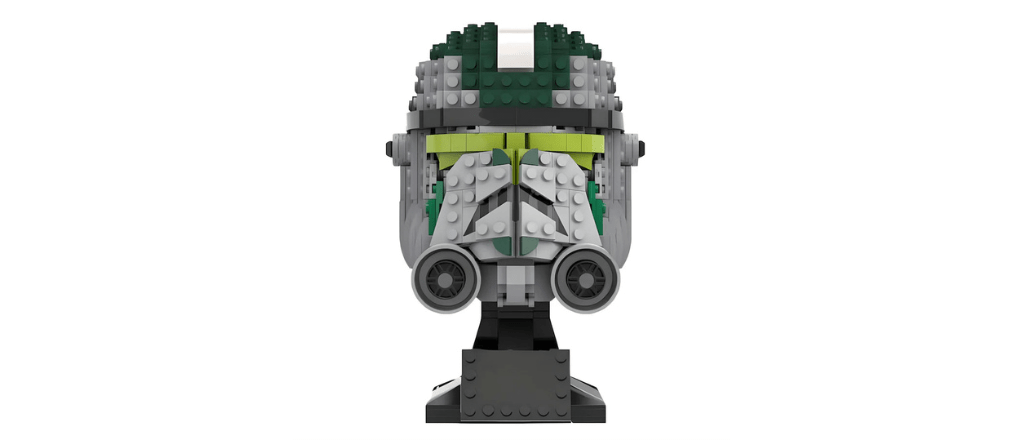
Collectors of Star Wars action figures and models have consistently shown strong interest in Phase 1 configurations, with specific Phase 1 variants and specific Battle of Geonosis configurations commanding particular collector interest. The LEGO Star Wars line has produced numerous Phase 1 sets over the years, reflecting the sustained commercial interest in this armor period and the specific appeal of the Geonosis and early Clone Wars visual aesthetic that Phase 1 defines. This collector engagement is not simply commercial — it reflects genuine historical interest in the Clone Wars’ opening period and the specific armor that defined it.
Why Phase 1 Remains Visually Compelling Decades Later
The enduring visual appeal of Phase 1 Clone Trooper armor is worth analyzing specifically, because it is not self-evident that a first-generation military design would remain as compelling as Phase 1 has. First-generation designs are typically superseded by their successors in terms of sophistication and visual interest — Phase 2, with its sharper lines and greater personalization, is objectively more visually complex than Phase 1. Yet Phase 1 retains a visual power that Phase 2, for all its sophistication, does not entirely match.
The reason, I think, is the specific quality of Phase 1’s visual coherence — the way its rounded forms, its clean white surfaces, and its elegant simplicity create a visual statement that is complete in itself rather than being defined by what it adds to a base configuration. Phase 2 is visually interesting in part because of its variations and personalizations — take away the unit colors and the individual modifications and Phase 2 is less compelling on its own terms. Phase 1’s visual power is intrinsic — it does not require variation to be compelling. The basic Phase 1 helmet, in standard white, is one of the most visually powerful pieces of design in the franchise. That is the mark of exceptional fundamental design, and it is why Phase 1 remains, two decades after its introduction, one of the finest pieces of military design in the history of science fiction.
For readers who want to explore Phase 1 Clone Trooper armor further, the Star Wars Databank at starwars.com maintains official documentation of Clone Trooper armor variants with canonical technical information. Wookieepedia at starwars.fandom.com provides comprehensive lore documentation for Phase 1 armor and all its variants. The “Star Wars: The Clone Wars Character Encyclopedia” published by DK Books at dk.com is an essential reference for the specific configurations and unit markings of Phase 1 armor. “Star Wars: Attack of the Clones” and “Star Wars: The Clone Wars” animated series, both available on Disney+ at disneyplus.com, are the primary visual references for Phase 1 armor in its full canonical context. The 501st Legion at 501st.com provides the most detailed costuming standards for Phase 1 Clone Trooper armor. And the “Star Wars: The Clone Wars — The Complete Season Collection” provides the full arc of Phase 1 armor’s appearance across the series’ early seasons.
The war began in white. And it was beautiful and terrible in equal measure.