
 Canada
 USA
USA Japan
Japan



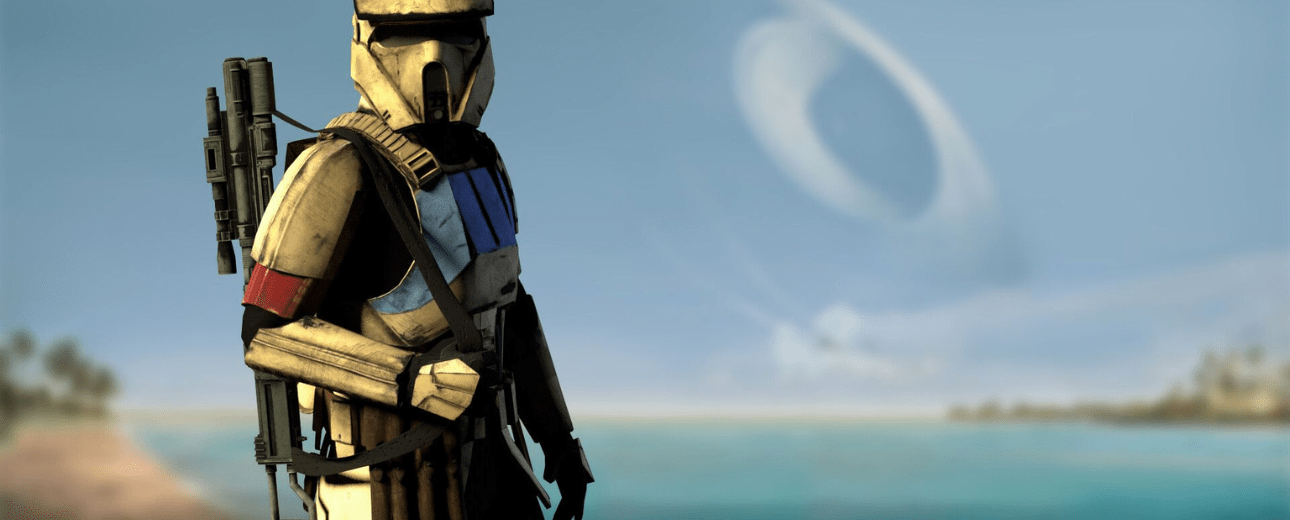
There is a moment in “Rogue One: A Star Wars Story” that stops every serious Star Wars fan in their tracks the first time they see it, and it has nothing to do with the Death Star or Darth Vader or the desperate heroism of the Rogue One team. It happens when the film first shows us Scarif — that impossibly beautiful tropical Imperial facility, all white sand and turquoise water and towering Imperial architecture — and we see, for the first time, the soldiers who guard it. They are not standard Stormtroopers. They are something different: armor that has been adapted for the coastal environment, a color scheme that suggests both the beach and the military, a visual design that communicates immediately that these soldiers belong to this specific place and this specific mission in a way that the generic Stormtrooper does not.
Those soldiers are Shoretroopers — officially designated Coastal Defender Stormtroopers — and their introduction in “Rogue One” is one of the most quietly brilliant pieces of Star Wars world-building in the Disney era. In a franchise that has been building the mythology of the Stormtrooper for forty years, the Shoretrooper represents something genuinely new: a specialized variant that is not simply a reskin of the standard trooper but a carefully considered adaptation of the Imperial military model to a specific operational environment, with visual design choices and implied tactical capabilities that make them feel like a genuine evolution of the concept rather than a cosmetic variation.
This article is the complete guide to the Shoretrooper: their origins in the production of “Rogue One,” their role in the Imperial military structure, their visual design and what it communicates, their tactical capabilities and operational context, their appearances across the Star Wars canon, and why they matter to the franchise’s ongoing project of building a convincing and detailed picture of what the Galactic Empire actually looks like from the inside. By the end, you will have a complete understanding of one of the most visually striking and most narratively interesting Stormtrooper variants in the Star Wars universe. Let’s dive in — appropriately enough.
Origins: How the Shoretrooper Was Created for Rogue One
The creation of the Shoretrooper is a story about the specific demands of “Rogue One: A Star Wars Story” as a production and about the creative philosophy that drove its approach to the Star Wars universe. “Rogue One” was, from the beginning, conceived as a film that would expand the visual and narrative vocabulary of Star Wars in specific ways: it would show us the Empire at its height, operating with the full confidence of an unchallenged military power, and it would do so in an environment — the tropical beaches and Imperial facilities of Scarif — that was unlike anything the franchise had previously depicted.
This new environment created a specific design challenge: the standard Stormtrooper armor, which had been developed for the relatively generic environments of the original trilogy, was not visually or conceptually suited to the Scarif setting. A tropical coastal Imperial installation, the most secure facility in the Empire, would plausibly have soldiers specifically trained and equipped for its unique environment — soldiers whose appearance communicated their specialized role and their adaptation to the specific challenges of coastal defense. The Shoretrooper was the solution to this design challenge, and the creative team at Lucasfilm approached it with a seriousness and a specificity that set it apart from most Stormtrooper variant designs.
The Design Philosophy Behind the Coastal Defender
The design philosophy that produced the Shoretrooper is worth examining in detail because it reflects a broader approach to Star Wars design that “Rogue One” pioneered and that has influenced the franchise’s visual development ever since. The guiding principle was what might be called functional specificity: every element of the design should communicate something about what this soldier does and where they operate, creating a visual language that is immediately readable even to viewers who have no prior knowledge of the specific variant.
The color palette is the most immediately striking expression of this philosophy. Where standard Stormtroopers are almost entirely white — a color that communicates authority, uniformity, and the clinical impersonality of the Imperial military machine — the Shoretrooper’s armor incorporates tan and brown tones that echo the sandy beaches and natural environments of Scarif. This is not simply aesthetic decoration. It is a functional adaptation: soldiers who operate in coastal and tropical environments benefit from coloring that reduces their visual contrast against those environments, and the Shoretrooper’s palette reflects this practical consideration while maintaining the visual language of Imperial military identity.
The Production Team’s Approach to Stormtrooper Variants
The production team’s approach to creating new Stormtrooper variants for “Rogue One” was significantly more rigorous than the approach that had characterized most previous Stormtrooper variant designs in the franchise, and the Shoretrooper is the finest example of this rigor. Rather than simply creating visual variations on the standard Stormtrooper design for novelty or for merchandising purposes, the team developed each variant from a specific operational premise: what kind of soldier would the Empire need for this specific environment, and what would their equipment and appearance reflect about the demands of that role?
For the Shoretrooper, this operational premise was the defense of a high-security coastal Imperial facility in a tropical environment. The design team considered not just the visual appearance of the armor but the implied capabilities and limitations of a soldier operating in this environment: the need for mobility in sandy and potentially wet conditions, the specific weapons and equipment that coastal defense would require, and the command structure that a specialized garrison force would have. These considerations produced a design that feels genuinely functional rather than simply visually distinctive, which is what elevates the Shoretrooper above most Stormtrooper variants in the franchise’s history.
Visual Design: Reading the Shoretrooper’s Armor
The visual design of the Shoretrooper is one of the most carefully considered in the Star Wars canon, and it rewards close examination because every significant design element communicates something specific about the function and identity of these soldiers. This is character design as military design: a visual system that tells you, without any accompanying text, what kind of soldier this is and what operational environment they were built for.
The helmet is the most immediately distinctive element of the Shoretrooper design, departing significantly from the standard Stormtrooper helmet in ways that are both visually striking and functionally suggestive. Where the standard Stormtrooper helmet is smooth and relatively featureless, the Shoretrooper helmet has a more angular, almost brutalist quality, with a wider visor configuration that suggests enhanced peripheral vision — a practical adaptation for soldiers who need to monitor wide coastal approaches and beach environments. The specific geometry of the helmet communicates aggression and surveillance simultaneously, which is exactly the right combination for a garrison soldier whose primary role is detection and response rather than offensive action.
The Armor Configuration and Its Tactical Implications
The armor configuration of the Shoretrooper differs from the standard Stormtrooper in several specific ways that have clear tactical implications for their operational environment. The overall silhouette is somewhat more streamlined than the standard Stormtrooper, with modifications that suggest greater mobility and less restriction of movement — important qualities for soldiers who may need to move quickly across sand, through shallow water, or in the complex terrain of a coastal facility.
The shoulder pauldron system that distinguishes different ranks of Shoretroopers — the color-coded pauldrons that indicate squad leader and captain status — is one of the most interesting design details because it reflects a visual hierarchy system that is more immediately readable than the relatively subtle rank indicators of the standard Stormtrooper. In a garrison force defending a specific installation, clear visual identification of command personnel is operationally important: soldiers need to be able to identify their commanders quickly in the chaos of combat, and the Shoretrooper’s pauldron system achieves this with elegant simplicity.
Color Variants and Rank Structure
The color variant system of the Shoretrooper’s rank indicators deserves specific examination because it reveals something important about how the Imperial military structures its garrison forces. The basic Shoretrooper wears the standard tan and brown armor without additional color markings. The Shoretrooper Squad Leader wears a red pauldron that immediately identifies their command role. The Shoretrooper Captain — the most senior Shoretrooper variant seen in “Rogue One” — wears a red pauldron with additional markings and carries equipment configurations that reflect their expanded tactical role.
This rank structure, communicated entirely through visual design elements, reflects the Imperial military’s characteristic approach to hierarchy: authority should be immediately visible, command relationships should be readable at a glance, and the visual language of rank should be consistent enough that any Imperial soldier can immediately identify the command structure of any unit they encounter. The Shoretrooper’s rank system executes this philosophy with particular elegance, creating a visual hierarchy that is both immediately readable and aesthetically coherent with the overall design language of the armor.
The Role of Shoretroopers in the Imperial Military
Understanding the role of Shoretroopers in the Imperial military structure requires understanding both what they are specifically designed to do and how they fit into the broader Imperial military ecosystem. They are not simply Stormtroopers with different paint — they are a specialized force with a specific operational mandate, specific training, and specific equipment that distinguishes them from both the standard Stormtrooper corps and from other Imperial military branches.
The primary mission of the Shoretrooper is the defense of Imperial coastal and tropical installations — facilities like the Scarif databank complex that are situated in environments that present unique defensive challenges. These environments combine the specific difficulty of coastal terrain — beaches, shallow water, tropical vegetation, complex approach routes — with the specific security requirements of high-value Imperial facilities. The soldiers who guard these installations need skills and equipment that are different from those of a standard garrison Stormtrooper, and the Shoretrooper represents the Imperial military’s solution to this specialized requirement.
Garrison Defense vs Mobile Combat
The tactical doctrine of the Shoretrooper is fundamentally oriented toward garrison defense rather than mobile offensive operations, and this orientation shapes everything about how they are equipped and how they fight. A garrison defender is optimized for knowing their ground — for understanding the specific terrain they are defending, for establishing defensive positions that maximize their effectiveness in their specific environment, and for responding effectively to threats that approach from predictable directions and through predictable routes.
This garrison orientation is visible in the Shoretrooper’s combat behavior as depicted in “Rogue One.” They defend the beaches and facilities of Scarif with the confidence of soldiers operating in familiar terrain, using cover and position effectively and responding to the Rebel assault with the organized, coordinated defensive response of a trained garrison force. They are not the offensive shock troops of an AT-AT walker assault or the urban combat specialists of a city occupation. They are defenders, and the specific quality of their combat effectiveness is the effectiveness of soldiers who know their ground and have prepared to defend it.
The Scarif Installation and Its Strategic Importance
The Scarif installation that the Shoretroopers defend is one of the most strategically significant facilities in the Imperial military complex, and the specific importance of what they are guarding helps explain why the Empire invested in specialized soldiers for its defense rather than simply relying on standard Stormtrooper garrison troops. Scarif is the primary data repository of the Imperial military — the archive facility where the most sensitive technical and strategic documentation of the Empire’s military programs is stored, including the plans for the Death Star.
Defending this facility requires soldiers who can maintain the highest security standards in a challenging physical environment, who can respond effectively to threats that might approach from the water, from the air, or through the complex terrain of the tropical facility, and who can do so while maintaining the kind of sustained vigilance that long-term garrison duty demands. The Shoretroopers are the answer to this specific combination of requirements, and their presence at Scarif reflects the seriousness with which the Empire takes the security of its most valuable data assets.
Shoretroopers in the Battle of Scarif: Their Finest Hour
The Battle of Scarif in “Rogue One” is the defining moment of the Shoretrooper’s canonical existence, the engagement that shows us most completely what these soldiers are capable of and how they operate in their intended environment. It is also one of the most spectacular and most emotionally resonant battle sequences in the Star Wars franchise, and the Shoretroopers’ role in it is more significant and more interesting than a casual viewing might suggest.
When the Rogue One team arrives on Scarif, the Shoretroopers are initially operating in their normal garrison posture — monitoring the facility, maintaining security checkpoints, conducting the routine operations of a well-organized military installation. The transition from routine garrison operations to active combat defense is one of the most interesting things that “Rogue One” shows us about these soldiers, because it demonstrates the specific quality of a trained garrison force responding to an unexpected threat in a familiar environment. They react quickly, they organize effectively, and they deploy with the confidence of soldiers who know exactly where they are and what the terrain offers them.
The Beach Battle and Shoretrooper Tactics
The beach battle that forms the centerpiece of the Scarif engagement is the sequence that most clearly demonstrates the Shoretrooper’s tactical doctrine in action. They use the beach terrain effectively — employing the tree line for cover, using the elevation changes of the dunes for defensive positioning, and coordinating their fire in ways that reflect genuine tactical training rather than the relatively undifferentiated combat behavior of many Star Wars enemy soldiers.
What is particularly impressive about the Shoretroopers in the beach battle is their adaptability — their ability to respond to the specific threats that the Rogue One team presents with targeted tactical responses rather than with generic defensive behavior. When faced with the Rebel assault, they adjust their positions, they call for reinforcement, and they maintain organized resistance even in the face of significant casualties and the general chaos that the Rebel insertion creates. This organized, adaptive resistance makes them significantly more formidable opponents than many of the Empire’s ground forces, and it reflects the specific training advantages of a specialized garrison force operating in their home terrain.
The Death Troopers and Shoretrooper Command Structure
The relationship between the Shoretroopers and the Death Troopers who also operate on Scarif is one of the most interesting military hierarchy elements that “Rogue One” depicts, because it reveals something important about how the Empire structures its elite forces. Death Troopers — the tall, black-armored soldiers who serve as Director Krennic’s personal guard — represent a higher tier of Imperial special operations capability than the Shoretroopers, and their presence on Scarif alongside the Shoretroopers creates an implicit military hierarchy that reflects the different roles of each force.
The Shoretroopers are the garrison force — numerous, trained for their specific environment, capable of sustained defensive operations across the entire facility. The Death Troopers are the elite operatives — fewer in number, individually more capable, oriented toward high-priority security tasks and the personal protection of senior Imperial officials. Together, they create a layered security architecture that reflects genuinely sophisticated military planning, with each force contributing specific capabilities to the overall defense of the installation.
Shoretrooper Equipment: Weapons and Gear
The equipment of the Shoretrooper reflects both their operational environment and their specific tactical role, with weapons and gear choices that make sense for coastal garrison defense in ways that are worth examining in detail. This level of equipment specificity is one of the things that distinguishes “Rogue One’s” approach to Stormtrooper variants from earlier franchise entries, which tended to give specialized Stormtroopers essentially the same weapons as standard troopers regardless of their supposed specialization.
The primary weapon of the standard Shoretrooper is the E-22 blaster rifle, a weapon that is specifically associated with this variant and that represents a departure from the standard E-11 blaster rifle of the regular Stormtrooper corps. The E-22 is a heavier, more powerful weapon that sacrifices some of the portability of the E-11 for increased stopping power — a trade-off that makes sense for a garrison soldier who is operating from defensive positions rather than conducting mobile offensive operations. A soldier defending a fixed installation can afford a heavier weapon because they are not required to carry it across long distances, and the increased firepower is valuable against the kind of determined assault that a high-security installation might face.
Specialized Equipment for Coastal Operations
The specialized equipment that Shoretroopers carry beyond their primary weapons reflects the specific operational demands of coastal and tropical environments in ways that demonstrate the Imperial military’s attention to the practical requirements of different deployment contexts. Environmental considerations — the specific challenges of operating in sandy, humid, potentially wet conditions — have clearly informed the equipment choices, and the result is a loadout that is more specifically adapted to its operational context than most Imperial ground forces achieve.
The Squad Leader configuration adds specific equipment that reflects the command and coordination responsibilities of that role — communication equipment, optical enhancement devices, and the specific tools that a small unit leader needs to direct their squad’s activities effectively. The Captain configuration extends this further, with the most elaborate equipment suite of the Shoretrooper variants, reflecting a role that combines direct combat leadership with facility-level coordination and command responsibilities.
The E-22 Blaster Rifle: A Weapon Worth Discussing
The E-22 blaster rifle deserves specific discussion as a piece of Star Wars weapons design that is as carefully considered as the Shoretrooper armor itself. The weapon was designed specifically for “Rogue One” as the signature weapon of the Shoretrooper variant, and its visual design communicates the same qualities of functional specificity that characterize the armor. It is heavier and more robust than the E-11, with a visual design that suggests durability and sustained operation rather than the lighter, more portable design of the standard Stormtrooper weapon.
The in-universe logic of the E-22 — a weapon optimized for the sustained defensive fire that garrison duty requires, more powerful than the E-11 but less portable — is reflected in how Shoretroopers use it in combat. They tend to fire from covered or semi-covered positions, using the weapon’s superior stopping power to create sustained suppressive fire rather than the mobile, aggressive engagement style that a lighter weapon would support. This tactical use is consistent with the garrison defense doctrine that defines the Shoretrooper role, creating a coherent relationship between equipment and tactics that is genuinely satisfying in its internal consistency.
Shoretroopers Beyond Rogue One: Appearances Across the Canon
While “Rogue One” remains the defining appearance of the Shoretrooper in the Star Wars canon, these distinctive soldiers have appeared in several other canonical contexts that expand our understanding of their role and their place in the Imperial military structure. Tracking these appearances reveals both the specific ways in which the Shoretrooper has been integrated into the broader Star Wars universe and the specific creative decisions that have governed how the variant is used outside of its original context.
The most significant canonical appearance of Shoretroopers outside of “Rogue One” is in “Andor”, the Disney+ series that explores the early days of the Rebellion and the specific character of Imperial oppression across the galaxy. “Andor” is set in the same general time period as “Rogue One” and shares its commitment to a grounded, realistic depiction of the Imperial military, and its inclusion of Shoretroopers in specific contexts reflects a careful consistency with the established lore of where and how these soldiers operate.
Shoretroopers in Andor and the Expanded Canon
The “Andor” appearances of Shoretroopers are particularly interesting because they show these soldiers in contexts that go beyond the specific Battle of Scarif that defined them in “Rogue One,” giving us a broader picture of how coastal and tropical Imperial installations are staffed and defended across the galaxy. These appearances confirm that the Shoretrooper is not a Scarif-specific variant but a more broadly deployed specialized force that the Empire uses wherever coastal and tropical garrison requirements exist.
The comics and reference books of the Star Wars canon have also expanded the Shoretrooper lore in interesting ways, providing technical specifications, backstory elements, and additional deployment contexts that flesh out the picture of these soldiers beyond what the films and series show directly. The “Star Wars: Rogue One — The Ultimate Visual Guide” published by DK Books is the most comprehensive single source for Shoretrooper technical information in the canon, with detailed equipment breakdowns, tactical descriptions, and visual documentation that reflects the design team’s full intentions for the variant.
Shoretroopers in Video Games and Interactive Media
The presence of Shoretroopers in Star Wars video games has been another significant venue for expanding the canonical understanding of these soldiers, with several games including them in ways that reflect their established role and design while adding gameplay-specific dimensions that illuminate their tactical capabilities in new ways. “Star Wars Battlefront II” is the most significant gaming appearance, including Shoretroopers as playable units and as opponents in Scarif-based maps that reflect the Battle of Scarif depicted in “Rogue One.”
The gameplay implementation of Shoretroopers in “Battlefront II” is particularly interesting from a lore perspective because it translates the tactical doctrine established by the film — the garrison defense orientation, the use of terrain, the specific weapons and equipment — into interactive form, allowing players to experience firsthand the specific capabilities that the design implies. Playing as or against a Shoretrooper in the Scarif maps gives you a visceral understanding of why the design works: the armor, the weapons, and the terrain combine into a coherent tactical picture that feels genuinely thought through rather than arbitrarily assembled.
Why the Shoretrooper Matters: The Significance of Specialized Stormtroopers
Having examined the Shoretrooper in comprehensive detail, it is worth stepping back and asking the larger question: why does the Shoretrooper matter to the Star Wars franchise and to the broader project of world-building that the franchise has been engaged in since 1977? The answer involves both the specific contribution of the Shoretrooper and the broader significance of the approach to Stormtrooper design that “Rogue One” pioneered.
The Shoretrooper matters, first and most immediately, because it advances the franchise’s ongoing project of making the Galactic Empire feel like a real military organization rather than a collection of identical soldiers in white armor. One of the most persistent criticisms of the original trilogy’s depiction of the Imperial military — and it is a criticism that has some validity — is that the Empire’s ground forces feel undifferentiated in ways that undercut the impression of a genuinely sophisticated military power. An empire that rules the galaxy would have specialized forces for different environments and different missions, and the absence of such specialization in the original trilogy was a limitation of both the production’s resources and the franchise’s then-current approach to world-building.
The Broader Impact on Star Wars Military Design
The broader impact of the Shoretrooper on the Star Wars franchise’s approach to military design is visible in the increased sophistication of Stormtrooper variant design across the Disney era. “Rogue One” established a template — develop Stormtrooper variants from specific operational premises, use visual design to communicate function, create equipment suites that reflect tactical roles — that subsequent productions have followed with increasing rigor and sophistication.
The First Order Stormtroopers of the sequel trilogy, the Clone Trooper variants developed in greater detail in “The Clone Wars” and “The Bad Batch,” and the various specialized Imperial troops that appear in “Andor,” “The Mandalorian,” and other Disney+ productions all reflect a design philosophy that owes something to what “Rogue One” demonstrated with the Shoretrooper. The franchise has learned, from the Shoretrooper’s success, that specialized military variants are more interesting and more world-building-effective when they are developed from genuine operational logic rather than from purely aesthetic or commercial considerations.
The Shoretrooper as Fan Favorite and Cultural Icon
The fan response to the Shoretrooper since their introduction in “Rogue One” has been one of the most enthusiastic of any new Star Wars character type introduced in the Disney era, and this enthusiasm reflects the specific qualities that make these soldiers so visually and conceptually satisfying. The combination of distinctive visual design, clear operational logic, and memorable screen presence in the Battle of Scarif created a variant that resonated immediately with fans who had been waiting for exactly this kind of thoughtful expansion of the Imperial military’s visual vocabulary.
The cosplay community has embraced the Shoretrooper with particular enthusiasm, with the distinctive tan and brown armor and the specific helmet design creating a costume that is immediately recognizable as both distinctly Shoretrooper and unmistakably Star Wars. The 501st Legion — the premier Star Wars costuming organization — has established specific costume standards for the Shoretrooper that reflect the community’s investment in accurate representation of these soldiers, which is itself a measure of the variant’s cultural significance within the fan community.
The Future of the Shoretrooper in the Star Wars Canon
The future of the Shoretrooper in the Star Wars canon is a genuinely interesting question, because the specific temporal and geographical context that has defined their canonical appearances to date — the Imperial era, coastal and tropical environments — will eventually come to an end as the franchise’s current slate of productions moves through and beyond the time period they inhabit. What happens to the Shoretrooper concept as the franchise continues to develop, and what role might these distinctive soldiers play in future productions?
The most immediate opportunity for expanded Shoretrooper presence is in the ongoing “Andor” series, whose second season continues to explore the Imperial era with the same commitment to military authenticity that characterized the first. “Andor” has already demonstrated its willingness to use specialized Imperial variants thoughtfully, and the specific storytelling contexts that the series explores — Imperial installations, coastal and tropical environments, the full apparatus of Imperial military control — create natural opportunities for Shoretrooper appearances that would feel organic rather than forced.
Potential Future Appearances and Story Possibilities
Beyond “Andor,” the broader slate of Star Wars productions set in the Imperial era — including potential future films and series that have been announced or rumored — represent opportunities for the Shoretrooper to appear in new contexts that could expand our understanding of their role and their place in the Imperial military structure. A story set in or around a major coastal Imperial installation, a narrative that explores the specific culture and experience of Imperial garrison soldiers, or a production that revisits Scarif or similar environments could all provide natural homes for expanded Shoretrooper characterization.
The most exciting possibility is a production that takes the Shoretrooper beyond their established garrison context and shows them in a genuinely novel situation — deployed to a new kind of environment, facing a new kind of threat, or operating in a command structure that illuminates aspects of their role that the Scarif garrison context has not fully explored. The Shoretrooper design is rich enough and the operational concept is flexible enough that these soldiers have genuine potential beyond the specific context of their introduction, and the franchise’s ongoing commitment to expanding and deepening its military world-building suggests that this potential will eventually be realized.
The Shoretrooper Legacy in Star Wars Design
Whatever future appearances the Shoretrooper makes in the Star Wars canon, their legacy in the franchise’s design history is already secure. They represent the moment when the Star Wars franchise demonstrated definitively that Stormtrooper variant design could be genuinely sophisticated — that a specialized soldier type could be developed from real operational logic, executed with real visual intelligence, and integrated into the franchise’s world-building in ways that made the universe genuinely more convincing and more interesting.
The tan and brown armor, the distinctive helmet, the E-22 blaster rifle, the remembered image of those soldiers on the beaches of Scarif — these are images that have earned their place in the Star Wars visual canon, and they will continue to define the standard against which future Stormtrooper variant designs are measured. The Shoretrooper is not just a good Stormtrooper variant. It is the template for what a good Stormtrooper variant should be, and that is a legacy that will outlast any specific future appearance in any specific future production.
For readers who want to explore the Shoretrooper further, the Star Wars Databank at starwars.com maintains official documentation of the Coastal Defender Stormtrooper with canonical technical information and story context. The Wookieepedia at starwars.fandom.com provides the most comprehensive fan-compiled documentation of Shoretrooper lore across all canonical appearances. The “Rogue One: The Ultimate Visual Guide” published by DK Books at dk.com is the single most valuable reference for Shoretrooper design details and technical specifications. “Rogue One: A Star Wars Story” itself is available on Disney+ at disneyplus.com and remains the essential primary experience — no description of the Shoretrooper adequately conveys the impact of seeing them for the first time on the beaches of Scarif. The “Star Wars Battlefront II” game, available through EA at ea.com, provides the most interactive engagement with Shoretrooper tactical capabilities. And “Andor”, also available on Disney+ at disneyplus.com, represents the most sophisticated recent deployment of the Shoretrooper in canonical storytelling and is essential viewing for anyone who wants to understand these soldiers in their fullest canonical context.
The Empire’s beaches are defended. And they have never looked better.