
 Canada
 USA
USA Japan
Japan



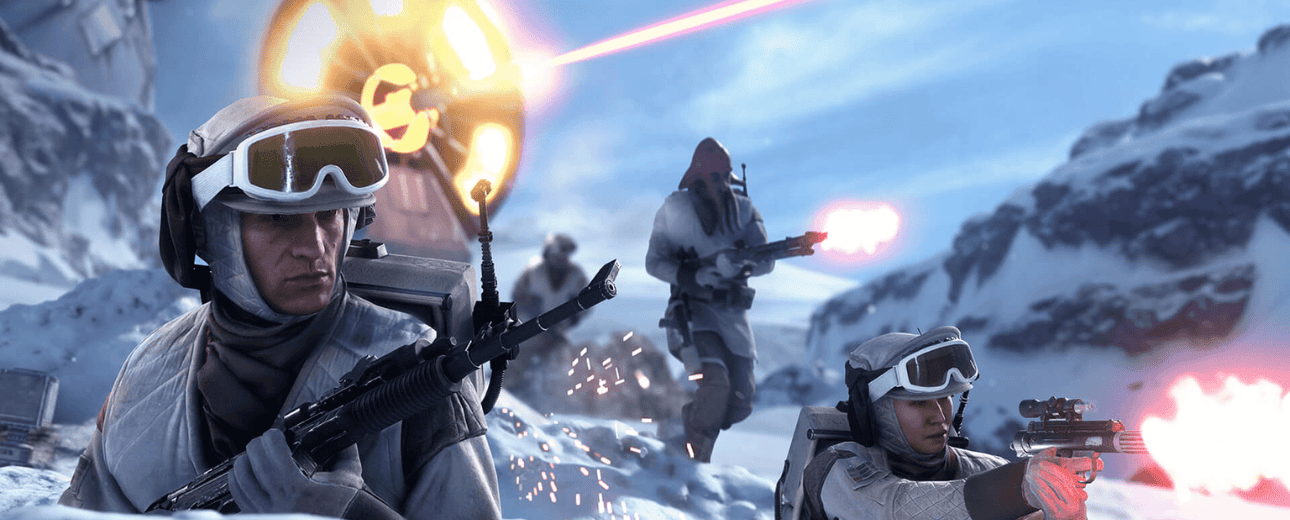
There is a moment in “The Empire Strikes Back” that most people overlook because their eyes are naturally drawn to the AT-ATs stomping across the snow, or to Luke Skywalker racing his snowspeeder across the frozen plain, or to Han Solo desperately trying to get the Millennium Falcon started before Imperial troops pour through the base entrance. But if you shift your attention to the background of those scenes, to the trenches and corridors and gun emplacements of Echo Base, you will see them: ordinary soldiers in white cold-weather gear, running toward the fight, manning defensive positions, buying time with their lives so that the transports can escape. Nobody knows their names. Nobody talks about them. But without them, there is no Rebellion.
This article is for those soldiers. The Rebel troopers of Hoth are among the most overlooked figures in the entire Star Wars saga, overshadowed by the film’s more famous protagonists and by the sheer spectacular scale of the battle itself. They don’t get hero moments or memorable lines. Most of them don’t even survive. But they are the backbone of everything the Rebellion stands for, and their story — their equipment, their backgrounds, their tactical situation, and their extraordinary courage in an almost impossible defensive fight — deserves to be told in full.
So let’s tell it. We’re going to cover everything: who these soldiers were, where they came from, what they wore and carried, how they fought and died, what the expanded universe tells us about their individual lives, and why the Rebel troopers of Hoth represent something genuinely important about what makes Star Wars matter as a story. This is their complete guide, and it is long overdue.
Who Were the Rebel Troopers of Hoth? Understanding the People Behind the Helmets
Before we get into equipment and tactics and battle analysis, we need to spend some time with the most fundamental question: who were these people? The Rebel troopers defending Echo Base were not a professional standing army in any conventional sense. They were not soldiers who had been recruited from birth into a military institution, given standardized training from childhood, and deployed as interchangeable units in a planned military campaign. They were something far more complex and far more interesting than that.
The Alliance to Restore the Republic, more commonly known as the Rebel Alliance, was a coalition military force assembled from an extraordinary variety of backgrounds, ideologies, and life experiences. The people who ended up in Rebel uniforms came from across the galaxy and across the social spectrum: former Imperial officers who had grown disgusted with the Empire’s brutality, idealistic young people from Core World families who had everything to lose and chose to fight anyway, survivors of Imperial atrocities whose entire worlds had been destroyed and who had nothing left to lose, smugglers and criminals who drifted into the cause through circumstance, and committed political operatives who had been working against the Empire since before the Rebellion had a formal military structure.
What united all of these people was not a shared background or a standardized ideological formation. It was a choice, made individually and at enormous personal cost, to resist an empire that controlled virtually every aspect of galactic life. The soldiers in the trenches of Echo Base had made that choice knowing full well what it meant: they were marked people, enemies of the most powerful government the galaxy had ever seen, fighting with inadequate resources against an opponent that had virtually unlimited industrial capacity and manpower. They fought anyway. That choice, freely made and fully understood, is what makes them so compelling.
The Diversity of the Alliance’s Fighting Force
The diversity of the Alliance’s personnel is one of its most important characteristics, and it is something that the expanded universe materials about Hoth make explicit in ways the film can only suggest. Echo Base was home to soldiers from dozens of different species and hundreds of different planetary backgrounds, each bringing different experiences, different skills, and different perspectives to the shared enterprise of surviving long enough to keep the Rebellion alive.
Human soldiers from Core Worlds and Outer Rim territories alike served side by side in the base’s defensive positions. Mon Calamari officers brought the disciplined military culture of a species that had already fought and survived Imperial occupation. Sullustan technicians and fighters contributed the navigational and mechanical expertise that their species was renowned for across the galaxy. Duros soldiers, Twi’lek operatives, and countless other species populated the roster of Echo Base’s garrison, creating a truly galactic fighting force whose composition itself was a statement about what the Alliance stood for: a galaxy where species and origin mattered less than commitment and courage.
This diversity is worth dwelling on because it contrasts so sharply with the Imperial forces attacking them. The Snowtroopers of the 501st Legion were a homogeneous, standardized force deployed by an institution that valued uniformity and interchangeability above all else. The Rebel defenders were the opposite: a heterogeneous, individually motivated collection of people whose strength came precisely from their differences and from the voluntary, committed nature of their service. Understanding this contrast helps you understand what the Battle of Hoth actually means as a dramatic and thematic event.
Why They Were on Hoth in the First Place
To understand the Rebel troopers of Hoth, you also need to understand the circumstances that brought them to one of the galaxy’s most inhospitable environments in the first place. Echo Base was not anyone’s first choice for a Rebel headquarters. It was a desperate compromise, a refuge chosen specifically because its extreme conditions made it unlikely to draw Imperial attention, and because its remoteness offered some protection against the kind of systematic search that the Empire had been conducting since the destruction of the first Death Star at the Battle of Yavin.
The months between Yavin and Hoth had been extraordinarily difficult for the Alliance. Victory at Yavin had been followed by intense Imperial pressure that forced the Rebellion to abandon multiple bases and staging areas, always staying one step ahead of the Empire’s expanding search. The choice of Hoth as a new base reflected the Alliance’s increasingly constrained options: they needed somewhere they could establish infrastructure, repair ships, and plan the next phase of the campaign, and they needed somewhere the Empire was unlikely to look. The ice planet of Hoth, largely uninhabited, environmentally hostile, and on the extreme edge of the Outer Rim, seemed to offer all of these things.
The soldiers who ended up at Echo Base had therefore already been through an extended period of operational stress, displacement, and uncertainty by the time the base was established. Many of them had participated in the evacuation of previous bases, had fought rearguard actions to cover those evacuations, and had watched colleagues die in the process of keeping the Alliance alive. They arrived on Hoth not as fresh recruits full of idealistic energy, but as experienced, battle-hardened fighters who understood exactly what they were up against and had chosen to keep going anyway. That context is essential for understanding who they were and why their defense of Echo Base was so remarkable.
The Hierarchy and Organization of Echo Base’s Garrison
Echo Base’s military organization reflected the Alliance’s characteristic blend of formal military structure and improvised pragmatism. At the top of the command hierarchy sat General Carlist Rieekan, a seasoned military officer whose caution and thoroughness had made him one of the Alliance’s most trusted commanders. Below him, the base’s garrison was organized into the kinds of functional units that any military base requires: infantry defensive forces, artillery and heavy weapons crews, ground vehicle crews, medical personnel, engineering and logistics support, and the communications and intelligence staff who kept the base connected to the broader Alliance network.
The infantry defenders who would bear the brunt of the Imperial assault were organized into companies and platoons, with officers and non-commissioned officers responsible for specific sectors of the base’s defensive perimeter. These unit structures were real, with real chains of command and real tactical plans, but they were also stretched thin. Echo Base’s garrison was not designed for a sustained conventional defense against a full Imperial assault. It was designed to provide enough security to protect the base during normal operations and to buy time during an emergency evacuation. The men and women who held those defensive positions during the Battle of Hoth were being asked to do something the base was never built for, and they did it anyway.
The Cold Weather Gear: Dressing for Survival on a Frozen World
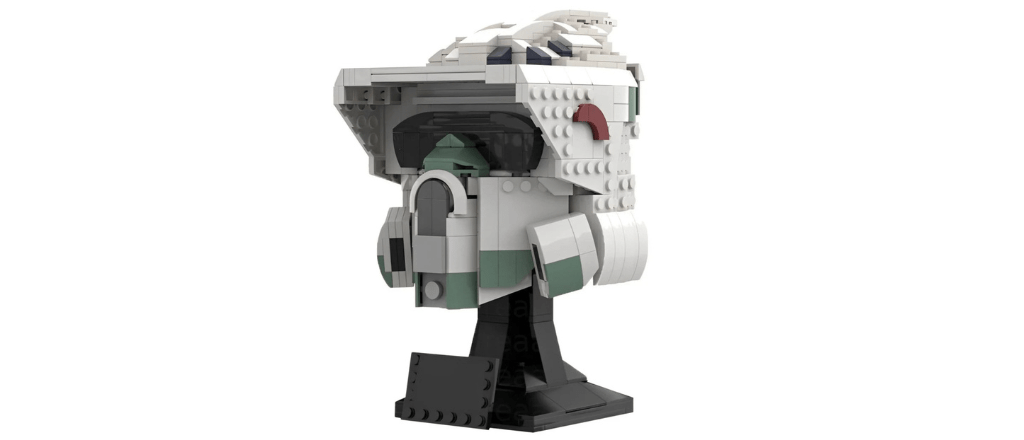
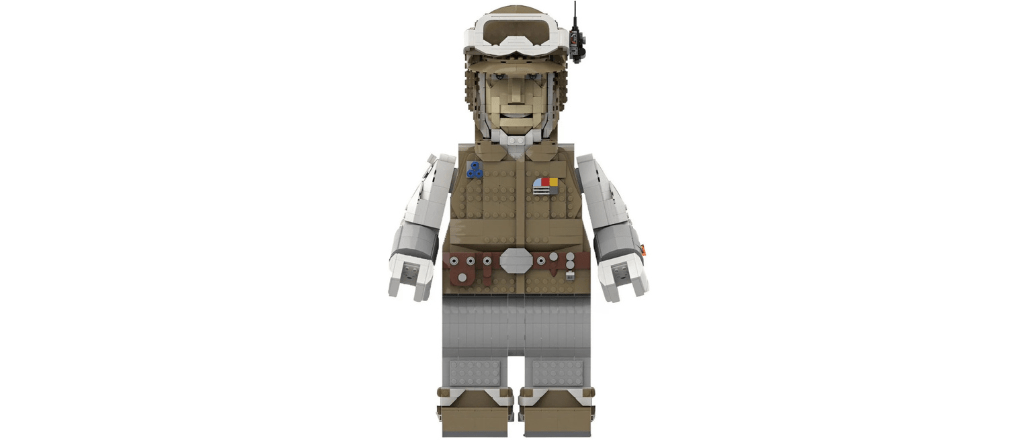
One of the most immediately recognizable visual elements of the Rebel troopers of Hoth is their distinctive cold-weather gear, the layered white and off-white clothing and equipment that has become one of the most iconic visual signatures in the entire Star Wars saga. But like the ARF trooper armor we explored in a previous article, this gear is not purely aesthetic. Every element of the Rebel cold-weather kit reflects specific survival and operational requirements dictated by the extreme environment of Hoth, and understanding those requirements deepens your appreciation of what the soldiers wearing this gear were actually dealing with.
Hoth is not merely cold in the way that a winter on an inhabited planet is cold. It is lethally, continuously, extraordinarily cold, with surface temperatures that plunge far below anything a human body can survive without comprehensive protection. The planet’s two suns provide minimal warmth, and the constant winds create wind-chill conditions that can kill an exposed human in minutes. The environment is hostile in other ways too: the terrain is treacherous, visibility is frequently limited by blowing snow and ice crystals, and the planet’s native megafauna — most notably the Wampa — represent a genuine lethal threat even before the Imperial military arrives.
The Layers of Protection: Breaking Down the Rebel Cold Weather Uniform
The Rebel cold-weather uniform is a sophisticated layered system, not a single garment. This layering approach is exactly what real-world cold weather military gear uses, because layers trap air between them and air is one of the most effective thermal insulators available. The innermost layers provide moisture management, drawing sweat away from the body to prevent the dangerous condition where wet clothing against the skin accelerates heat loss dramatically. The middle layers provide the primary thermal insulation, trapping body heat and preventing it from dissipating into the arctic environment. The outer layers provide wind and moisture protection, blocking the penetrating Hoth winds and preventing snow and ice from degrading the insulating properties of the inner layers.
The outer garment that most people recognize from the film is the white or off-white parka and trouser combination that gives the Rebel Hoth troopers their distinctive appearance. This outer layer serves multiple functions simultaneously: thermal protection, wind resistance, and a degree of visual concealment against the snow-covered terrain of Hoth’s surface. The white coloration is not accidental. Against the unbroken white of Hoth’s landscape, white-clad soldiers are significantly harder to detect visually than they would be in any other color, and in the kind of close-terrain defensive fighting that Echo Base’s garrison was preparing for, visual concealment can be the difference between a defensive position that holds and one that gets flanked and overrun.
The Helmet and Headgear System
The helmet worn by Rebel Hoth troopers is one of the most distinctive pieces of equipment in the Star Wars visual universe, and it reflects the specific sensory and protection requirements of arctic combat operations. The helmet provides thermal protection for the head, which is one of the most critical areas to protect in cold weather because the human body loses a disproportionate amount of heat through the head when it is exposed. It also protects the face from the wind and cold that would otherwise cause rapid frostbite on exposed skin.
The goggles integrated into or worn with the Hoth helmet serve several functions beyond simple eye protection. They protect against the intense glare that reflected sunlight on snow and ice creates, a condition called snow blindness that can incapacitate unprotected eyes in surprisingly short periods. They also provide some degree of enhanced visual capability in the low-contrast white-on-white visual environment of Hoth’s surface, where the lack of contrast between terrain features and sky can make navigation and target identification genuinely difficult.
The overall helmet design gives the Rebel Hoth trooper a somewhat anonymous quality, with the combination of helmet, goggles, and face covering masking individual features in a way that is more reminiscent of the Empire’s standardized stormtrooper aesthetic than of the typically more individualized appearance of Rebel soldiers. This is a direct consequence of the environment: Hoth requires comprehensive face protection that inevitably reduces individual distinctiveness. In the expanded universe materials and reference books, this visual similarity to Imperial troops has occasionally caused tactical confusion in the chaos of battle, a detail that adds realistic texture to the Battle of Hoth’s tactical picture.
Personal Equipment and Survival Gear
Beyond the uniform and helmet, Rebel Hoth troopers carried a personal equipment load that reflected the dual demands of combat effectiveness and environmental survival. The survival dimension of this load is worth emphasizing because it is something that purely military analysis of the battle sometimes overlooks. Every soldier operating on Hoth’s surface was also operating in an environment that could kill them independently of anything the Empire did. Thermal exposure, disorientation in whiteout conditions, and injury from falls on icy terrain were all genuine threats that demanded specific equipment responses.
Personal survival kits carried by Hoth troopers typically included emergency thermal supplies capable of providing short-term protection if a soldier became separated from their unit, emergency rations with the caloric density required by bodies working hard in extreme cold, navigation aids for use in the featureless white expanse of Hoth’s surface, and basic medical supplies weighted toward the specific injuries most likely in the arctic combat environment: frostbite treatment, wound care in cold conditions, and the management of hypothermia.
The weapons and ammunition carried by Hoth troopers also reflected environmental considerations. Standard blaster technology functions differently in extreme cold, with energy cells discharging at different rates and some components becoming brittle in very low temperatures. The expanded universe materials suggest that Rebel armourers made specific modifications to standard Alliance weapons for Hoth deployment, adjusting power cell configurations and using cold-weather lubricants to maintain mechanical reliability in temperatures that would have degraded unmodified equipment significantly.
Weapons of Echo Base: What the Rebel Troopers Actually Carried
The personal weapons carried by Rebel Hoth troopers are a fascinating subject that rewards detailed examination, both for what they tell us about Alliance logistics and procurement and for what they reveal about the specific tactical situations Echo Base’s defenders expected to face. The Alliance, unlike the Empire, could not draw on the enormous industrial capacity of a galactic government to standardize and mass-produce weapons for its forces. Instead, it made do with a combination of purpose-purchased military equipment, captured Imperial weapons, and whatever could be procured through the Alliance’s extensive network of sympathizers, black market contacts, and allied manufacturers.
The result was a weapons inventory that was diverse, sometimes inconsistent, and occasionally improvised, but that reflected the genuine resourcefulness of an organization that was fighting a much larger opponent with far fewer resources. The weapons visible in “The Empire Strikes Back” and documented in the expanded universe materials give us a fascinating picture of how the Alliance armed its ground forces in the period around the Battle of Hoth.
The DH-17 Blaster Pistol: Echo Base’s Sidearm of Choice
The DH-17 blaster pistol is the weapon most closely associated with Rebel forces in “The Empire Strikes Back,” appearing throughout the film in the hands of Rebel troopers during the base’s defense. It is a compact, relatively lightweight blaster pistol manufactured by BlasTech Industries, the same company responsible for many of the weapons used by both sides in the Galactic Civil War. The DH-17’s prevalence among Rebel forces at Hoth reflects both its availability through Alliance procurement channels and its specific suitability for the close-quarters combat that Echo Base’s interior corridors were likely to produce.
As a pistol rather than a rifle, the DH-17 sacrifices range and stopping power for compactness and ease of handling in confined spaces. In the tunnels and chambers of Echo Base, where engagements would often occur at ranges of just a few meters, the DH-17’s limitations at longer ranges were less significant than they would have been in open-terrain combat. Its compact form also made it easier to handle while wearing the bulky cold-weather gear that all Echo Base personnel were required to wear during the battle, which is a practical consideration that is easy to overlook but genuinely important. Trying to aim a full-length blaster rifle while wearing a heavy parka, gloves, and goggles in a narrow corridor is significantly more difficult than the films make it look.
The A280 Blaster Rifle: The Backbone of Rebel Infantry Firepower
For troopers operating in the base’s exterior defensive positions and in the trench lines facing the Imperial assault, the A280 blaster rifle was the primary long-range infantry weapon. The A280 is a more powerful, longer-ranged weapon than the DH-17, capable of delivering enough energy to threaten stormtrooper armor at reasonable combat ranges and to engage vehicle crew positions and light equipment in the fire support role. It was one of the Alliance’s standard infantry rifles during this period, and its appearance at Hoth reflects the effort Alliance logistics officers made to equip their most combat-exposed units with the best available weapons.
The A280’s range and power made it particularly valuable in the open-terrain defensive positions along Echo Base’s perimeter, where Imperial snowtroopers would be advancing across the flat snow plain at ranges beyond what a pistol could effectively engage. The defenders in the trench lines needed to be able to put accurate fire on advancing infantry at distances that would thin out the assault before it reached the trenches, and the A280 gave them that capability. Combined with the crew-served weapons mounted at key points in the defensive line, the A280-armed infantry provided the sustained small-arms fire that was essential to making any defensive plan work.
Heavy Weapons and Crew-Served Systems
Beyond individual infantry weapons, Echo Base’s defensive plan incorporated a range of heavy weapons and crew-served systems that provided the firepower density required to slow or stop an Imperial assault. The most famous of these, at least in terms of screen time, are the large anti-vehicle cannons mounted in the base’s exterior trenches, which we see firing on the advancing AT-AT walkers in “The Empire Strikes Back.” These weapons represent the Rebellion’s attempt to provide ground forces with some capability against the heavy armor that the Empire routinely deployed in planetary assault operations.
The v-150 Planet Defender ion cannon deserves special mention, even though it is primarily an anti-spacecraft weapon rather than a ground combat system. During the Battle of Hoth, the ion cannon plays a crucial tactical role by providing cover for the Rebel transports escaping the system, disabling Imperial Star Destroyers long enough for the transports to make the jump to hyperspace. The crew operating this weapon, largely invisible in the background of the battle’s chaos, were performing one of the most important tactical functions of the entire engagement, and their contribution to the Rebellion’s survival is incalculable.
The anti-personnel weapons deployed in Echo Base’s defensive lines included a variety of blaster cannon emplacements, automated defense systems, and explosive devices designed to channel Imperial infantry assault into prepared kill zones. The extent and sophistication of these defenses is something the film only partially shows, but the expanded universe materials and reference books make clear that General Rieekan’s staff had put serious thought into how to defend a base they hoped they would never have to defend in conventional combat.
The Battle of Hoth: How the Rebel Troopers Actually Fought
Now let’s get to the battle itself, because understanding how the Rebel troopers of Hoth actually fought requires more than just watching “The Empire Strikes Back” once and assuming you’ve got the full picture. The Battle of Hoth is one of the most analyzed engagements in Star Wars fan discussions, and the consensus among fans who have gone deep on the tactical details is that it was both a military disaster and an operational success simultaneously — a defeat in conventional terms that achieved the strategic objective of preserving the Alliance’s core leadership and fighting capacity.
The Imperial assault began with the deployment of AT-AT walkers, the massive four-legged armored vehicles that have become one of the most iconic images in Star Wars history. The choice to lead with AT-ATs rather than with snowtrooper infantry reflects Imperial tactical doctrine and the specific terrain of Hoth’s approach to Echo Base: a broad, relatively flat snow plain that provided excellent fields of fire for heavy armor and limited natural cover for defending infantry. The AT-AT advance was designed to overwhelm the base’s perimeter defenses with armored firepower before infantry could move forward to clear the base itself.
The Defensive Plan and Its Execution
General Rieekan’s defensive plan for Echo Base reflected a clear-eyed assessment of the situation’s fundamental reality: the base could not be held against a full Imperial assault. The Imperial forces attacking Hoth were simply too powerful, too numerous, and too well-equipped for the Rebellion’s garrison to resist indefinitely. The only achievable objective was to slow the Imperial advance long enough for the evacuation transports to escape, and every element of the defensive plan was oriented toward that achievable goal rather than toward the impossible goal of actually defeating the assault.
The defensive line established in the trench system forward of the base was designed to channel the Imperial assault, forcing the AT-ATs to advance on a relatively narrow front where the defenders could concentrate their firepower and where the terrain would limit the walkers’ ability to maneuver. The snowspeeders of Rogue Squadron were tasked with harassing the AT-ATs and slowing their advance, buying the infantry defensive line the time it needed to hold while the transports completed their boarding and launch sequence. The ion cannon provided cover for each transport as it lifted off and made the run to escape velocity.
What is remarkable about the execution of this plan is how well it actually worked given the forces involved. The Rebel infantry defensive line held longer than any purely military analysis of the force ratios would have predicted. The snowspeeders, despite being completely outmatched in terms of armor and firepower, found a way to bring down AT-AT walkers through Luke Skywalker’s inspired use of tow cables — a tactic that required extraordinary airmanship and precise coordination. And the evacuation transports, against significant odds, managed to get enough key personnel and equipment off the planet to ensure the Rebellion’s survival.
What the Infantry Defenders Actually Did
The Rebel troopers in the trenches and corridors of Echo Base performed one of the hardest tasks in military operations: the fighting withdrawal. A fighting withdrawal is not a rout. It is a controlled, deliberate process of giving ground while maintaining unit cohesion and continuing to inflict costs on the attacking force, buying time for a larger operational objective. It requires soldiers who can hold their positions under fire, who can break contact on order without the unit dissolving into individual flight, and who can continue to function effectively as a team when everything around them is chaos and destruction.
The infantry defenders of Echo Base did exactly this. They held their positions in the trench lines while the AT-ATs advanced, maintaining disciplined fire that forced Imperial snowtroopers to advance cautiously rather than rushing forward unopposed. When the defensive line became untenable — when the AT-ATs’ advance brought their weapons to bear on positions that could no longer be held — the defenders fell back to prepared secondary positions inside the base itself, continuing to contest every corridor and chamber rather than simply running for the evacuation transports.
This kind of fighting, room by room and corridor by corridor in a structure that was simultaneously being hit by heavy fire from outside, is among the most psychologically and physically demanding combat any soldier can face. The Rebel troopers who conducted this interior defense bought the final evacuees the time they needed to reach their transports, and many of them paid for that time with their lives. The film shows glimpses of this fighting — soldiers running through smoke-filled corridors, making last stands at blast doors, covering retreating colleagues — but it cannot fully convey the sustained courage and professionalism that this kind of rearguard action requires.
The Snowspeeder Crews: Infantry’s Closest Partners
No discussion of the Battle of Hoth is complete without acknowledging the snowspeeder crews of Rogue Squadron and the crucial role they played in the overall defensive plan, because their story is intimately connected to that of the infantry defenders they were fighting alongside. The snowspeeder pilots and their gunners — the largely unnamed backseat crew members who operated the speeder’s weapons and tow cable systems — were performing an extraordinarily dangerous mission in vehicles that were never designed for the combat role they were being asked to fill.
The T-47 airspeeder, modified by Rebel technicians for cold-weather operations, was a civilian cargo and utility vehicle before the Alliance got hold of it. Its conversion to a combat role involved adding weapons and armor that the original design was never intended to carry, and the result was a vehicle that was fast and agile but deeply vulnerable to the firepower of the AT-AT walkers it was being asked to engage. Every snowspeeder pilot who flew against the AT-ATs at Hoth knew they were flying into a fight they were physically outmatched in, and they flew anyway.
The gunners in the back seats of those snowspeeders are among the most invisible heroes of the Battle of Hoth. We know the pilots’ names — Luke Skywalker, Wedge Antilles, Zev Senesca, Dak Ralter — but the gunners, including Dak Ralterhimself who dies in the opening moments of the battle, are largely absent from the Rebellion’s official memory. They were the other half of every snowspeeder crew, the person who actually operated the tow cable system and the rear-facing weapons, and their contribution to the operation was as essential as that of the pilots who flew the vehicles.
The Faces Behind the Helmets: Individual Rebel Troopers Worth Knowing
One of the things that separates “The Clone Wars” from “The Empire Strikes Back” in terms of its treatment of ordinary soldiers is the degree of individual characterization each medium was able to provide. “The Clone Wars” had twenty-two episodes per season to develop individual clone personalities, while “The Empire Strikes Back” had roughly two hours to tell a story in which the Rebel troopers of Hoth were necessarily supporting players. This means that most of the individual faces behind Hoth’s helmets remain anonymous in the film itself.
But the expanded universe — novels, comics, reference materials, and the newer canon short stories and anthology pieces — has done significant work to give individual identities to some of the soldiers who served and died at Echo Base. These expanded portraits are valuable not just as fan service but as genuine contributions to the story the Battle of Hoth tells, because they transform what might otherwise be an abstract military engagement into something personal and specific, something involving real people with real histories who made a real choice.
Named Troopers and Their Stories
The expanded universe has given names and backgrounds to a number of Echo Base’s defenders, and several of these are worth knowing in detail. Toryn Farr, the communications officer whose voice is heard over the base’s intercom system during the battle, is one of the few named female personnel at Echo Base and one of the few individuals whose specific function during the battle is clearly established in the film itself. Her calm, professional voice directing evacuation traffic while the base falls apart around her is a small but significant performance that the film uses to ground the chaos in something organized and human.
The expanded universe materials about Toryn Farr reveal a character whose path to Echo Base reflects the diversity of the Alliance’s personnel more broadly. She is a communications specialist who has served the Alliance through multiple postings and multiple crises, building expertise that made her exactly the person you want on the communications board when everything is going wrong. Her decision to remain at her post until the very last moment, ensuring that every evacuation transport had the guidance it needed, is an act of courage that the film documents without ever quite making explicit as such.
The Soldiers the Expanded Universe Remembers
Beyond Toryn Farr, the expanded universe has populated Echo Base with a rich roster of individual characters whose stories add significant texture to the Battle of Hoth’s narrative. The “From a Certain Point of View: The Empire Strikes Back” anthology, published by Del Rey Books, includes multiple stories told from the perspectives of characters who appear in the background of the film, and several of these focus specifically on Rebel troopers whose on-screen presence amounts to a few seconds of screen time but whose stories, as imagined by the anthology’s contributors, are genuinely moving and genuinely interesting.
These stories illuminate the human reality of the Battle of Hoth in ways that the film, for all its visual and dramatic power, cannot fully achieve in its necessarily protagonist-focused narrative. They show us soldiers who are afraid but who choose to hold their positions anyway. They show us the specific texture of what it feels like to be in a firefight inside a collapsing military base while wearing gear designed for survival in arctic conditions. They show us the relationships between soldiers who have served together through multiple campaigns and who fight harder because of those relationships. And they show us the deaths of people whose names we never learned from the film, giving those deaths the weight and the specificity that all deaths deserve.
General Rieekan: The Commander Who Saved the Rebellion
No discussion of the Rebel troopers of Hoth would be complete without a serious examination of General Carlist Rieekan, the officer whose command decisions during the Battle of Hoth were directly responsible for the survival of enough of the Rebellion’s leadership and forces to continue the fight. Rieekan is one of the most underrated military figures in the Star Wars universe, a commander whose competence and clear-eyed strategic thinking saved thousands of lives and preserved the organization that would ultimately defeat the Empire.
Rieekan’s most important decision at Hoth was made before the battle even began: when the Imperial probe droid was discovered and destroyed, he immediately ordered a full evacuation rather than hoping the Empire hadn’t received the droid’s transmission. This decision, which acknowledged that the base was compromised and that the only achievable objective was now the preservation of the Alliance’s personnel and assets, was the right call, and it is a harder call than it might appear. Ordering an evacuation means acknowledging defeat, means abandoning a base that has taken enormous resources to establish, and means accepting all the uncertainty and exposure of a fleet dispersed and on the run. Rieekan made that call immediately and correctly, and because he did, enough people and ships escaped Hoth to keep the Rebellion alive.
The Real-World Military Parallels: What History Tells Us About Soldiers Like These
The Rebel troopers of Hoth belong to a long tradition of military figures whose stories are defined not by victory or by famous individual heroism but by the courage to fight in desperate circumstances for a cause worth fighting for. Military history is full of such figures, and understanding the real-world parallels to the Hoth defenders deepens your appreciation of what “The Empire Strikes Back” is actually showing us.
The fighting withdrawal that the Hoth garrison conducted has real-world parallels in some of history’s most compelling military episodes. The Dunkirk evacuation of 1940, in which the British Expeditionary Force conducted a desperate rearguard action on the beaches of northern France while the bulk of the force evacuated by sea, is perhaps the most famous example of a military defeat that achieved strategic success through the preservation of forces that would fight another day. Like the Hoth evacuation, Dunkirk involved ordinary soldiers holding desperate defensive positions so that others could escape, and like the Hoth evacuation, its historical significance lies not in the battle that was lost but in the larger fight that was preserved.
The Psychology of the Last Stand
The psychological dimension of what the Hoth defenders experienced is something that military history and military psychology both have significant things to say about. Soldiers who are conducting rearguard actions — who know they are the ones staying behind so that others can get away — face a specific and extremely demanding psychological challenge. They must maintain their combat effectiveness, their unit cohesion, and their willingness to continue fighting in circumstances where the rational self-interested calculation would suggest that running is the better option.
What enables soldiers to do this, according to both historical accounts and psychological research, is almost never pure ideology or abstract commitment to a cause. It is almost always the immediate, concrete reality of loyalty to the people around them: the colleague in the next position who needs them to hold their ground, the friend who would be exposed if they broke and ran, the fellow soldier whose survival depends on the defensive line remaining intact for a few more minutes. The Rebel troopers of Hoth held their positions for the same reason that soldiers throughout history have held desperate positions: because the people next to them needed them to.
Parallels to Resistance Movements and Irregular Forces
The Alliance’s ground forces at Hoth also have meaningful parallels to the resistance movements and irregular forcesof real-world military history, which is appropriate given that the Rebellion was explicitly modeled, in George Lucas’s original conception, on the guerrilla and resistance movements of the twentieth century. The French Resistance, the Yugoslav Partisans, the Viet Cong, and numerous other irregular forces throughout history have shared the Alliance’s basic strategic situation: fighting a more powerful, better-resourced conventional military force through a combination of mobility, popular support, information warfare, and the strategic patience to survive long enough for the larger political and military situation to shift in their favor.
Like these historical irregular forces, the Rebellion’s strength was never primarily military. It was political and moral: the demonstration that resistance was possible and sustainable, that the Empire could be opposed and hurt, that ordinary people could choose to fight even against overwhelming odds. The Rebel troopers of Hoth, by holding their positions long enough to ensure the Rebellion’s survival, contributed to this political and moral project as much as they contributed to any purely military objective.
The Legacy of Hoth’s Defenders in Star Wars Lore and Fan Culture
The Rebel troopers of Hoth occupy a specific and enduring place in Star Wars fan culture, one that goes well beyond their relatively limited screen time in “The Empire Strikes Back.” They have become, in the decades since the film’s release, a kind of shorthand for a particular kind of Star Wars story: the story of ordinary people in extraordinary circumstances, of the anonymous courage that makes the more famous heroism possible, of the soldiers who don’t get the statue but without whom no statue would ever be erected.
The cosplay community has embraced Rebel Hoth trooper gear with particular enthusiasm, partly because the distinctive white cold-weather uniform is visually striking and relatively achievable for dedicated costume builders, and partly because there is something genuinely appealing about representing the ordinary soldiers of the Rebellion rather than its famous heroes. Wearing a Hoth trooper costume is a choice that says something specific: I care about the whole story, not just the protagonists, and I want to honor the people who made the heroes’ victories possible.
Their Influence on Subsequent Star Wars Military Storytelling
The Rebel troopers of Hoth also had a significant influence on how subsequent Star Wars storytelling approached the question of ordinary soldiers and supporting military characters. Projects like “Rogue One: A Star Wars Story” (2016) can be understood as, among other things, an extended meditation on the kind of story that the Hoth defenders represent: the story of people who give everything for a victory they don’t live to see, whose names don’t appear in the history books but whose sacrifice made the history possible.
“Andor” (2022), the Disney+ series that has been widely praised for its sophisticated, politically and morally complex treatment of the Rebellion, carries this tradition even further, showing in granular detail what it looks like to build and sustain a resistance movement: the human cost, the moral compromises, the ordinary people who are radicalized by Imperial oppression into becoming fighters. The Rebel troopers of Hoth are the end product of exactly the process “Andor” depicts, and watching the series with Hoth in mind gives you a new appreciation for where those anonymous soldiers came from and what shaped them into the people they became.
What Fans Have Built Around Hoth’s Defenders
The fan fiction and creative communities surrounding Star Wars have produced an impressive body of work centered on the ordinary defenders of Echo Base, and this creative output reflects the genuine narrative appeal of the subject. Stories that take the perspective of unnamed background characters in famous scenes have a particular kind of appeal: they ask what the world looks like from the ground level, from the position of people who are experiencing the events of the saga not as protagonists with agency and narrative importance but as ordinary individuals caught up in extraordinary circumstances.
The best of this fan-created work imagines the interior lives of soldiers who appear for seconds in one of cinema’s most famous battle sequences and asks: who were they, really? What did they believe in? Who were they thinking about as they held their positions in the corridors of Echo Base? What had brought them to this frozen world, and what did they hope was waiting for them if they survived? These are genuinely moving questions, and the fan community’s willingness to ask and answer them is a testament to the enduring power of the story “The Empire Strikes Back” tells, even in its margins and its backgrounds.
Why These Soldiers Still Matter: The Enduring Significance of Hoth’s Defenders
We’ve covered an enormous amount of ground in this article, and I want to close with something that I think gets to the heart of why the Rebel troopers of Hoth matter not just as Star Wars characters but as a cultural and moral phenomenon. These soldiers represent something that the Star Wars saga has always been, at its best, about: the value and the dignity of ordinary courage in the service of something larger than oneself.
The big battles of pop culture mythology are usually told from the perspective of the exceptional: the Force-sensitive warrior, the legendary pilot, the prophesied savior. And there is nothing wrong with that storytelling approach — it has produced some of the most powerful narratives in human cultural history. But there is another kind of story that is equally important and less frequently told: the story of the people who are not exceptional by any mystical measure, who have no prophecy and no destiny, who bring nothing to the fight except the decision to show up and the courage to hold their ground.
The Moral Weight of Voluntary Service
The Rebel troopers of Hoth chose to be there. Not one of them was conscripted, not one of them was born into service the way the clone troopers of the Republic were, not one of them was following orders from an authority they had no power to refuse. They looked at the galaxy they lived in, they looked at the Empire that controlled it, and they decided that fighting was better than submission. That choice, made freely and with full awareness of its cost, is the moral foundation of everything the Rebellion stood for, and it is the thing that makes the anonymous soldiers in Echo Base’s trenches genuinely heroic in a way that transcends tactical analysis or military achievement.
The galaxy they were fighting to restore was not guaranteed to be better than the one they were fighting to end. The future was uncertain. The odds were terrible. The resources were inadequate. And yet they fought, because the choice to fight for something worth fighting for is itself an act of affirmation: an affirmation that the galaxy can be better, that the people in it deserve better, and that the work of making it better is worth the cost. Every soldier in every defensive position at Echo Base made that affirmation with their presence and their willingness to hold their ground.
What They Tell Us About the Rebellion’s True Strength
The Rebel troopers of Hoth also tell us something important about where the Rebellion’s true strength came from, something that the Empire consistently failed to understand and that its defeat ultimately demonstrated. The Empire’s strength was industrial, organizational, and coercive: it controlled resources, it commanded obedience through fear, and it deployed that coercive power with enormous efficiency. What it could not manufacture or command was the kind of voluntary, committed, individually motivated service that the Rebellion’s ordinary soldiers exemplified.
You cannot order someone into that kind of service. You cannot conscript the quality of commitment that kept Rebel troopers at their posts in Echo Base’s corridors when the rational calculation said they should run. You can only earn it, by standing for something that people genuinely believe is worth fighting for. The Rebellion earned it, imperfectly and inconsistently and at enormous human cost, and the soldiers at Hoth were the proof. Their willingness to die for the cause was not the product of conditioning or coercion. It was the product of genuine belief, and genuine belief is the one thing that all the Empire’s industrial power could never produce.
For readers who want to explore the Rebel troopers of Hoth further, the “From a Certain Point of View: The Empire Strikes Back” anthology published by Del Rey Books at www.penguinrandomhouse.com is essential reading, with multiple stories told from the perspectives of background characters including Hoth defenders. The “Star Wars: The Empire Strikes Back – The Original Graphic Novel Adaptation” provides additional visual context for the battle’s ground-level action. The official Star Wars Databank at www.starwars.com maintains entries for Echo Base and several named personnel who served there. The fan-maintained Wookieepedia at starwars.fandom.com has extraordinarily comprehensive documentation of the Battle of Hoth, the base’s organization, and the named personnel who served in its garrison. And “Andor” on Disney+ at www.disneyplus.com, for all that it is set in a different period, is the best available exploration of the human reality behind the kind of people who ended up defending Echo Base: ordinary people making extraordinary choices in a galaxy that demanded everything they had.
The soldiers nobody talks about held the line so that the people we do talk about could escape and fight another day. It’s time we talked about them.